Totally loved. Tears - Joy and Laughter. A keeper.

Totally loved. Tears - Joy and Laughter. A keeper.
If ‘the future’ is trust.
Who/what - do you trust?
I mean really really trust?
And why?
How many such entities are there?
Now you meet someone outside that 🔗📼 Circle of Trust.
How do you include them in your circle of trust? What are the qualifiers?
If not include them completely - at least for a single transaction?
How many ‘circles of trust’ does the average person need?
You are boarding a plane. How much trust do you need in ‘the system’ that ensures that the pilot is qualified, that there is nobody going to be on board plotting a nefarious action, that nobody has broken into the supply chain for (say) water and poisoned the supply - and so many more things that can go wrong. How many circles of trust do you need to be confident that you can fly safely between two points without an incident?
I definitely trust Jax - but not even she can make those kind of ‘trust guarantees’. I have to trust people that I do not know, that they know something and that something is more reliable than average. Ideally - a LOT more reliable.
Now now flip it - with those considerations in mind - consider a single airline - put yourself in their shoes and ask if they’re going to let you on the plane with your ‘self sovereign identity’ that has been ‘authorised’ by an identity that they have never heard of - much less trust.
So - in order that one of their planes doesn’t suffer an incident - who do they trust and why?
Should they?
This all coming to mind as I read a couple of posts over the holidays that were totally unrelated and yet totally connected.
Separately - still waiting to see how self sovereign identity is going to work. The idealism being concocted in NZ, the UK et al will almost certainly fail (or at best be redefined to suit the outcome).
Phil’s connection to ’Visa thinking’ makes sense - but at some point - somewhere - validation with somebody / something need to be made with a ‘trusted authority’ that is bigger than you - and even 🔗 The Principality of Sealand and other similar places.
That is distributed trust - across a network - not centralised - distributed. But we know where the dominant distributed nodes are on the internet? Don’t we. We know that when we say that TCP/IP is by design decentralised. But we also know that despite this - the internet is in practise increasingly centralised.
Not sure there is going to be that much of a change with DIDs - given the current reality - and even then - careful what you wish for.
There is room for an alternative that demonstrably works. It just doesn’t fit into the model that everybody is talking about which is anyway really only about trusting devices - not people.
My reply to a LinkedIN question was too long for LinkedINs highly advanced tech to support - hence this post »>
I’ve no idea if this is a generic funnel or one you’re actually using, but let’s start with the fundamental issue: linear funnels aren’t real. Reality is messier. The jump from ‘Appointment Booked’ to ‘Work Completed’ in a single step tells me this is almost certainly generic - which isn’t a criticism of the diagram itself, just a reality check on what it can actually model.
Here’s what concerns me: there’s as much (more>) not asked as asked. You can’t sensibly model a funnel in isolation. Not all SMEs are equal, for starters. Industry matters. Geography matters. Market dynamics matter. Deal size expectations matter … what matters is a long list.
Some will argue that ‘funnels are dead - long live the flywheel’. I’m not in that camp - BUT I am in the camp that you should at least work out intentionally how a flywheel fits in or around your funnel model. They’re not mutually exclusive.
The graphic opens with ‘Lead Comes In’. The first SME question should be how did that lead get there in the first place? That informs everything downstream. You also need to be explicit about qualification - not all ‘leads’ are ‘leads’.
The flow itself is too linear. There are no loops, no decision rules, no explicit criteria for what happens when someone doesn’t follow the ‘happy path’. Reality has friction, objections, false starts, and reversals. In fact the linearity of the model suggests to me that the business is confusing the ‘buyer journey’ of the customer with the ‘sales journey’ of the business.
Most critically, it also seems to assume a one-time transaction. That’s rarely a business model worth optimising for. Where do repeat business, churn, extension sales, retention, cross-sell, and upsell live in your model? If you’re thinking subscriptions or ongoing relationships, the funnel shape changes entirely.
Finally - where’s the data? Today’s numbers and tomorrow’s requirements. If you don’t need much data to manage this funnel, that raises a question about why you’re automating it at all. But if you do need data - which you should - then measurement becomes the whole game. You can’t manage what you don’t measure.
And why do I write all this?
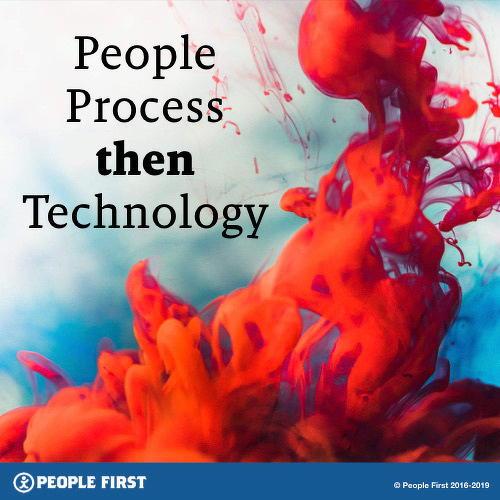
Because for me - until you can bottom out all of this - and a whole lot more - there is no point in looking for the ‘ideal’ technology. As I always say ….

I watched this when it first came out - with great anticipation - being a fan of the books and all - and ... sadly disappointed. Nice enough. If there was a follow up - would watch that - but definitely fell flat.

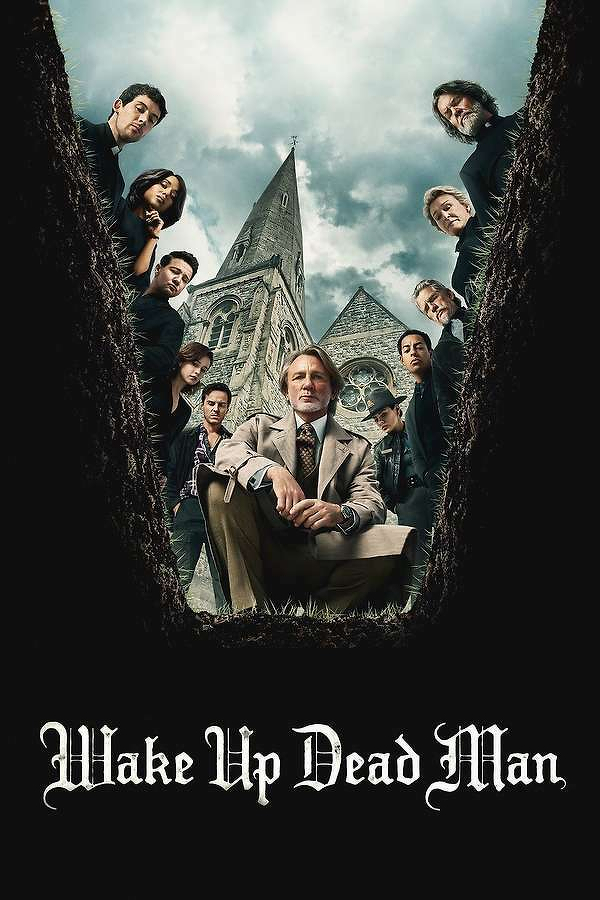
I am a minority .. I did not like the original Knives Out … at all. So heaven only knows why I watched the second - which I liked even less - so what possessed me to watch the third? No idea - but so glad that I did. Finally the franchise delivered.
🔗 In praise of Drafts // @ameripie
… an app by Agile Tortoise (AKA Greg Pierce), remarkably won App of the Year for 2025 at Mac Stories, a full thirteen years after its release.
💯
Apps @ameripie uses with drafts - with my annotations
PLUS
As I have written before - 99% of my written words (outside of email) start in Drafts.
The appointment is reminiscent of Meta Platforms’ hiring of former British Prime Minister Nick Clegg as a global affairs executive in 2018 …
💬 Martin Peers - The Information - talking about Osborne and OpenAI
No he wasn’t. He was ‘Deputy’ PM - a bit like ‘Winnie’ and ‘Seymour’ in New Zealand at the moment (a thank you from the dominant party that still couldn’t get a majority on its own - so formed a coalition.)
Nick was so good at his job that in 5 short years as Deputy he took the LibDems from 57 seats to just 8. After which he lost his position, resigned from party leader and a year later lost his local election. After that the Brits made him a ‘Knight’ in the UK and Zuck made him whatever it was called for Meta.
Imagine how far he could have gone if he was a success.
Consider that in the wake of the national security announcement from Tяump and The Tяump Аппаратчик
What’s most striking to me about this document isn’t any specific policies, but what it reveals about values. Increasingly, the United States and Europe don’t share them. This reflects a change in America far more than a change in Europe. Trump sees a G-Zero world ruled by the law of the jungle, where might makes right and everything can be bought. For all its flaws, institutional quirks, and bureaucratic sclerosis, the European Union stands for something else: rule of law, liberal democracy, human rights, multilateralism. You can roll your eyes at that list all you want, but it’s the foundation of the entire European project. Heck, it’s why America built the transatlantic alliance in the first place. (The alternative, two world wars, didn’t work out too well for anyone.) And it’s now in direct tension with what Washington is selling.
💬 Ian Bremmer
🔗 Full Piece which also includes this reminder …
The only time NATO’s Article 5 has ever been invoked was by the United States, after September 11, 2001. Every European ally came to America’s defense despite different approaches to free speech, regulation, and countless other policy disagreements. They showed up, fought, and died alongside Americans in Afghanistan.
💬 Ian Bremmer
So … Europe is the enemy, China - despite rhetoric seem to be closer and Russia - with no cards but all the influence - blood brothers.
I would note that …
Together, the EU countries hold more US debt than Japan and China put together - to the tune of $2 maybe 2.5 trillion. - well above twice that of China - and that doesn’t include the UK who is in the same ball park as China all by itself.
All that wringing of hands a few months ago about China selling its debt and now we have this.
Of course - they didn’t.
No economist in this house - but I do wonder when a country - any country - will get to do something radical rather than putting up with this shit.

I watched the first and wasn’t really expecting a second … and I am CERTAINLY not expecting a third. PLEASE.
If you have nothing better to do .. in our house it’s one of those that fits in the Venn diagram overlap of ‘what movie shall we watch’ twixt the two of us.

Remarkably average .. I had Guy worked out during his second scene. Keira needed to think more.