
? Searched
Generation Beta?
I think describing who I am, what I want and need and everything else besides based on my age is baloney and claptrap. Hell - I’d put more money on being defined by astrology. But still this bunk persists.
It’s getting weirder.
The Intersection of Politics, Business, Culture and YOU.
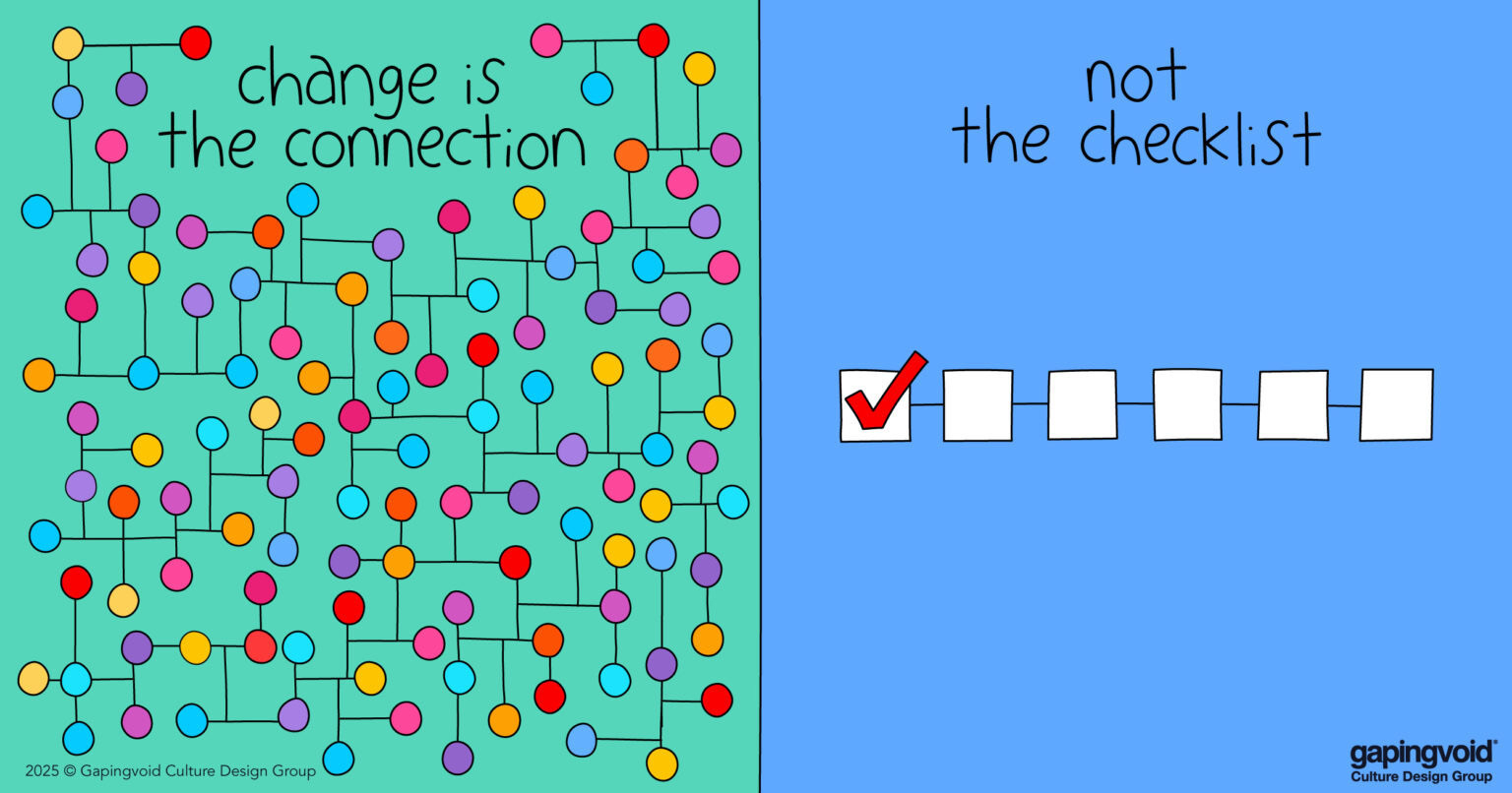
🔗 From DEI to dei - Gapingvoid
Real change requires a change in mindsets and deep seated beliefs. And you only change that through culture.
🔗 The Curse of Easy Money - Gapingvoid
Soon you have a two-speed society: those riding the wave, and everyone else paying inflated prices with deflated opportunities.
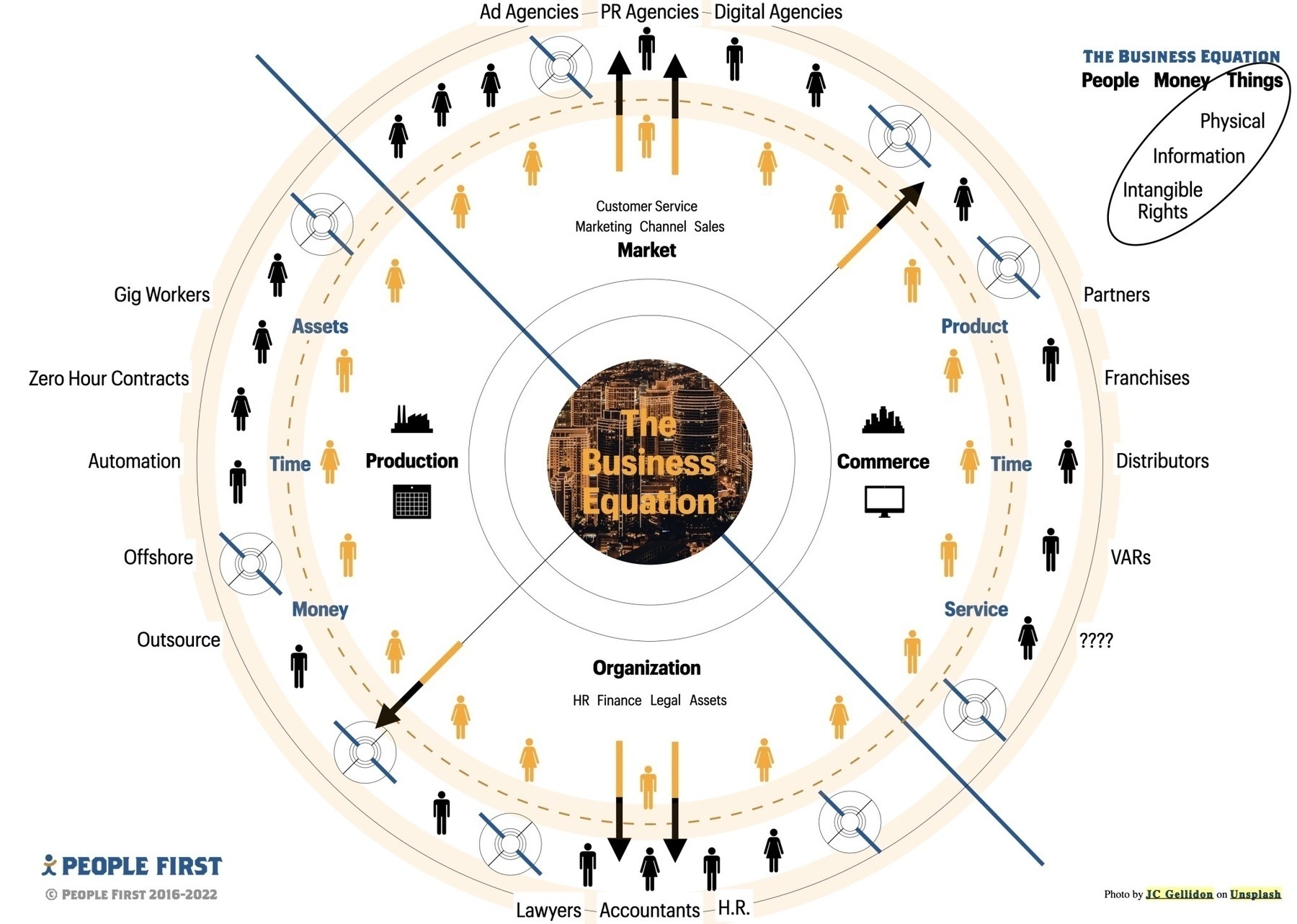
The Business Equation
I have on occasions referenced ‘The Business Equation’ within this ‘Personal Journal’. I shared it last week in a pack of mental models I use as part of my processes that businesses find helpful when building their company. In the sharing, it occurred to me that while pictures are worth 1,000 words - sometimes you might need 10,000.
For example, The Business Equation includes my take on concepts like;
-
The Virtual Corporation
-
The Future of Work
-
Outsourcing and Offshoring
-
The Company of One
-
Supply Chain Transparency
… and even my extension to Geoff Moore’s Core/Context model - applied to people and the roles they might be looking to take.
I use these models and more during my engagements and advisory services that are designed to grow businesses.
I might write more about this. Should I?
A Reminder About ‘Content’
… because it’s getting worse.
A strategic thinker wouldn’t call it content.
Sorry - no idea who wrote that - not me - but definitely on pace with my thinking - which you will know that 🖇️🔍 I have written about this many times over the years.
To save the click through - in a nutshell …
As long as ‘we the creators’ fall into the trap of using low cost, homogenous, non-descript words like ‘content’ to describe our work, our soul, our passion, our beliefs then our work will continue to be viewed as ‘free - to - cheap - to - low - cost’, as ‘homogenized, non differentiated, interchangeable fodder’. Moreover, we then only have ourselves to blame and the resultant payment for your art, your thinking, your ideas, will continue to race to the bottom.
💬 John Philpin
And
It is not in the interests of any creator to allow that, so why allow their interests to define how we think?
💬 John Philpin
And
Content is a horrible, generic, cheap, ‘anything will do’ kind of word. Which is why ‘content’ has no value. It is also important to know that it is in the best interests of the buyers of our sweat, labour, thought and time to keep their price down. But our costs are not kept down. So our net earnings suffer. And they are suffering badly. And it has to start with you - the creator, because it isn’t in the interests of buyers to change their behaviour and vocabulary - ’they’ want great work at no cost.
💬 John Philpin
So. What you going to do about it?
🔗 The Case for the Executive Chair
I annotated this in the middle of 2024 with the intention to share, it’s pretty damming.
Only one or two directors on the typical 11-member board say they understand industry economics and how the company makes money. Two or three say they have little or no understanding.
Exactly in line with my observations - failure to understand leads to a focus on history, compliance and not losing - because they don’t even understand how to grow and win.
🖇️ You might not be surprised to learn that I have a fix. It’s called The Business Equation
Systems of Record are transitioning to System of Compliance while Systems of Engagement are still on the whole being ignored.
🔗 Om on content, it’s as if I wrote it - not with the natural flow of Om - but definitely 🖇️🔎 the subject matter.
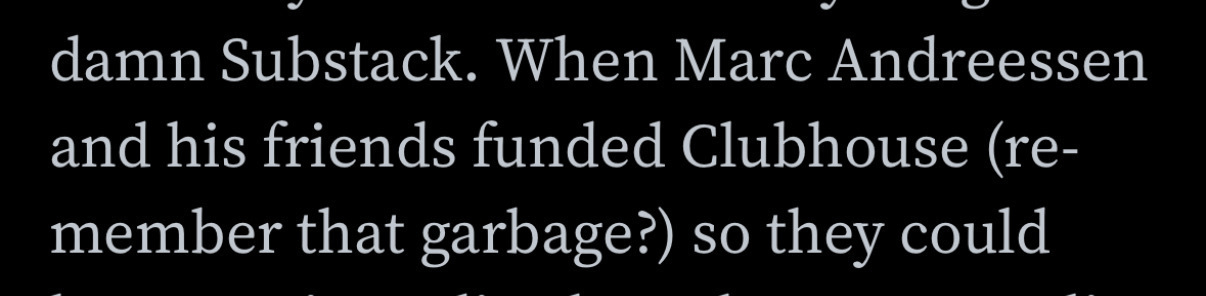
Not my words - but I did 🖇️ call it nearly 5 years ago - and 🖇️ 🔎 a few times since.
So I will plant this post in various places across the inter webs as I reach out to find those customers that need what I do.
The link is worth clicking on, but that’s not really what this is about. Except, in a way, it kinda is… let me explain.
This part of John’s business model is a weekly sponsorship. He sells them upfront. He can sell two on the same week. And if one becomes open suddenly
Here’s the deal: my calendar is showing some similar gaps. Now, I don’t operate exactly like John Gruber—heck, we’re not even in the same space—but at the core, the goal is the same.
And honestly, for-profit organizations aren’t as different from each other as we might like to think.
I like to imagine every organization as a magic box. It takes inputs—people, capital, resources—and transforms them into outputs: products and services that are sold to customers. Ideally, every window of time is filled with something that generates revenue for the business.
These are sold to customers. Ideally, every window of time is filled with something that generates revenue for the business.
This urgency is one reason why so many rush to create products that can “make money while you sleep.” The aim is to replace perishable inventory with non-perishable. And while that’s a great approach, it’s not what I do, because—despite what I just said—every organization is unique.
So here I am, reaching out to the internet to help fill those gaps.
If you have a business—or know someone who does—that’s struggling to boost revenue, let’s chat. I’ve got frameworks, methods, and a book that’s gotten some praise from fellow writers worldwide.
Over the years, I’ve tried it all: flywheels, funnels, category marketing, guerrilla sales, challenger sales, social selling—you name it, I’ve probably experimented with it.
Here’s the biggest takeaway:
It’s all about the synergy of teamwork and a shared purpose.
If you’re ready to turn those inputs into something extraordinary, drop me a line. Let’s make some magic happen.
This version aims for a conversational tone while still driving home the main points and inviting engagement.