Stacked Menu with Dropdown

Posts in: LongForm

🔗 The Redacted Smith Transcript

So I 🔗 asked Claude a simple question …

Please only consider this document and no other information. Bottom line - if you were the judge - would you find the …

Still To Do

On the Blog

My three words for 2026 are 🖇️ Engage - Enable - Excite. But there’s a catch. Underpinning all of that is a requirement to both stop and start. Stop what’s bad for you, what isn’t working, what’s draining you. And start what’s good for you, change things up, do something different when something clearly isn’t landing.

That’s where the tension lives. One voice says when things aren’t working, change the game. Do something different. Move it up. Stagnation demands disruption. You’ve got agency, the ability to reframe, introduce new variables, step outside the rules you’ve been playing by. This voice won’t accept circumstance as fixed.

Auto-generated description: A superhero with glasses is torn between an angel and a devil in a comic book style city backdrop.

The other voice says if things aren’t working, they’ll persist anyway. Be patient. All will be well. Not wishful thinking, but confidence in process. The recognition that what’s broken right now is already being worked on by time and circumstances you can’t control yet. Patience here isn’t inaction. It’s understanding that some shifts simply require waiting.

Both are right. And so - by definition - both are wrong and the decision is made by applying the real skill of ‘sensing’. Very useful!

When does the system actually need you to disrupt it, and when is your job to hold steady whilst deeper shifts take hold? Get that distinction wrong and you either exhaust yourself with constant pivoting or you surrender to inertia. Sometimes both.

For me this is not theoretical. It’s the fork in the road. It’s not about the new year - it’s about life that continues to get harder and harder.

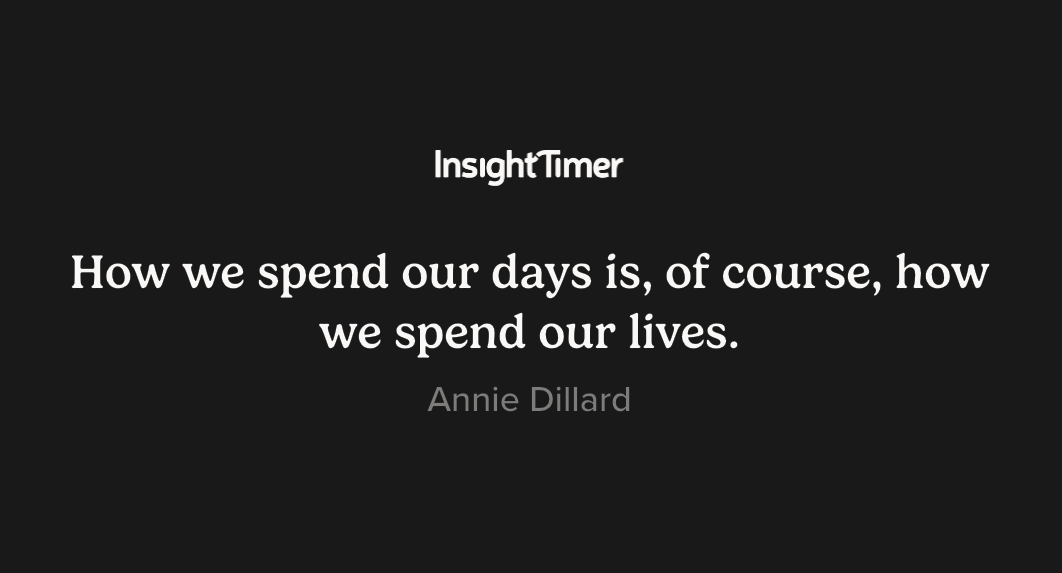
This all came to mind this afternoon when this popped up on my phone.
Song For The Post

🔗📼 The Clash

Let me count the ways - but for now a short primer ….

Wrong - In What They Are

To understand how the fractalisation of work (doesn’t) work - consider ‘the taxi’, the definition of which is in the process of being redefined as a personalised vehicle that will take you …

Not My Words - but those of ‘The 🔗Jax’ - over on 🔗 LinkedIN

(Lightly edited to make sense in a blog post.)

“We should all do the right thing by and for our children - they are our future and deserve to be protected.”

💬 Jax Harrison

Keeping #CHILDREN - babies literally safe online should be #EVERYONE ’s priority. Sadly this causes so much damage - and I am so sad for the loss of this young boy 13 year old -Levi and for the family who lost him.

Maybe Australia has it right.

Children don’t have the wisdom or knowledge to know what is real and what isnt - or how to cope when things go wrong…

Parents are not sure how to explain it or talk to their children about it - the dangers of hashtag#chatbots and #sexbots and #sextortion to a child of 13years old. And not only that - because it is supposed to be safe for them to use the Apps. Is it awkward to tell your 13yr old these things? Yes, but now a more than necessary and urgent conversation to have.

Why? It is because of the consequences of lack of hashtag#safety parameters of private companies - who are larger than many nations - who are deciding the fate of our #CHILDREN and their futures - without the appropriate intervention and guidance from lawmakers and governments or even counsellors. Without full disclosure of what they are allowing.

Do you really think if there was a warning label like on a pack of cigarettes - every time you or your child logged in to the App - if there was a flashing for 30 seconds a warning ‼️ “Use of this app may expose children and others to harmful sextortion, potentially harmful relationship bots, cutting and self harm groups and challenges, radicalisation, bullying, and may cause severe anxiety, self harm and suicidal thoughts … everyone would be so keen on it - NO. Of course not - parents and teens would think twice.

And that’s the smallest step the companies could do. It would cost them nothing … just less children on their platform.

Instead they just take the risk and do nothing to make it better because it doesn’t cost that much to them.

The value of collecting our children’s data is worth more than that. Think about it. Read that again.

Somehow as a human society we are abdicating responsibility of the protection of our …

#childrensrights
#childrensminds
#mentalhealth
#hearts

… to private companies who have #profit first and #safeguarding second.

We cannot trust them to do the right thing - because “when a leopard shows you its spots you should believe them”.

Their actions tell you who they are.

#OnlineSafety prevents hashtag#OfflineHarms and companies like hashtag#Instagram hashtag#Meta can and should do better.

“We should all do the right thing by and for our children - they are our future and deserve to be protected.”

Governance and regulatory accountability and actions don’t hinder innovation they #savelives - our children’s lives.

#thefuturefound
#onlinesafety
#AI
#governance
#regulation
#policy
#children
#stopchildtraffic
#socialmedia

This is from iAWriter.

If ‘the future’ is trust.

Who/what - do you trust?

I mean really really trust?

And why?

How many such entities are there?

Now you meet someone outside that 🔗📼 Circle of Trust.

How do you include them in your circle of trust? What are the qualifiers?

If not include them completely - at least for a single transaction?

How many ‘circles of trust’ does the average person need?

You are boarding a plane. How much trust do you need in ‘the system’ that ensures that the pilot is qualified, that there is nobody going to be on board plotting a nefarious action, that nobody has broken into the supply chain for (say) water and poisoned the supply - and so many more things that can go wrong. How many circles of trust do you need to be confident that you can fly safely between two points without an incident?

I definitely trust Jax - but not even she can make those kind of ‘trust guarantees’. I have to trust people that I do not know, that they know something and that something is more reliable than average. Ideally - a LOT more reliable.


Now now flip it - with those considerations in mind - consider a single airline - put yourself in their shoes and ask if they’re going to let you on the plane with your ‘self sovereign identity’ that has been ‘authorised’ by an identity that they have never heard of - much less trust.

So - in order that one of their planes doesn’t suffer an incident - who do they trust and why?

Should they?


This all coming to mind as I read a couple of posts over the holidays that were totally unrelated and yet totally connected.

Separately - still waiting to see how self sovereign identity is going to work. The idealism being concocted in NZ, the UK et al will almost certainly fail (or at best be redefined to suit the outcome).

Phil’s connection to ’Visa thinking’ makes sense - but at some point - somewhere - validation with somebody / something need to be made with a ‘trusted authority’ that is bigger than you - and even 🔗 The Principality of Sealand and other similar places.

That is distributed trust - across a network - not centralised - distributed. But we know where the dominant distributed nodes are on the internet? Don’t we. We know that when we say that TCP/IP is by design decentralised. But we also know that despite this - the internet is in practise increasingly centralised.

  • Through Access Points
  • Through DNS
  • Through Platforms
  • Through Hosting

Not sure there is going to be that much of a change with DIDs - given the current reality - and even then - careful what you wish for.

There is room for an alternative that demonstrably works. It just doesn’t fit into the model that everybody is talking about which is anyway really only about trusting devices - not people.

My reply to a LinkedIN question was too long for LinkedINs highly advanced tech to support - hence this post »>

🔗 This was the question.

I’ve no idea if this is a generic funnel or one you’re actually using, but let’s start with the fundamental issue: linear funnels aren’t real. Reality is messier. The jump from ‘Appointment Booked’ to ‘Work Completed’ in a single step tells me this is almost certainly generic - which isn’t a criticism of the diagram itself, just a reality check on what it can actually model.

Here’s what concerns me: there’s as much (more>) not asked as asked. You can’t sensibly model a funnel in isolation. Not all SMEs are equal, for starters. Industry matters. Geography matters. Market dynamics matter. Deal size expectations matter … what matters is a long list.

Some will argue that ‘funnels are dead - long live the flywheel’. I’m not in that camp - BUT I am in the camp that you should at least work out intentionally how a flywheel fits in or around your funnel model. They’re not mutually exclusive.

The graphic opens with ‘Lead Comes In’. The first SME question should be how did that lead get there in the first place? That informs everything downstream. You also need to be explicit about qualification - not all ‘leads’ are ‘leads’.

The flow itself is too linear. There are no loops, no decision rules, no explicit criteria for what happens when someone doesn’t follow the ‘happy path’. Reality has friction, objections, false starts, and reversals. In fact the linearity of the model suggests to me that the business is confusing the ‘buyer journey’ of the customer with the ‘sales journey’ of the business.

Most critically, it also seems to assume a one-time transaction. That’s rarely a business model worth optimising for. Where do repeat business, churn, extension sales, retention, cross-sell, and upsell live in your model? If you’re thinking subscriptions or ongoing relationships, the funnel shape changes entirely.

Finally - where’s the data? Today’s numbers and tomorrow’s requirements. If you don’t need much data to manage this funnel, that raises a question about why you’re automating it at all. But if you do need data - which you should - then measurement becomes the whole game. You can’t manage what you don’t measure.

And why do I write all this?

Because for me - until you can bottom out all of this - and a whole lot more - there is no point in looking for the ‘ideal’ technology. As I always say ….

🔗 Responding to Bill Bennet’s article.

The dependencies are clear - but if the EU, with 450 million people and deep talent pools, is only now waking up to the fact they can’t compete …