
👤 PeopleFirst
Shifting the People First Newsletter Format.
Every Tuesday - ask a question.
Every Friday (10 days later), provide a summary of the aggregated feedback with ‘personal opinion and annotation’ for AN answer.
This Week …
Why not weigh in?
A Newsletter On And About Substack - It’s The End Of An Era.
What do you think?
Episode 61 of The People First Podcast is now available - a podcast that introduces to Daniel Szuc- an Aussie, living in Hong Kong who with his wife Jo has launched Make Meaningful Work. Take a listen.
It used to be that we lived in private and chose to make parts of our lives public. Now that is being turned on its head. We live in public, like the movie says (except via micro-signals not 24–7 video self-surveillance), and choose what parts of our lives to keep private.
Ben Schott - 2010 - TEN YEARS AGO
ClubHouse
People ... Process and THEN Technology ... but as usual the world at large is ignoring the advice - and jumping straight into an app without much thought ... let me explain.
If you are a celeb - you can get in.

Photo by kilarov zaneit on Unsplash
If you are one of the masses ... we have a wait line for you ... once you have downloaded our app and given us your telephone number ... curiously out of the box it asks you to confirm the phone number you want it to use ... so it has already read the data on my phone - without my permission - even before I have been accepted.
It is iPhone only for now. (They know where the money is).
The site itself tells you nothing - but others have explored and looked and opined. (Links at the end.)
But What About Privacy?
One thing the site could have done would be to talk about their privacy policies, where the data is, why they have it (because they don’t seem to ask for it) and why they need it. Not to mention how they intend to handle things like harassment. But like all good 'bro software' - we'll sort that out later ....
Nothing on the site reveals much about what people should be concerned about, only what they are concerned about ... access to celebrities!
Diving further down ...
"Recording any conversation is strictly forbidden, meaning your encounters with VIP members or general conversations are protected."
ClubHouse
... how do they manage that? They don’t. Nothing stops me audio recording a conversation ... if I can hear it ... I can record it. (By the way - I am sure that they record it. Are they? The prohibition stated applies to us - not them. And I assume that if they aren't now - they will be using AI to scan the voices to 'learn more about us' in the future.
Contacts
Also - any idea if your contacts are safe? Or are they going to be mined aswell? (In fairness - I just checked my phone - they aren't even listed on the 'approved apps' - but then again, I'm not in yet.
But here is the truly insidious thing. Let’s say you have no interest in Clubhouse. That said you aren’t a hermit. You are ‘connected’. You have to be. The people that are inviting you to join Clubhouse know that you are connected and in their minds should be there. And that’s just the ones you know about.
The fact is that if you are in the contact book of anybody that has joined Clubhouse ... it’s a safe bet to assume (like it or not) that your information is already in the ‘Clubhouse Social Graph. And if you know anyone who is inviting people - your data has definitely been uploaded.
Watch the articles start to appear in the mainstream press as Clubhouse starts to grow. Watch people throw their hands into the air and ask ‘who knew this was happening’ ... who gave Clubhouse permission. I don’t need to wait.
The answer is you - assuming you joined and invited people.
Ignorance
The sad thing is that all of this (and I am writing this as Clubhouse numbers are sitting around 1 million) is so clear to anybody who pays attention or even stops to think for two minutes before clicking away on buttons ‘confirming their agreement’)
This play is designed to operate around 'ignorance', at worst and at best - ‘who cares - I don’t mind - I have nothing to hide’.
You might not, but Clubhouse and similar actors also don’t care about you (sorry). The point is that they have no interest at all in the ‘nodes’ on the graph - they are focussed on the connections and you dear clubhouse member are feeding the beast ... but not just with your information ...mine aswell.
Added Thought (21st February 2021)
It just occurred to me as I was reading ...
this (Why Hot New Social App Clubhouse Spells Nothing But Trouble) from the Guardian
... how hard would it be for Apple ( if they do it - others will follow - after they stop laughing ) to offer two contact/address books. Only you know which is real and which is a dummy. In the dummy, you keep a couple of contacts and it is that which you upload when asked by corporations like Clubhouse.
Of course - Clubhouse will then demand a minimum of (say) '100 contacts', and then a market will spring up - £5 for 100 dummy contacts. $10 if you want to include names like Elon Musk, Mark Zuckerberg, Marc Andreesen, Paul Davison and Rohan Seth - you know the people that cause these problems to begin with, you can!
Additional Highlights:
Before we get to what others are saying ... this is what they are saying (not much and it goes back to July last year).

Clearly not yet worked out:
How will we evaluate complaints of abuse or harassment when we don’t record user conversations?
Clubhouse Post (and the only reference to 'harassment in the entire post)
But It's Already Valued At $100 Million!
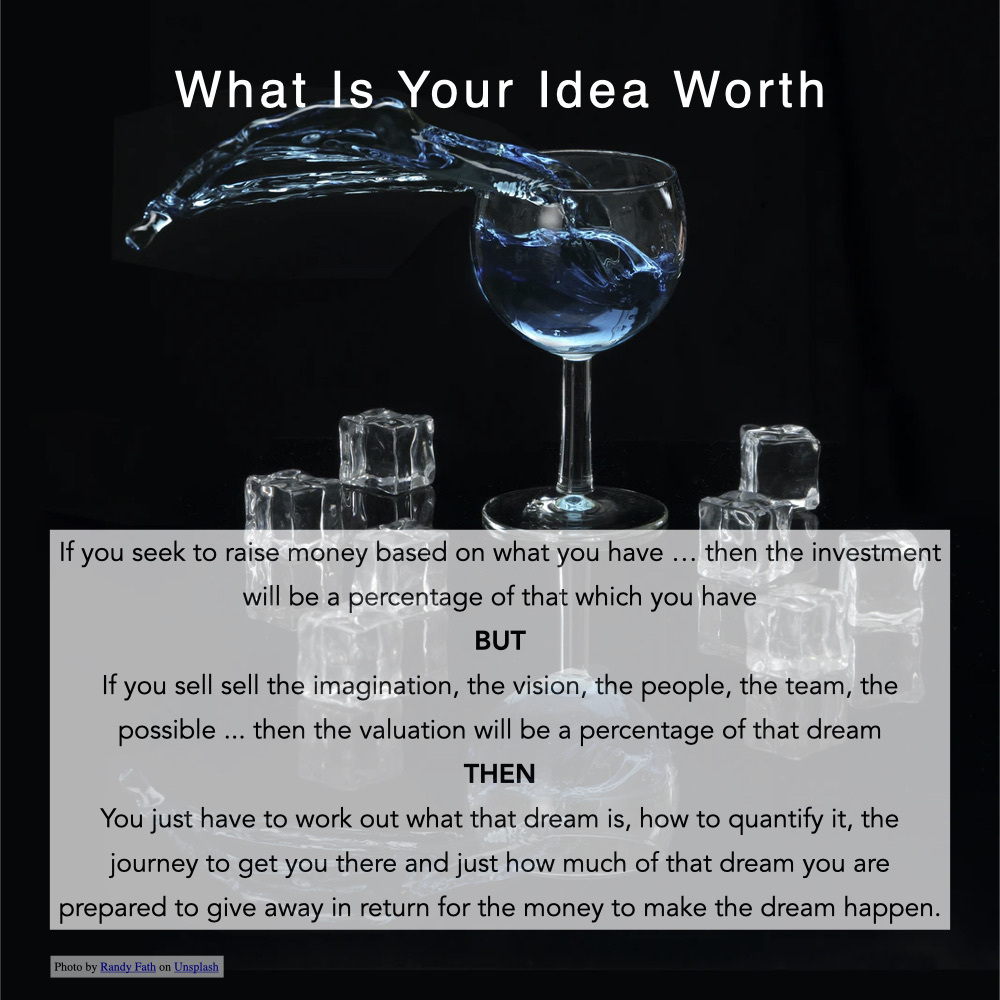
Of course it is. Andreesen Horowitz dropped a cool $10 million into their bank - and if they got 10% of the company for that deposit - then the company is valued at $100Million ... The 'V'in 'VC' stands for 'Voodoo'.
But still - nothing as to how they recoup that investment.
So How Do They Make Money?
No idea.
I lie. Lots of ideas ...
They will upload all your contacts to their servers.
They aren't recording - but they say nothing about scraping the conversation running it through AI and building a profile of you - after all - they know who you are - what you are saying - which groups you are in .... (and if don’t think they can dynamically and in real-time scrape and transform your spoken words into text - then clearly you have not seen Descript.
Of course - I have no idea if all this is happening, could happen, would happen - but just three months ago - Facebookers were up in arms after watching 'The Social Dilemma' and now here we go again - flocking like lemmings to become the latest product for Silicon Valley tech bros to use.
This is their privacy policy. Take a read, that policy doesn’t say anything about not being able to do all that I just described. In fact, it all but spells out that this is exactly what they are going to do. Also interesting that they keep it on 'Notion'.
Various people have said different versions of these words in the past - I like the one from Rounders ... that talks about if you cant spot the mark - you are the mark.
Maybe I'm wrong. Wouldn't be the first time .... but if I am - can someone tell me how they make money?
Clubhouse Articles
(I have ignored all the puff stuff from March and simply linking to December / January stuff - now that the honeymoon is over.)
Vanity Fair - The Murky World of Moderation on Clubhouse.
spoiler alert - what moderation?
Vogue - Everything You Need to Know About Clubhouse, the App Celebrities Are Flocking To.
spoiler alert - that 'celebrity access' is both a clue and the key.
Bloomberg - Private Social App Clubhouse Courts Fresh Controversy
One exception, Wired - back in May.
Wired - They aren't big fans.
Conclusion
No, I don’t know everything about what this app is setting out to do.
When that blog post came out, there were only two full time members of the team - the two founders. One is ex Pinterest. The other is ex Google. So nothing to worry about there. Right?
To my mind their 'Field of Dreams' approach - 'Build it and they will come' is working for them ... but at what cost to the people that join in. I've requested access - and sitting quietly waiting to hear back from someone. I am not going to push for access - I am just interested to see how long it actually takes.
Once in - I will be able to say more, but my initial thoughts are very much of a 'wait - haven't we been down this road before'?
Thinking Allowed
This is a People First post that was originally on the People First domain. It has been moved here as part of my domain consolidation program. It’s a steady and slow WIP as I check each entry, so do please bear with me.- More about People First
- Other People First Posts
(not just from the ‘other domain’ … all of them.)
My three words for 2021 …
- Transform
- Transition
- Transcend
What are your three words?
Thining aloud and sharing in parralel - thankyou for the inspiraiton Jeff O
#peoplefirst #humanity #humanityfirst
The damage has been proven, so why are we still on Facebook?
Now there’s a question.

Where Do You Work
A response to a recent newsletter. Specifically one where I explored Work Location. (You might want to click in and have a read to get the context.)
Sometimes people have a lot to say, but they don’t join into the dialogue - nor even make comments. I get it. I really do. Another post from an anonymous reader, this time answering something I wrote in a newsletter and again - reproduced with permission from the original writer.

Now, this is a subject that really gets to me!!
I have long argued that the biggest conflict in the world today is that between global and tribal politics. I have met anthropologists who maintain that the human-animal is basically tribal - pre-programmed by history, if not genetics, 'to want to belong'. They argue that this is at the root of all sorts of things we see today - including racism/xenophobia at the most serious level and, more prosaically, things like fashion fads, football fans, pop group mania, etc., at the daily level. However, there is, in my eyes at least, clear evidence of emerging subsets of humans who want to throw all that away in favour of seeing the world, and our species, holistically.
One rather crude indicator of this - a frequent topic in my Operations and Supply Chain Management consultancy and teaching - is the tension between global companies (not of all which are the spawn of the devil, planet-destroying, secret cabal members, but simply businesses whose raw materials, skill-base and customers cannot be defined by random, historical, “lines on the ground") and national Governments, most obviously over issues like differing tax regimes (and where it’s paid) and customs (import/export) processes.
Extend this to the individual with the option of working at very long distance from 'the office', and we see similar issues. Some 6 years ago, I did a piece of work for a Greek client, itself funded by the EU, whose direct customers were mainly from the new Eastern EU member states. HMRC was out of the traps like a top greyhound: within days I was in receipt of paperwork explaining what I needed to do to make sure that my work was taxed (and subject to National Insurance) 'here in the UK' (despite me NOT actually being in the UK), rather than in Greece. I presume the argument would be that we are a UK-registered company, I am a UK citizen and the education/experience that enabled me to win the contract were gained in the UK, some of it at University, at the taxpayer's expense. That’s fair enough. However, many of the people who would say “quite right too” are EXACTLY the same people who complain when a US company, say, elects not to be taxed in the UK on earnings made here. Yet, those companies are employing UK people, who pay (quiet a lot) of tax, when you take NI, VAT, duty etc., into account as well as direct PAYE, they are renting or buying UK property, and paying local tax on it, they are consuming UK products and services that create more jobs and tax, etc. If they moved all their operations out of the UK, would we win or lose? It’s not such an easy calculation as the 'red top fury' suggests.
So, back to your individual, living where (s)he wants to live but working for a company 'back home', or, in the extreme, in the economy that places the highest monetary value on her/his skills. Would (s)he pay tax in the country of residence, the country of origin, the country employment, or several of these? Would the value of the residence (shopping local tax, etc.) be offset against the value of direct employment taxation in deciding policy?
Or is this another nail in the coffin of nationalistic division?
Thinking Allowed
This is a People First post that was originally on the People First domain. It has been moved here as part of my domain consolidation program. It’s a steady and slow WIP as I check each entry, so do please bear with me.- More about People First
- Other People First Posts
(not just from the ‘other domain’ … all of them.)
Message From A 🎵 Musician
As a reader of this blog and newsletter or as a listener of my podcast - you know that I am a keen supporter of the broad category of ‘creative professional’ - and specifically ‘musician’. What follows are not my words, but those of a musician that wrote to me recently. Reproduced with their permission and names and venues changed/anonymized to ‘protect the vulnerable’.
I just got my first real paying gig since March 17 for Saturday December 26th. Meanwhile, due to an uptick in local COVID cases the county has announced that restaurants are to remain open, but no one allowed at the bar for the next 2 weeks.
By my calculation from today (Dec. 10), that takes us to December 25th. So, December 26th we will be back to normal?
After 9 months of ‘COVID communications with the owners of a local ‘hostelry’ - and having played there every Friday for over fourteen years, I have now experienced a full u-turn, so instead of returning to my Friday Afternoon slot - which they said “would be there for me whenever I was ready to return”, they have instead told me I will be “on call”, if they need a last minute substitute as ‘their schedule is booked full’.
I told them actually no …. no I won’t.
Beyond that, they are no longer paying what they used to - and that was never a lot to begin with!
The business (music AND the hostelry) has never been stacked with integrity, but this has to be a new low. Maybe to match the pay rates of the stand-ins?
Meanwhile on the other side of town, my Tuesday night gig (again over 14 years) has been taken over by a guy playing bass with a karaoke backing machine … in return for ‘a burger and a beer’ !!
The musician said “he did not want to steal my night” … funny - because he did. He could have said no. I guess the burger temptation was too great.
He was offered the gig by the owner because his belief was that I wouldn’t work for free. (Correct!).
I grew up in a Union town. I remember what those kinds of people were called.
I get it. I really do. I know the venues are struggling with finance like us all - musicians included - but if they can’t afford musicians - why bring them on at all?
If your business model is to offer live music - shouldn’t you pay for it?
And sure - I can hear the gallery calling down - you’ll make it up in tips.
With luck - but in reality - no.
So take a share of the profits of extra beer sold …. yeah - good luck with that! When THEY are doing well, YOU are on a fixed (low) fee - “make it up in tips”. But now they are down … well, you know how it goes.
As you know I’ve made my living as a full time musician and creative all of my life, so sad to reflect on COVID lessons;
loyalty - out of the window promises - not worth the paper they are written on dogs - they will eat dogs Don’t get me wrong, the competition is just getting ramped up. The number of musicians - in this area seems to be growing by the day - and I am pretty sure that the number of hostelries are reducing. (One of the biggest just 10 miles away has announced that it is closing for GOOD. )
Not sure how this is going to play out - but I stand with my belief that a business should only offer what it can afford - and the race to the bottom of price is not a race I am going to join in.
When I order Lobster, I don’t expect to eat it and then renegotiate the price - but that seems to be the life of the live performer.
Still - one door closes, another opens - I wonder what happens when two doors close!
Thinking Allowed
This is a People First post that was originally on the People First domain. It has been moved here as part of my domain consolidation program. It’s a steady and slow WIP as I check each entry, so do please bear with me.- More about People First
- Other People First Posts
(not just from the ‘other domain’ … all of them.)
I have been asked a number of times as to what - exactly - is People First. Last week my occasional co host turned the tables on me and asked me the same question.
And I answered him!


After last week’s newsletter, received a nice email that contained the following quote. Seemed appropriate.
“If you don’t think you can & believe you are not good enough, you are absolutely correct!”
Tom Conway (via Randall Rospond)