💬 QuoteWise
Still quotes - but quotes that emerge from my long history with a great little service call Readwise.
“Nothing you create is ultimately your own, yet all of it is you. Your imagination, it seems to me, is mostly an accidental dance between collected memory and influence, and is not intrinsic to you, rather it is a construction that awaits spiritual ignition.”
💬 Nick Cave
Never mind that Nevermind is called Nevermind - track 11 was called ‘On A Plain’
23rd in the series of #MBMay
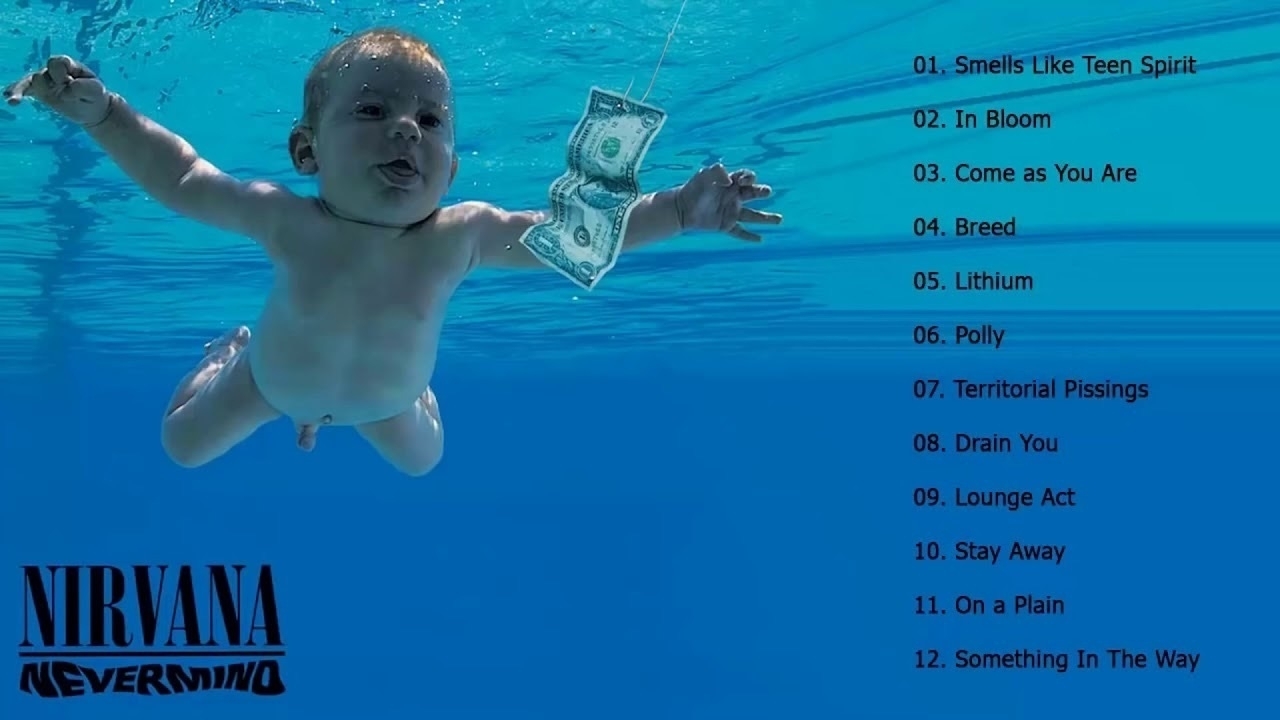
Photo; Nevermind Album Cover
Caveat: NONE of the photos in this series are mine, but when I know who to credit, I do.
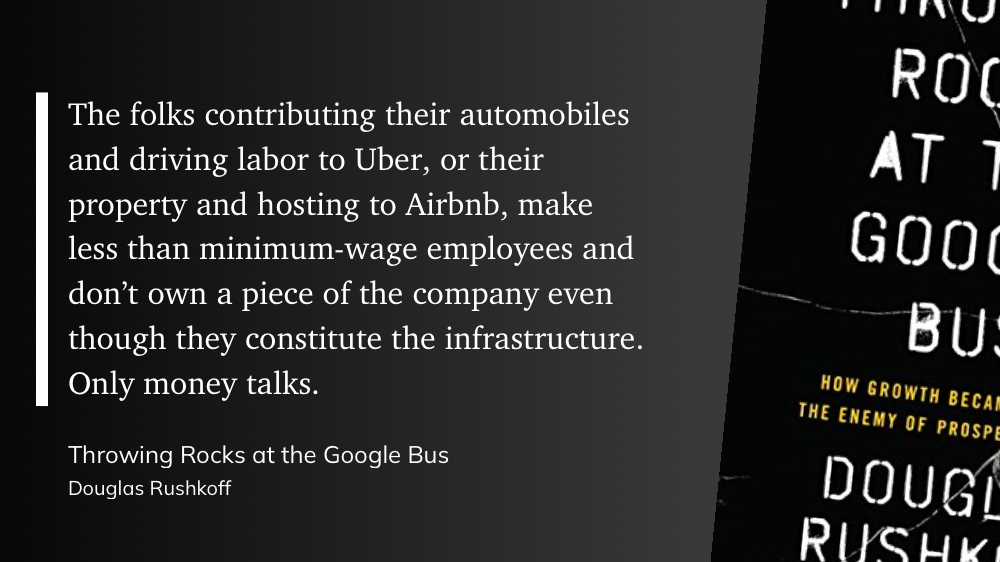
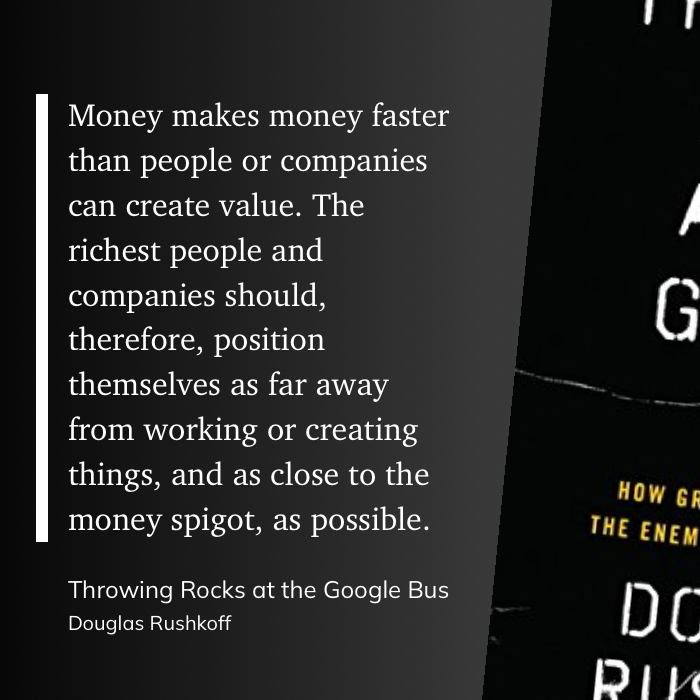
Been pointing this out for years - as has Rushkoff.
AND
Although we all know that ‘wealth’ is not generated from ‘hours worked’, this additional argument compounds the problem.
Apparently, it is not an ‘IGLOO’ cooler full of good drinks … it is a ….
wait for it ….

An Experience Kit!
If You Don't Add Value - Why Are You There?
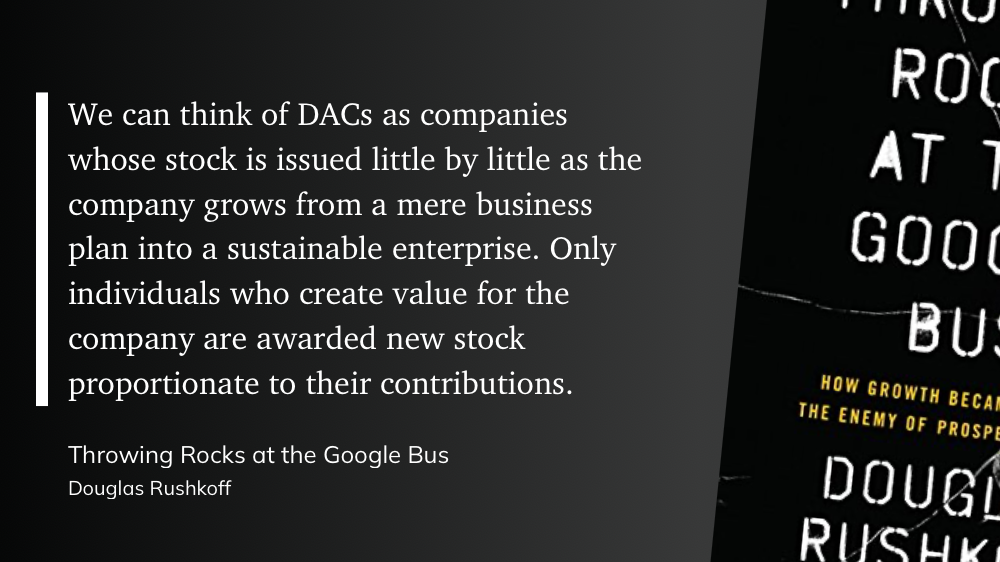
It is telling that someone like Doug Rushkoff can write these words;
Only individuals who create value for the company are awarded new stock proportionate to their contributions.
💬 Douglas Rushkoff
... without questioning the principle.
The corollary is of course that there are people that work inside a company that don't add value, which for yours truly is of course like a 'red rag to a bull' - because as the title of this post suggests, if you are employed by a company and not adding value to that company - then why are you there?
Stakeholder capitalism (apparently) 'solves' the problem.
‘Stakeholder capitalism’ is the buzzword du jour for business practices that strive to achieve more than profits and a high stock price.
💬 McKinsey
If you want to read more - you can:
Putting stakeholder capitalism into practice.
To be fair, the idea of 'Stakeholder Capitalism' has been around for several decades, although who actually coined the term is up for debate, with names including Klaus Schwab (Founder and Executive Chairman of the World Economic Forum), Peter Drucker and Tom Peters.
Still wondering? This is not a bad primer.
So yes - it is not a new idea - it's just that as the world's conversation is moving into fairness and equality, as we see a (kind of) resurgence of Unions and as 'capitalists' are pushed into the corner of 'defending their position' ... the term is emerging and arguably being positioned as the logical next step for a 'sustainable economy'.
I wrote about this over three years ago when I shared a Ted Talk from Nick Hanauer. Today, that video has had over 5 million views. At the point of 'first discovery', I had not heard of Nick - but as I pointed out, the principles of what he was talking about are engrained in People First thinking.
Today, you can hear the same language when people talk about DAOs in the world of 'Web3' and quite a few other places.
But then many steps before 'Stakeholder Capitalism', there was something called 'The Cooperative Movement' which got its start in 1844 in Rochdale a small town in Lancashire, England.
So far, I have not read anything that clearly articulates the distinction between Stakeholder Capitalism and Cooperatives and which and why each might be better or worse than the other. Sometimes I wonder if 'cooperative' is too 'radical' in this world - so we keep inventing new words to describe the same thing.
I have always liked the New Values/Old Values - New Power/Old Power model originally developed by Jeremy Heimans and Henry Timms nearly ten years ago.
So, picking on a random target company like Uber, which despite hanging its hat on 'the sharing economy' is actually 💯 an 'old thinking' capitalist company.
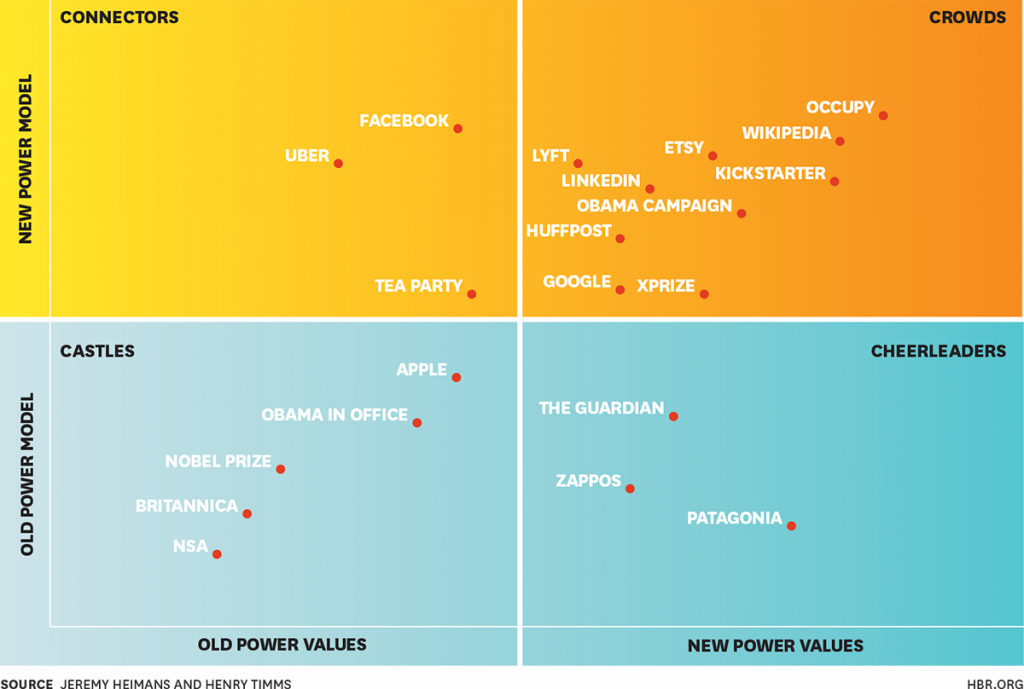
Now consider a company called ATX Coop Taxi - a cooperative taxi service based in Austin that has been around for over 5 years. NO - they aren't as well known - but their service is a 'cooperative'.
The question is why hasn’t it taken off?
That is for another time.
The Four Natural Forces Applied To Business
I used the 4 natural forces model in my 📚recent book as an analogy for the 4 forces of humanity.
And then I read that 🔗 Fermilab has found a discrepancy with the mass of the W boson.
“The current 'standard model' of particle physics describes four fundamental forces. Three of those — electromagnetism, gravity and the strong nuclear force — push or pull things, broadly speaking. The fourth force — the weak nuclear force — doesn't really push or pull anything. Instead it makes one type of particle transform into another type of particle. In doing so we get the force responsible for radiation, and it's the force that drives nuclear fusion in the sun. So it's quite important.”
I’ll say it’s important. Now I will have to revisit some of the thinking in the book!