🔗 Agentic swarms are an org-chart delusion
If you believe the future is agent management, you’ll build tools for orchestrating fleets of specialized bots. You’ll create dashboards for monitoring your marketing agent separately from your sales agent separately from your dev agent. You’ll recreate Salesforce, but for robots.
If you believe the future is unified execution, you’ll build tools that let one person express intent and get outcomes across every domain from a single surface. The interface collapses. The abstraction layers disappear. You don’t manage agents any more than you manage the individual transistors in your laptop.
I need to revisit - I mean she’s talking org charts.
🔗 Careers are jungle gyms, not ladders
Real careers look more like jungle gyms. You climb up, move sideways, drop down, hang upside down for a while, and sometimes jump across to something new entirely. Progress isn’t measured only by elevation, but by agility, strength, and perspective. The value comes from how many dimensions you can move in, not just how high you can go.
💬 Guy Kawasaki
There’s a disclaimer you see everywhere in investment materials:
“Past performance is not indicative of future results.”
It protects against pattern-matching gone wrong - that is the assumption that tomorrow will look like yesterday because yesterday’s data was consistent.
In tech we don’t have such a disclaimer. But we might well need one. Because as AI increasingly takes hold, the pundits are taking to referencing history:

“The printing press in the 1440s freed information.”
.. it went from scarce and controlled to everywhere. The Catholic Church wasn’t happy. Wars were fought. But society restructured around it. Literacy exploded. New professions emerged. The world absorbed it.
**They forget to mention the timescale. **The press was invented, then the first Bible printed 15 years later. Another 50 years to spread across just Europe. A full 160 years before it finally fuelled the Reformation.
During the Industrial Revolution around the 17th to 18th century - people moved from farms to factories. Labour patterns inverted. Social structures shattered and rebuilt. Real upheaval. But wages eventually rose. Living standards improved. The world kept going.
History reminds us that the steam engine first appeared in 1712 with another 40 years passing before James Watt refines it for rotary power and another 50 years to get to the first steam locomotive.
Well - how about electricity - it arrived in the late 19th century, transforming production, communication, daily life simultaneously. Changed when people worked, how they lived, what was possible. Massive disruption. Fundamental restructuring. But humans found new equilibrium. The world was okay.
Again. Timescale … 40 years from Faraday’s dynamo to the first light bulb. The first power station served 60 customers. A full 70 years passed before the first 50 per cent of America was electrified.
So wheb the pundits say: this AI stuff. We’ve been through it all before. We’ll be fine. We’ll be resilient.
Suddenly that disclaimer rears its head.
Because this time it is different.
Faster – Previous disruptions took generations to fully absorb. This one is compressing years into months.
Affects everyone – The printing press needed readers. Factories needed workers. Electricity needed infrastructure. AI doesn’t require permission or literacy and it’s already everywhere.
Global – There’s no frontier to escape to. No place where the old rules still apply. No opt-out.
It learns from us. Then from itself. – The printing press was static. A combine harvester does one thing. But this? It learns from what you feed it, then uses that to improve itself, then learns from those improvements. The loop closes. The tool gets smarter while you’re still figuring out how to use it.
Nobody actually knows how it works. – You can understand a printing press. You can understand a combine harvester. Even the people building those things grasped the mechanics. But AI? Not even the engineers building it can fully explain why it makes the decisions it makes. You’re delegating thinking to something you don’t understand.
It’s adaptive. – Every other technology was fundamentally the same yesterday as today. This one changes. Morphs. Responds. You can’t treat it as a fixed tool because it isn’t.
One More Thing
Previous disruptions changed what humans did.
This one changes what humans think.
The problem is in my positioning function. It’s setting inline styles that override the CSS, breaking the show/hide logic.
💬 Claude
Claude finally taking responsibility … time was when ‘my’ would have read ‘your’
Found it! The path calculation is wrong. The issue is with how we’re counting the depth.
Claude … ‘we’re’ not counting the depth - that’s all you baby!
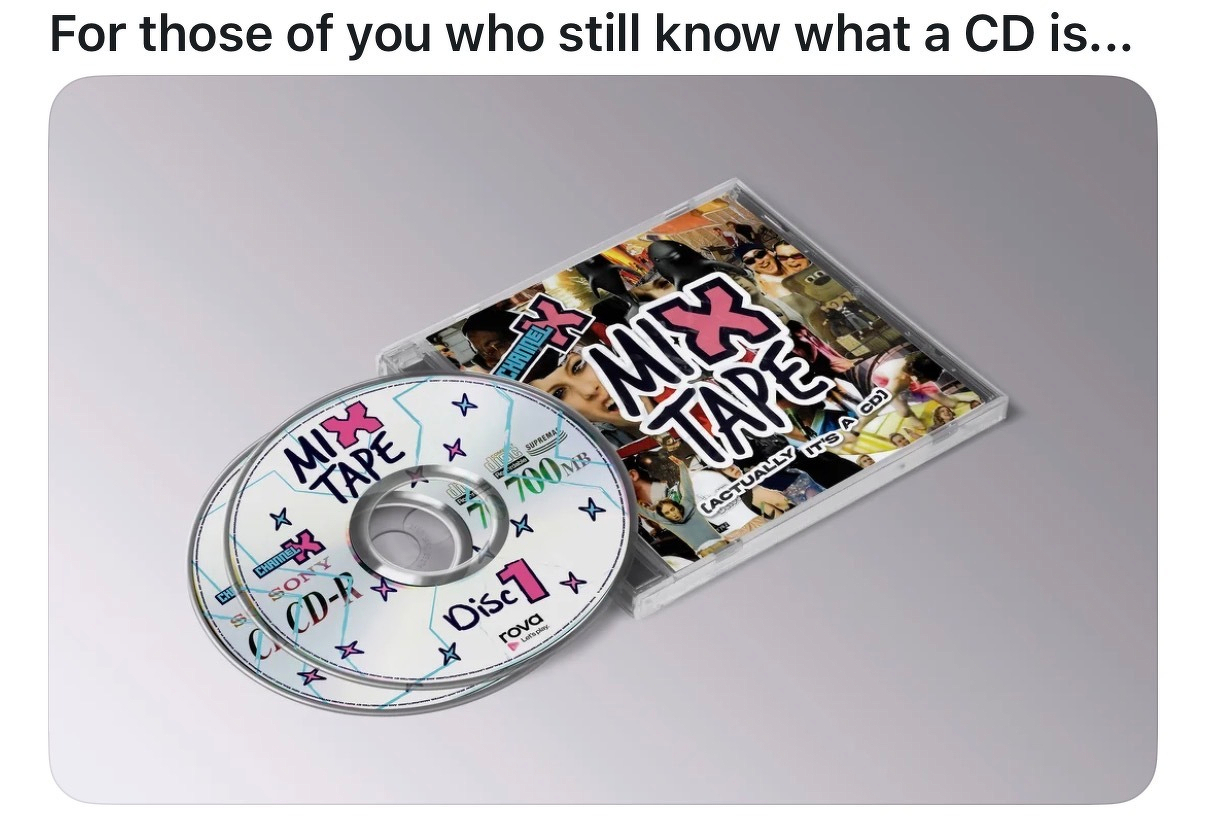
Meanwhile over on Reditt - clear indication that tapes and CDs are easily confused.
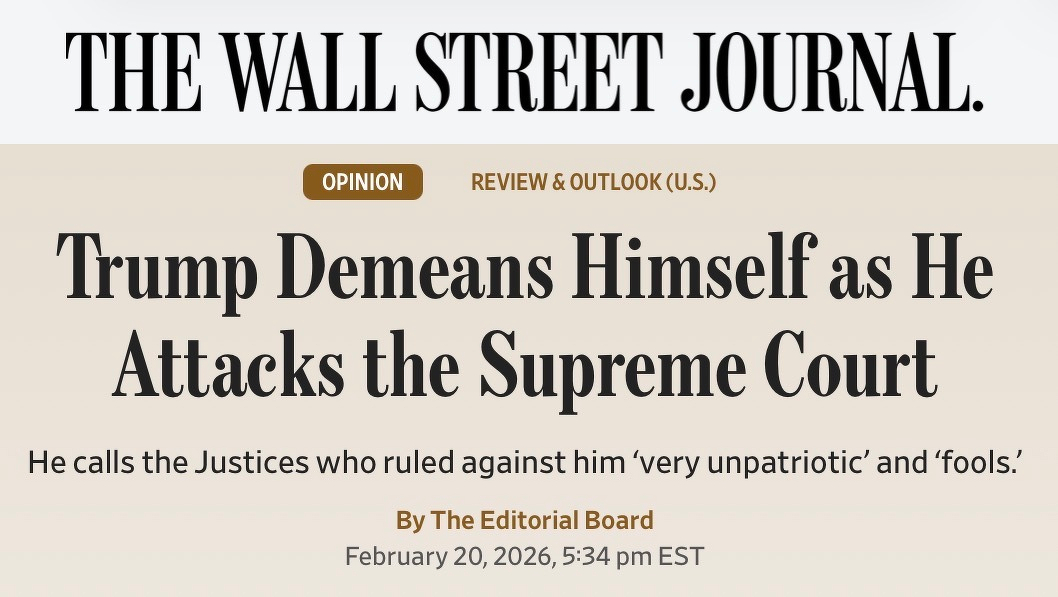
Demeans himself❓That’s his modus operandi.
In case you were wondering where this …
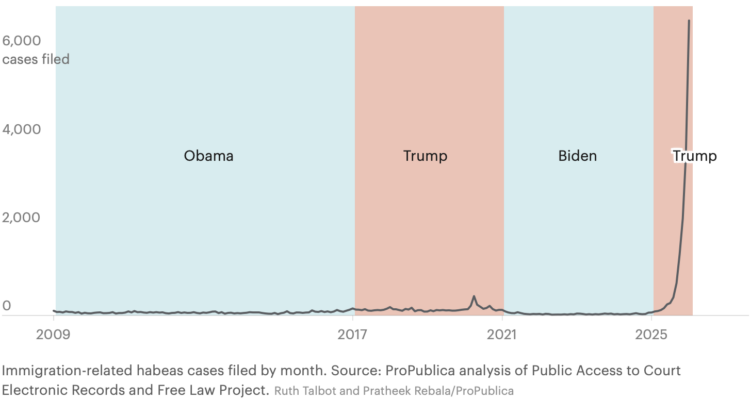
… came from. It came from here:
🔗 Immigrants challenging their detention in historic number of cases
✅ The good news is that I got FreshRSS working - proven - downloading - very happy with myself in all honesty.
❌ The bad news - the maintenance and set up side is definitely not for the amateur. Kinda up there with running your own mail server.
Back to iCloud for now - and then eventually back to Feedbin I think.
Unless the cognoscenti has other thoughts?
at anthropic we are starting to see accounts spending hundreds of thousands of dollars per month on tokens.
🤯
Here’s a funny thing … now there’s a funny thing
💬 Max Miller
Did a back up of my micro blog and I am told that the oldest post in the back up is from 2017 … I open the blog in Mars Edit and I see posts going back to 2005.
Thoughts as to why the discrepancy?
// @manton
@danielpunkass - is the Mars Edit view simply reflecting what is ‘up there’ - or is there a copy on my drive somewhere?
How Long Does It Take❓
Not long .. apparently.
Well look at that - time flies when you are having fun.
Well look at that - time flies when you are having fun.
‘First’ there was Today … and then there was ‘Current’ .. and downloaded both today - despite already using Reeder and NetNewsWire from @brentsimmons and Feedland from @dave and Readwise (though not quite the same I agree.) - and let’s not forget the next one coming in from @manton
Exporting and importing OPML files twixt them all is a fun way to spend an afternoon - but wouldn’t it be so much easier if I just had a single OPML file that all the apps talked to?
Is that too hard?
This seems to be on pace with my recent conclusions following reading that (I paraphrase - my bold) ..
The market intelligence market was valued at USD 12.1 billion in 2024 and is expected to reach USD 21.4 billion by 2031, growing at a CAGR of 8.2% The market is consolidating around value-add - not just raw data, but curated, contextualised intelligence delivered into existing workflows.
That’s exactly right. It’s like SAAS horizontal plays losing to highly focussed vertical plays. The same is happening with ‘information and intelligence’. Thats what we are doing.
Anybody exploring 🔗 Birdy Chat?
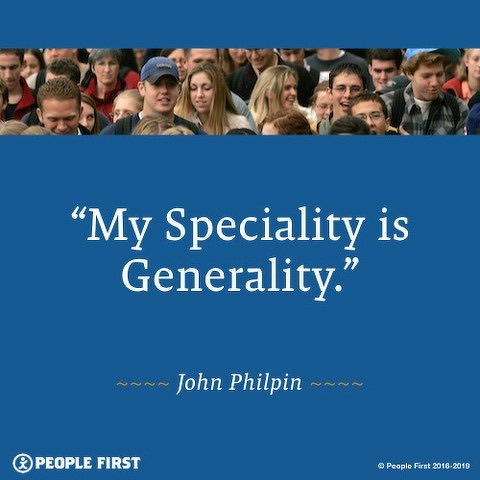
ð Expert Generalists
“We are thus starting to explicitly recognize this as a first-class skill of âExpert Generalistâ.”
ð¬ Martin Fowler
Not a new message - I have been reading it over and over for a long time - even before âAIâ.
Why? Because it is really about the increased fractionalisation of work - so that the tech overlords can better harvest human skills in order to codify, automate and âremove the human from the… john.philpin.com/2026/02/1…