
🖋️ LongForm
Want to reduce the noice and just focus on things with a little more meat - the this category is for you. Like so much on this site we have a ‘WIP’ as i take some out - and put some in - but safe for at least starting in 2026.
🖋️ It's Fractal
Reflections on fractal communications - a very old idea - and its cropping up again as I am developing a very new idea - and even I hadn’t connected the dots.
Similar Thinking. Different Thoughts.
The post opens with a position on SaaS platforms moving towards context-as-a-service (CaaS) from Scott Brinker. I question marketing strategies for the ;age of experience’ - built on outdated systems from the ‘age of reason’. (Not to mention that Caas is to my mind up an entirely different pole.)
My Wiki is Really Coming Together
Significant progress made on my Structured Thought Wiki thanks to Claude - transforming it from numerous stubs into a more complete site with 193 pages, aided by Claude’s contributions in both content and design.
You (Should) Say Goodbye - I (Definitely) Say Hello
A short (ish) reminder of the ongoing and necessary shift from old marketing principles that evolved when the vendor was in charge to new principles - which focus on engagement and experience - because the customer is now in charge.
I Agree With ‘The Call’. I Totally Disagree With What That Means
As a regular reader of Scott’s newsletter, I opened this one in eager anticipation because he seemed to be making the same observations as I have been over the last couple of years … but I was wrong.
🔗 Engagement Platforms as Coherence Infrastructure

A slight restructure of this post - and so a reissue.
Chris Best, CEO of Substack Wrote To Me
A security incident at Substack resulted in unauthorised access to users' email addresses and limited data, prompting an apology and assurance of improved protections. Before we get to that though - I have a couple of questions. Well one actually.
Pace Layers - Redux
Climbing the ‘pace layers’ leads to fewer and more specialized sources of information.
How Early Adopters Fall Behind
My thesis : In the late 80s, the slow adoption of computers and email outside of Oracle whilst annoying (at least to me) - also resulted in the fast adoption in the PC revolution - that Oracle was totally unprepared for and was left behind on.
Back On To Content Again.
Chris Lockhead posted 🔗 this on LinkedIN
It’s LinkedIn oatmeal.
Chris is right, so I replied:
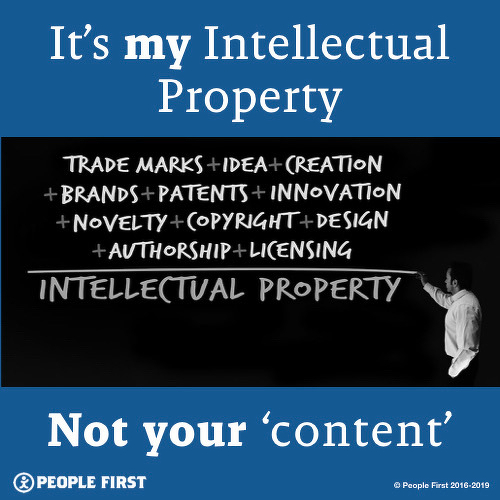
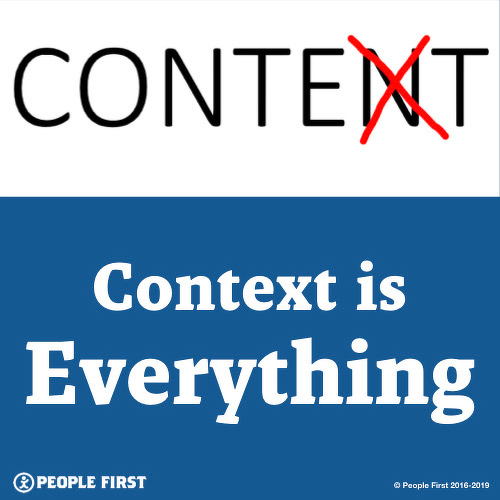
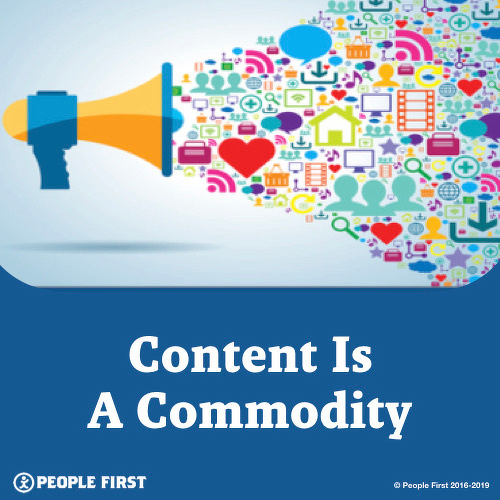
Content is homogenous, undifferentiated and fully interchangeable with any other content - like any other ‘grain’ that sits in a silo.
- Can you really tell one grain of wheat from another?
- Is your post/comment really interchangeable with every one else’s?
If so - content it is. If not - guess what - it is not content. So don’t call it content.
Content is a horrible, generic, cheap, ‘anything will do’ kind of word and so - like a grain of wheat - any individual piece of ‘content’ has no value. The value is in the total silo.
It is also important to know that it is in the best interests of the ‘buyers’ (I use the term loosely) of our sweat, labour, thought and time to create our IP - to keep their costs down. So, content is what THEY will continue to call it. Don’t fall into that trap.
Our costs are not kept down. Our net earnings do suffer. They are suffering badly.
Oh - and a quick reminder - been saying this for years. As have others - like 🖇️ Will Arnett talking to Dana Gould



C3 Ain't What It Used To Be - More Rebrands than ~~Facebook~~ Meta.
C3.AI, founded by tech industry veteran Thomas Siebel, is in talks to merge with privately held startup Automation Anywhere being reported by The Information.
Which got me to thinking - C3 is a dot ‘ai’? When did that happen?
The Tyranny of the Town Square
We’re self-censoring into vanilla mediocrity, It’s destroying everything - and I do mean everything.
And when they don't, we judge competence, take it personally, make assumptions, or shut down.
Guilty as charged. Going to try harder.
Exploring The New Claude PlugIN For Chrome
Cough - is it in fact ‘new’?
Anyway - installed and popped over to a local banking site here in New Zealand and asked Claude ‘what the strategic imperatives of the business at that page are … It built a plan and asked me to approve - I did - no modifications …
Guilty? Surely Not? A Quick Chat With Claude.
🔗 The Redacted Smith Transcript
So I 🔗 asked Claude a simple question …
Please only consider this document and no other information. Bottom line - if you were the judge - would you find the defendant guilty or innocent. If guilty - on what counts. For each of those counts - What SHOULD the punishment be, what would the punishment be and what could the punishment be. Please keep succinct.
Spring Cleaning
Still To Do
On the Blog
-
Categories: Remove category ‘LongForm’ from Film Review Posts
-
CSS: Simple Recent Posts - finish styling
-
CSS: On a phone close up ‘spaces’ on home page
-
CSS: Sort all home page blog styling
-
CSS: Get the bullets back
-
Functionality - Add the ‘Replies’ page back ❓
-
Functionality - Second Archive Page to pull entire Archive
- going to need JSON/Micro.Blog Help
-
Import My Instagram. It is time.
-
Import The ‘Quotespace’ Blog. (Troubleshooting)
-
Search - resolve PageFind, @sod search, categories, archive et al - way too confusin
Its Decision Time
Navigating the natural conflict between disruption and patience is essential. Responding to each at the right time is one of life’s greatest challenges.
Org Charts: Why They Are Wrong
Let me count the ways - but for now a short primer ….
Wrong - In What They Are
-
A static snapshot in a dynamic system - Org charts freeze people in place, in a world that’s fluid, adaptive, and always in motion.
-
An illusion of control - They suggest neat lines of authority, when actual influence flows in networks, whispers, and Slack threads.
-
A power fantasy - Designed more to reassure executives than to reflect how things really work on the ground.
Wrong - In How They Are
-
Too hierarchical, too linear - Most charts resemble military command structures in an age that demands collaboration and cross-functionality.
-
Built top-down, not inside-out - They reflect formal reporting lines, not value creation, lived relationships, or trust pathways.
-
Exclusionary by design - Contractors, advisors, ecosystem partners, AI tools? Nowhere to be seen, yet often critical to delivery.
Wrong - In the Information They Contain
-
Titles ≠ capability - Job labels are vague proxies. They reveal little about what someone is great at, trusted for, or actually doing.
-
Missing the real flows - No view of how decisions are made, who connects teams, or where knowledge is hoarded vs. shared.
-
Performance blind - They say nothing about value contribution, outcomes, energy, or momentum.
Wrong - In How Work Is Understood
-
They reduce people to boxes - And forget that work is a web of conversations, motivations, tensions, experiments, and progress.
-
Ignore emergence and adaptability - Real work happens across silos, shaped by informal leaders, not always those in bold font.
-
Reinforce outdated logic - Built for predictability and scale, when today’s work is about learning, iterating, and adjusting on the fly.
The Fractalisation of Work
To understand how the fractalisation of work (doesn’t) work - consider ‘the taxi’, the definition of which is in the process of being redefined as a personalised vehicle that will take you for a to b.
That continues - BUT … it also used to be a place for …
-
Human conversation - spontaneously - about local gossip, life advice, or even silence. And all without algorithmsmonitoring sentiment.
-
A helping hand, someone who’d load your luggage, not because it was required, but because that’s what people do.
-
Navigation expertise by someone who knows the backstreets better than GPS, and magically avoid traffic lines.
-
The ‘welcome committee’, offering recommendations for where to eat, what to avoid, and how to make the most of your stay.
-
An interpreter or cultural guide, especially in unfamiliar cities or countries, bridging gaps in language and local norms.
-
A protector that waited until you got safely inside your home or hotel before driving off.
-
A confidant that listens to everything from your job woes to relationship breakdowns .. no subscription required.
-
A fixture of community memory in the form of a driver who knew your parents, remembered your last trip and asked after your kids.
-
A micro-economy participant, in that they often owned their vehicle, had real agency over hours, routes, pricing, and long-term plans and what they earned was part of the local economy where they plied their trade - no profits siphon off and extracted to the banks of the ride share company.
-
A professional, who knows that the job isn’t just driving, but care, awareness, and service - all wrapped in experience.