
🖋️ LongForm
Want to reduce the noice and just focus on things with a little more meat - the this category is for you. Like so much on this site we have a ‘WIP’ as i take some out - and put some in - but safe for at least starting in 2026.
Time
Being of a certain generation … the existence of The Berlin Wall is very much part of the DNA of my memory. (Berlin itself - not so much … though I had reason to be in Berlin shortly after the fall of the wall.)
The Berlin Wall has been gone for longer than it existed, Deutsche Welle reported on Monday.
The wall was constructed in 1961 and kept Germans in the eastern side of the city from fleeing to the west after 3.5 million had left following World War II. It was up for 28 years, two months and 27 days.
Hard to believe that more time has passed since then than the very existence of that edifice (if that word is not too ‘honorary’ of such an abomination).
John Philpin
Two John Philpin’s? It might get confusing.
Yes we have talked on the phone
Yes we are related (we think)
🖇️ This is one of my philpin sites
This was originally posted to my 1999 stream, which after importing from 1999. seemed to get ‘upset’. So I have moved it here and deleted it there to fix the problem.
Originally posted on ‘river.beyondbridges.net’ : April, 2017
🎵 Martyn On Monday
Reminded of this today …
A live BBC recording from his Solid Air album.
John was never classified in the prog genre - quite rightly … but I definitely think there are some influences.
Vellum
Does anyone have any knowledge / experience / thoughts about Vellum?
##Later
Now - that is really interesting …
Vellum is a free download. You can use Vellum to import your manuscript, explore Book Styles, and see how your book will appear on a variety of devices. A purchase is only necessary when you’re ready to generate books.
Personalized E-mails Should Be .. Well .. Personalized!
There must be something about me at this time of the year .. apparently I first signed up with IFTTT six years ago! They even sent me a ‘happy birthday’ message this morning …
It’s been six years since you joined IFTTT on February 6, 2012.
… and then tried to give me some guidance on using the service more with some recommendations.
I have to say the 4 applets that they picked for me were neither relevant, interesting, clever or even unknown … you would have thought that with all the triggers and tracking that they have behind the scenes that they could have done a lot better with their personal recommendations.
For example they know the services I have connected to, how often my applets get triggered, how long they have been there … which is a clue to where I spend time, what I do and where my interests lie.
Moving My 1999 Posts to Micro.Blog
I have linked my 1999 site into Micro.Blog - so that if I publish something on River.BeyondBridges.net … the post finds it’s way into my Micro.Blog timeline.
So far so good.
Now what I want to do is pull all of the historical posts that are there into here (the public facing side of my Micro.Blog)
In other words …
A one off import of all the content at My River to John DOT Philpin
Onwards - I know there is help to be had somewhere.
David Does David
Just watch
It will take five minutes and 24 seconds of your day.
**File Under ** Just Great 🎵
Good Grief
sometimes - you just have to wonder ….
Hundreds of top-secret and highly classified cabinet documents have been obtained by the ABC following an extraordinary breach of national security.
Click through if you want to see the story of how this came to be.
Consolation prize
I guess we should be happy that government ineptitude is not limited to the USA and the UK!
Last Night’s Supermoon Eclipse.
Well … I got up. I looked. I watched. I waited.
Pretty amazing … although you wouldn’t think so based on the photos!


Micro Blog Safely Delivering A Post To Wordpress
This is a specific post - with a specific reason.
The specifics relate to using this plug in on one of my wordpress blogs - thankyou for the link @manton
The idea is that this post gets fed through to And Another Thing. When it arrives it will be classed as ‘Pending’ - so as not to inundate the readers at And Another Thing.
I will then visit the site later today and publish the post and .. if it works, the plug in will add in a footer to this post .. and it will appear there.
If it does - I will come back here and add the link to the experiment.
Fingers crossed!
Later
It worked - and now have a nice workflow that starts with Mars Edit from [@danielpunkass](https://micro.blog/danielpunkass) and the team at **Red Sweater**, that allows me to publish to Micro.Blog (of course from [@manton](https://micro.blog/manton)) and through the power of a Wordpress plugin developed and offered by [@michal](https://micro.blog/michal) that post is routed to [And Another Thing](http://www.andanotherthing.co) where it is held in Pending mode.I can then periodically check and delete the irrelvant posts (all irreverent posts will be allowed) and tweak with some tagging and other tuning for that site before it gets published.
The plugin allows me to append the message with a standard footer, so a reader can also register for the occasional newsletter and/or click on a link to see other posts that arrived on the site in this way.
Next - clean up the Newsletter flow and then add this functionality into my other blogs. (Don’t ask).
Shop Class as Soulcraft
I captured the following information on this 📚 somewhere ( maybe even here ). I haven’t read it - but it is on my list. I like the look of it. It seems to have a Zen and the Art of Motorcycle Maintenance feel to it and right in line with the work I am doing here. Has anyone read it? Recommend it?
A book that I loved reading that provides insights here is “Shop Class as Soulcraft.” It’s an inquiry into the nature and depth of cognition and levels of expertise and experience at play in work that society under values (for example, motorcycle mechanic).
Steven Wilson
File Under : 🎵
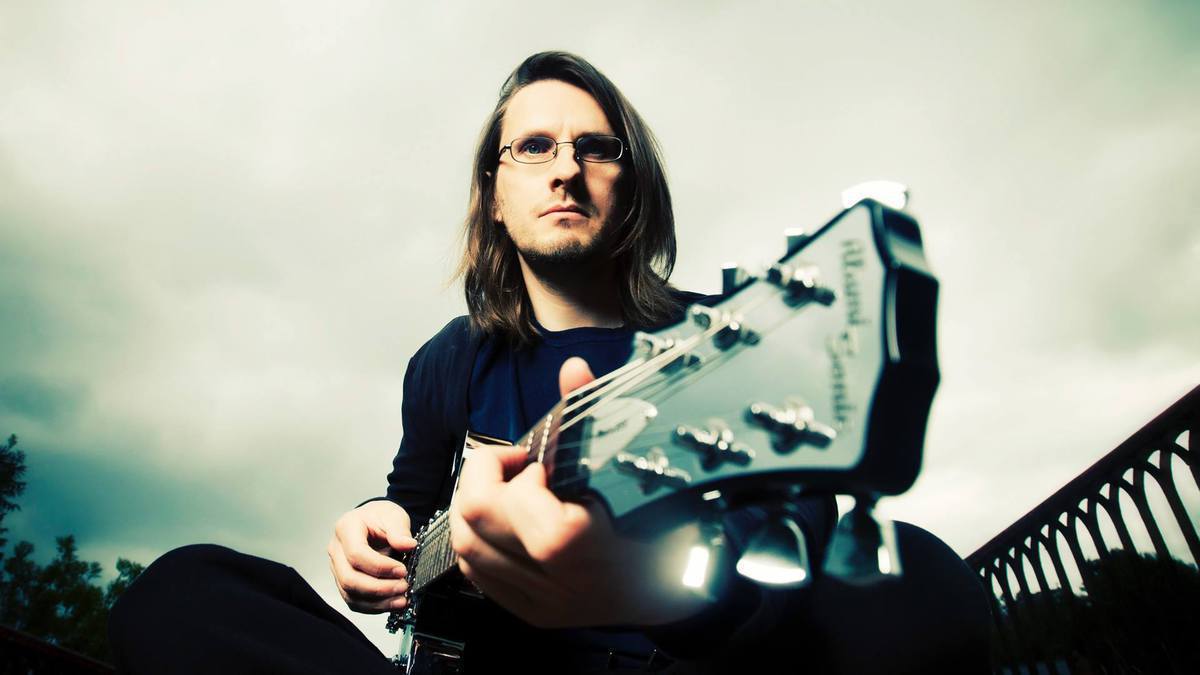
Over the past ten days I have dropped a daily entry of an image, with a comment into the music feed. This is the eleventh in the series of ten (doffing cap to Spike Milligan) that provides some context - and links back - to those entries. Suffice to say - I class Steven Wilson as one of the most prolific musicians and sound engineers that we have ever seen. It isn’t just the quantity - surely bands like The Dead and Phish can beat him on that count … but more the quantity with the both quality and variety of what he produces.
It was late 2002 when a good friend put me onto a new album that had just been released - he’s one of those guys that when he says listen to this … you listen. The Album was In Abstentia that came from a band that I had never heard of …. Porcupine Tree. The band’s creative force was a guy called Steven Wilson. Turned out that this was Porcupine Tree’s seventh album (depending on how you count them - and how you think of the Tree) …. but that was a lot of music to have passed me by - particularly since I loved it. Needless to say - I went into the back catalogue and discovered two albums that I liked even more … Signify and Lightbulb Sun. File under Progressive Rock / Psychedelic Rock / Alt Rock / Post-Progressive / Metal
But there was more, before - and during ‘The Porcupine Tree Years’ - Wilson had another band No-Man with Tim Bowness. To be clear, I am not a massive fan of No-Man … just amazed that in parallel with launching a solo project (Porcupine Tree - because that is how he started), he had the time and desire to create a second totally different sound, band and direction. File under Ambient / Art Rock / Dream Pop
But there’s even more, two years after I was introduced to In Abstentia - out comes Wilson with another project …. Blackfield - this was (is?) a collaboration with Israeli rock star Aviv Geffen … 5 albums to date - love everyone one of them. File under Art Rock / Power Pop / Alt Rock
It took until 2012 for another collaboration to be formalized. For many years Wilson and Mikael Åkerfeldt - who is essentially Opeth’s Wilson - had been friends, worked together and appeared on each others albums. 2012 saw the release of their first - and to date only - formal collaboration - Storm Corrosion. File under Metal / Progressive Rock
I doubt we will get a second - but you never know - because Wilson just keeps going …
Consider IEM - another of his projects in the late 90s - this time with … well himself … file these albums under Krautrock / Pysychedelic
Or Bass Communion -file under Ambient / Drone / Electronic
To my mind, it is his solo career that has really opened him out. He released his 5th, 6th or 7th (again - it is is how you count) solo album last year - and is now on tour with it. But his full creative genius absolutely shines with the one ‘before’ that … Hand.Cannot.Erase. - that wasn’t just an album, it was a book, an experience a tangible engagement was created to engage the listener.
My music collection tells me that I have over 50 of his recordings across all of these projects - and that doesn’t include the 5.1 surround sound mixes he has been doing since 2009 for classic Progressive bands including Yes, Jethro Tull, King Crimson, Caravan, ELP, Marillion, Rush, Roxy Music, … oh and Hawkwind, XTC, Gentle Giant, and Tears For Fears. (BTW - he hasn’t won yet - but has been nominated 4 times for Best Surround Sound Album in the Grammies)
All in all - safe to say - when it comes to music - there isn’t much he doesn’t do
Note : the classification / genres that I have used above come from Wikipedia with odd personal extensions
Finally, Wilson is on record (if you will pardon the pun) that as a kid he listened a lot to Dark Side Of The Moon - because of his dad and Donna Summer - because of his mum … certainly explains a lot of the crossover you see in his music … but it doesn’t explain this … which has nothig to do with him - but somehow seems related!
Informed Consent
A question raised recently, that ‘everyone’ should be able to answer …
How do you make a judgement about what is safe to do online?
Good question. But I specifically put ‘everyone’ in quote marks because I worry about ‘everyone’. I worry that given that people generally do nothing to protect their passwords … think yellow stickies on monitors, using thr same password across all services, sharing your password(s) with friends … however you look at it - whatever you do …. if that is hard to understand - we have an uphill battle with ’Informed Consent’
Discovery
Discover Suggestion for @macgenie …. how about an index somewhere (another icon?) of all blogs that have achieved Micro Monday Status … they will be blogs that someone in the community at some point thought worthy of promotion and therefore contain good things that others might enjoy … and will always be discoverable - long after they have passed through the recommended stream of Micro Monday - and so possibly lost?
The Homepod
Apple Homepod Review By An Audio Engineer
##The Songs He Used
- “Hotel California” by The Eagles.
- “Way Down We Go” by Kaleo.
- “Lie To Me” by Depeche Mode.
- “Fitzpleasure” by Alt-J
- “Black Mambo” by Glass Animals
- “Delilah” by Florence and the Machine
- “Hallelujah” by Jeff Buckley
🎵
Artists Start To Get Paid A Bit More
“A federal copyright board has raised the music streaming royalties for songwriters and music publishers by more than 40% to narrow the financial divide separating them from recording labels.
Up to this point, music streaming platforms like Apple Music, Spotify, Amazon Music Unlimited, Pandora, and others, have had to pay out 10.5 percent of their revenue to music publishers and songwriters. Now, though, after the court ruling, those platforms will need to fork over 15.1 percent of their revenue.
It is still amazing to me how little artists get paid for streaming. While this is a step forward … it is a long way form being fair. Afterall, people complain about the Tax on the app store at 30% - and yet a tax of 90% being reduced to 85% percent for music makes the news and is seen as acceptable.
What am I missing?
🎵


It's People That Make A Company.
Got to tell you … @Manton at 🔗 Micro Blog rocks.
For a variety of reasons I have posted trouble tickets to 4 different companies today (Is it me? Really? Say It Ain’t So!)
Pretty sure that Manton is the smallest of the four operations … but that didn’t stop him from being not just the first to respond, but the only one thus far that has even offered me a solution to fix the problems described. (Manton actually fixed it.) In fact two of them have yet to respond.
If you are reading this … and wondering what the hell Micro.Blog is … well ping me and let me know. I have some spare invite codes that will get you in. You won’t regret it.
Sunlit - Straight Out Of The Box Observations And Comments
I am running the beta of Sunlit (thankyou @manton).
I have done two posts so far ….
… Which is pretty simple really - adding a picture, dropping in some text - it’s like a post - which I can already do in the core app.
BUT
I think what Sunlit is really about is ‘telling visual stories’ - in fact in the interface, it actually uses that term, so I took three pictures out of my library and wrote a story … (don’t worry - I am not expecting an award!)
So far so good - but here are the issues
- That layout doesn’t naturally come out of Sunlit - I had to come back to my post once published and edit to get the order of the photos organized - and then move my text around to relate the text to the story.
- This might be ‘operator error’ … So just recording this thought for now.
- Also - on the single post - I have a big picture, but with multiple pictures, the app forces the images to something smaller - and in fact - notice how the portrait is smaller than the two landscapes …
This is what I Think Sunlit should be able to as an MVP for visual story telling …
- Load multiple pictures
- Reorder the pictures that make sense for my story
- Let me control how big those pictures are
- Let me inject copy throughout the pictures
To be clear … Sunlit is a beta app - so I am sure that this is all taken on board … certainly will continue to use it - high hopes - might even get me to think about posts using images more than I do.
Just for kicks (that aren’t always on route 66) two screen captures of what the posts look like after I di the editing in the micro.blog - ‘visual’ view and ‘text’ view


Kicks

Riding The Road. Living The Dream.
No … that isn’t me - I’m the dude on the other side of the camera!