
👤 PeopleFirst
People: The Driver
I spotted this car parked near a Farmers Market - I walked on, wondering about the owner and what their story was.
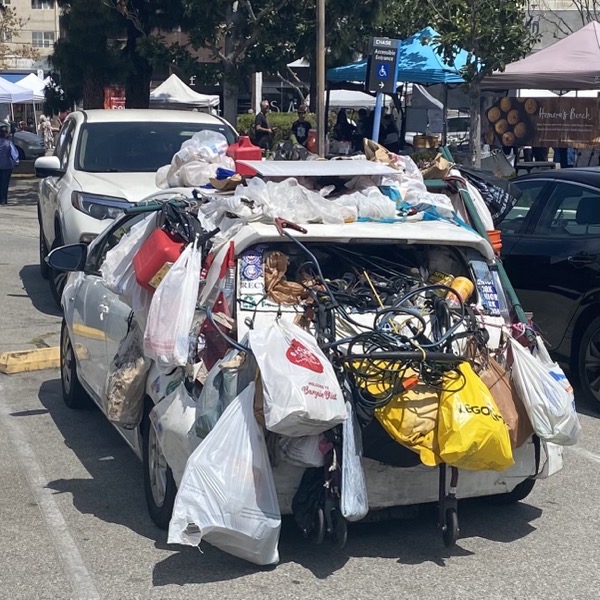
Returning a few hours later, I saw a couple of cars stopped at a junction. They weren’t moving and as I got closer saw an elderly man using his feet to propel him and his wheelchair backwards across this small, pot hole riven junction … up a small incline.
I walked over and asked him if he needed any help.
“No thanks. I’m fine.
Are you sure?
“No really. I’m ok … Thankyou.
Pushing harder with his feet for the final assault on the slope.
I waved to him ... ok then ... and kept going. He shouted out.
“Thankyou. Thankyou very much. I’m ok ... really."
I turned around to wav to see him by his car, wrestling with the door to get in, carefully watched by his lady friend, sitting patiently to one side of the road in her wheelchair.
I still don’t know the story of the car, nor it’s owner - but clearly, despite what the car might say to a passer by ... he was a proud, well mannered, graceful man. I really wish I knew his story.
Whilst you are waiting for Open AI to lose this message …
The server is currently overloaded with other requests. Sorry about that! You can retry your request, or contact us through our help center at help.openai.com if the error persists.
… and get on with generating your latest way cool graphic … know that I am seeing no wait time at Stable Diffusion and MidJourney plus images seem to be getting generated in less than 10 seconds.
Sure - they might not be as ‘hot’ as what you want - but unlike the Open-AI experience - you do at least get one!
Updated 23-04-03 : 20:15
And that’s a wrap for now. Finally
Turns out that ' " ' is apparently not the same at all as ' “ ' !!!
This post is written - and being updated - in Drafts, courtesy of a plugin by @donnydavis
I am using it to test and edit a set of terms that are the start of my new glossary (an @AndySylvester plugin)
Test Glossary
Terms
-
-
identity
-
data
-
tech
-
work
-
commerce
-
learning
-
Language is one of the 8 pillars of People First thinking where we explore the subtle art of manipulating conversation and dialogue through the careful choice of words. It’s rampant.
-
value
Links
Via Doc Searls
… aims to make individuals become more aware of the risks and benefits of data trading and sales, and take steps to protect their own data … …. is the first step towards unpacking and untangling the complex world of data exchanges. … we hope to provide guidance on how industry groups and associations can develop better codes of conduct and best practices for data exchanges.
Interesting🔗 article on the cost of coordination.
That said, it’s mainly a webmention test.
🎛️🎙️ Embrace The Future
The excerpt is not the main thrust of the podcast, but neatly summarizes the problem of rejecting, rather than embracing, what is clearly something that is part of the future.
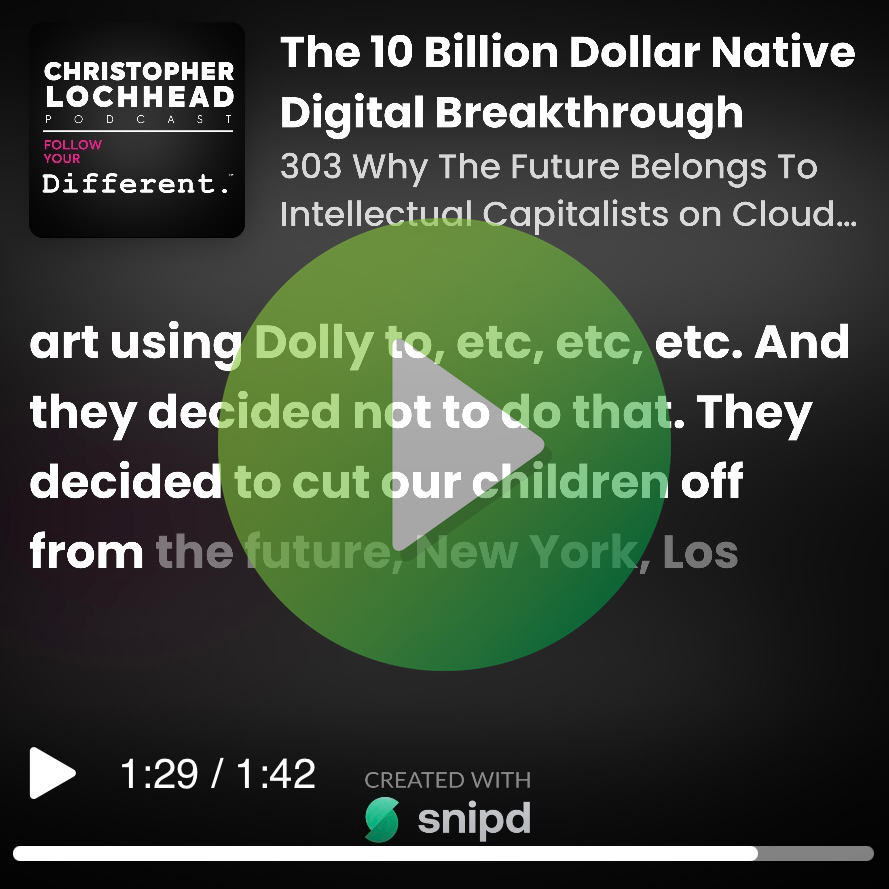
The Full Podcast: 🎙️ Why The Future Belongs To Intellectual Capitalists
This Is Not The End.
🔗 Nick Cave on Growing Older - older mind you … not ‘old’.
This IS The Beginning.
🎛️ A couple of revised posts on the blog.
🖇️🎛️ Will Arnett doesn’t like the word content either.
🖇️🎛️ Why my term ‘English Progressive’ might make sense in musical genres. {🚧 BROKEN - SORRY}
Opening up a new category on the blog that I call ‘🖇️ snippets’.
More refinement might yet occur.
A Substack with bundles of links : 🔗 Digital Countries are the Next New Thing
Who’s already started : 🔗 The Network State Dashboard
The Book : 🔗The Networked State Book (free and downloadable)
Originally posted on John.Philpin.Com
Wherever you go in the world, New Zealand, Scotland, Austin Texas, Raleigh North Carolina, Hyderabad, Shenzhen …. pretty much anywhere, you will find there are tech centers. Tech centers that often adopt ’Silicon’ or ‘Valley’ or variations on such in their names, but there are many more. The local government will often declare they are investing and building a tech center of excellence to ‘rival’ Silicon Valley. Except they aren’t. Let me explain.
It has occurred to me that while I have been posting to this blog at the rate of knots, this blog has been not feeling the love. I have some thoughts on how to fix that. I am going to try the first idea for a while and see what happens. Stand by!
The 🔗 Beckn protocol “allows you to create open and decentralized digital ecosystems”. So far, the word ‘blockchain’ is mentioned nowhere (that I have found). I also haven’t found how it handles ‘identity’ before it facilitates a transaction, though it says it does ‘identify each other’ but I’m not sure that is the same thing?
Can anyone share their experiences. It looks really interesting from a ‘People First’ perspective.
Extracts from their world …
identify each other and perform transactions with each other without the need for a central intermediary
Beckn Protocol is an open commerce protocol with an abstract core, which is enabling market players to reimagine building seamless digital experiences and networks. This is very similar to how HTTP, while being a simple and open protocol has fueled seamless interaction between multiple systems and led to an explosive growth in internet adoption.
The beckn community is an open community. So, no registrations. No memberships. No partnerships. Just a minimal footprint of an open and equally accessible Beckn Protocol that anyone can use. Multiple businesses and organizations have started using beckn protocol to fuel their digital acceleration. The credo of being an open protocol creates a level-playing field for any market player, small or large.
🎛️🎙️ That ‘Content’ word again.
You might have read my 🔗 many posts about ‘content’ .. and my singular objection to that word. Turns out I am not the only one. Will Arnett waxes lyrical about that exact issue on Smartless.
)
The Full Podcast: 🎙️ Smartless : Dana Carvey
I have been saying that My Speciality is Generality for years.
It’s that time of year again … this is my 5th journey with ‘Take Three Words’ and has worked well for me over the years.
Why Don't We All Have Agents
I got a voice mail from my agent this evening. She opened with her usual apologies for being out of touch but she wanted to talk to me about four contracts that were coming to a head. Details needed to be nailed down.
Four contracts? I knew about the transformation contract, but as for the other three … I had no idea what she was talking about. What else had she found?
Color me intrigued.
Of course I called her back and she dived in head first, at her usual ra ta tat tat machine gun conversational speed … and I listened - I mean what was my choice!
.. and to find out what happened then … well we have a podcast for that … a short one mind you … 6 minutes and 41 seconds.
Podcasts. You Need A Player AND Something To Listen To.
Interesting that it isn’t just Mastodon that seems to be in sudden growth mode. The Mastodon questions relating to ‘how to get started’ and ‘who to follow’ are just as applicable to Podcasts - even though they are much more established. That said, it is clear that even for the long time listener, checking in and making sure that once you have found the best stuff to listen (often by asking around) that you have the best stuff to listen to it on!
This post then is my contribution to answering;
🔸 What is the best app?
🔸 Which podcasts should I follow and why?
Caveat - I am an Apple ecosystem person - so my podcast player recommendations MIGHT not be available on your platform of choice. Sorry.
Which Player
As an Apple user, you might expect me to use the Apple player and you would be wrong. Every now and then I do revisit Apple’s core apps to make sure I have a good reason to be outside of their ecosystem. I last checked the Apple podcast world 3 months ago. NOPE.
Not to say it isn’t a good app - its just that it doesn’t work for me and this is primarily because I follow to a LOT of podcasts and listen to very few of them. As a result, I need an easy mechanism to find, categorize, triage, organize and listen.
There are few apps that I haven’t downloaded, most don’t work for me (or more accurately, they don’t offer enough to make me want to switch). They might work for you - all good, this isn’y the kind of piece to get into that debate.
This is what I use and why it specifically works for me.
I have used Castro for a long time. It really is a wonderful app and I would not knock it. Castro and Marco Arment’s Overcast are the two podcast apps that I kept coming back to when I looked outside of Apple. When I first explored podcast apps beyond Apple, I tried them both. Castro won out. I just couldn’t get my head around the way Overcast worked. Castro in comparison was very intuitive. Why relearn when what you have works?
And then 3 months ago that all changed. As I referenced above, I do explore app alternatives from time. Changes had been made to the Apple app - so i explored and hadn’t realized that Overcast had itself been through a massive redesign.
Oh my.
The Apple changes were good - but nothing that helped me. BUT Overcast won out and I have been using it ever since. This is why.
I subscribe to over 100 podcasts (don’t judge me) and generally listen to a podcast for somewhere between 30 and 90 minutes each day. It does get over 90 minutes from time to time - mainly depending on what else is going on in my life. Clearly there is lot that I follow and don’t listen to. So as I wrote above when looking at a podcast app, find, categorize, triage, organize and listen are all important functions.
My Process
-
Every single podcast I follow is categorized into one or more place … ‘tech’, ‘politics’, ‘bbc and npr’, ‘humour’, ‘music’ … you get the picture.
-
As part of my morning ‘feed catchup’ i triage all the new arrivals and delete anything I know I won’t be even thinking about listening to.
-
When I am ready to listen - the category filter helps me do an initial narrow down and then I choose from within.
Resultant Benefits for me. (Your mileage may vary)
🔸 Very intuitive
🔸 Fast and efficient triage
🔸 Synching across multiple devices
🔸 Their app even works on the Mac
🔸 The Ability to categorize to quickly choose ‘the tone’.
The Unique Controls in Settings I won’t go into - suffice to say, the possible refinements of what you MIGHT choose to do is extraordinary - but were I to tell you that I have not changed one setting - you would know that this app is very much in synch with how I think.
Through all of this you will notice I have made no mention of speeding up / slowing down podcasts (which is possible in most players) - because I don’t do it, even with the sheer number of shows I triage. I was tempted once, tried it, didn’t like, never bothered again. To me, it is similar to reading a book’s cliff notes and assuming you have read the book.
What I Listen To
At any given moment I might have up to 40 unplayed podcasts in the queue. (Right now I am at 21, I know because I just counted. In fact - well - here they are.)
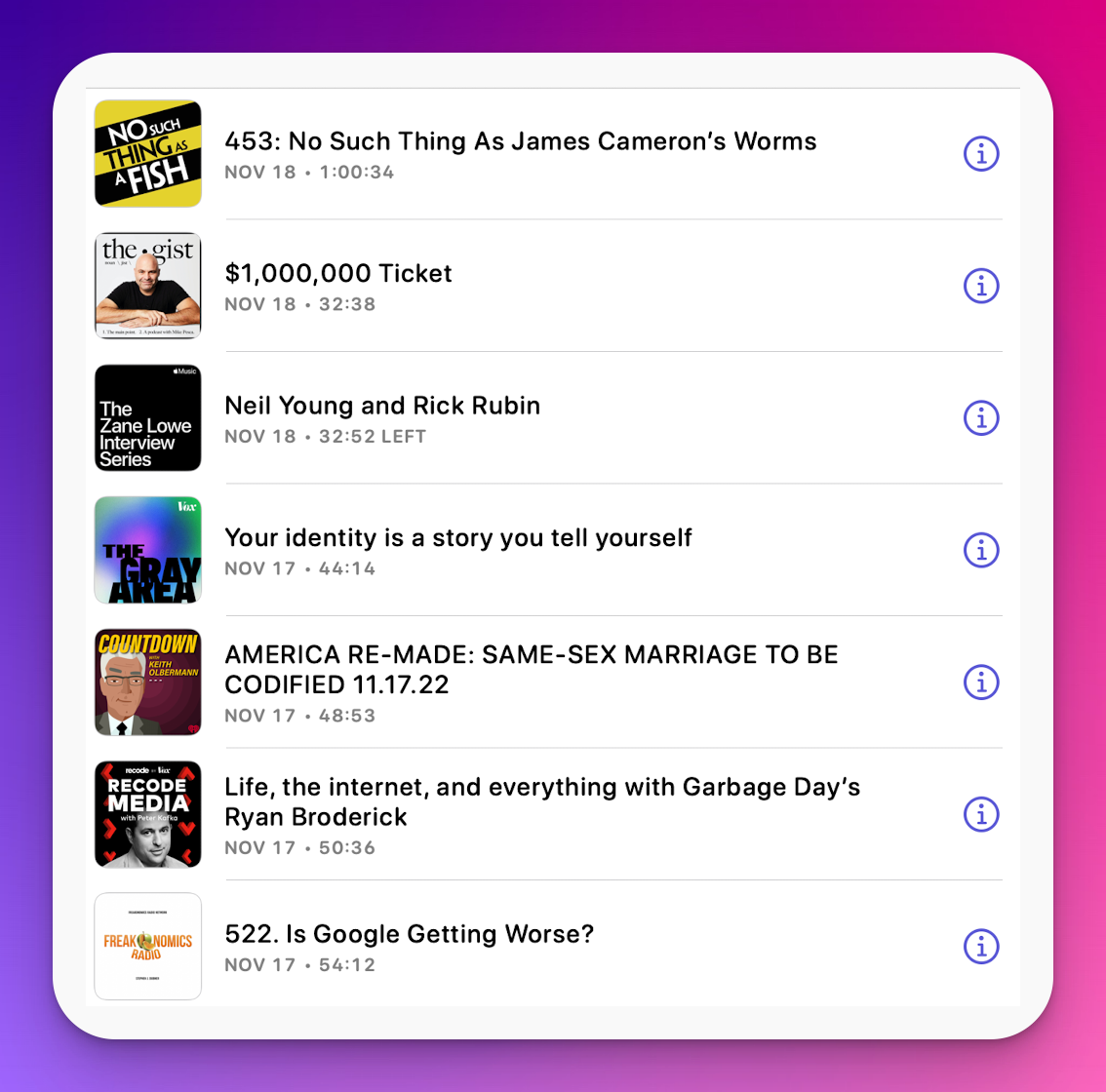
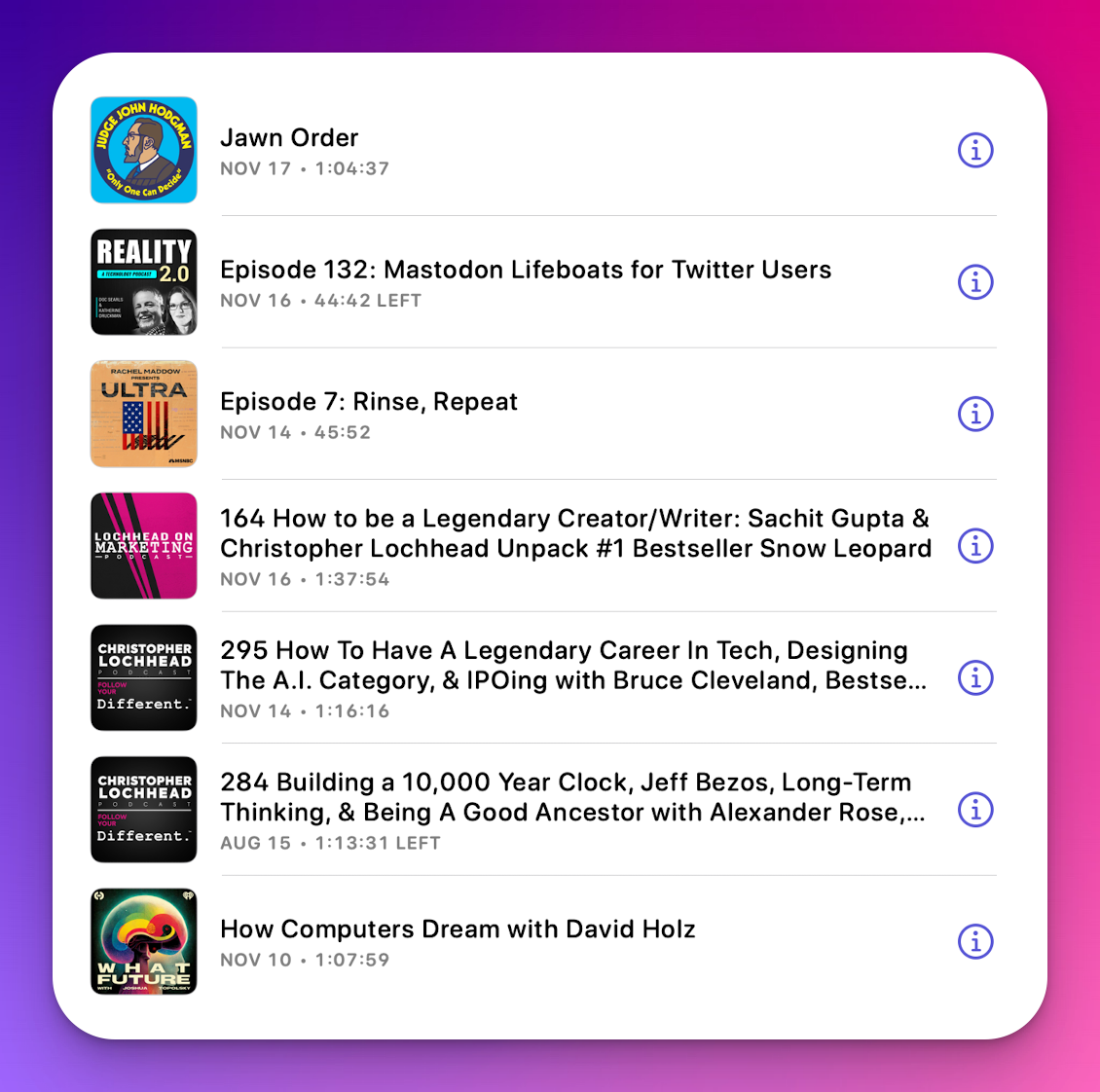
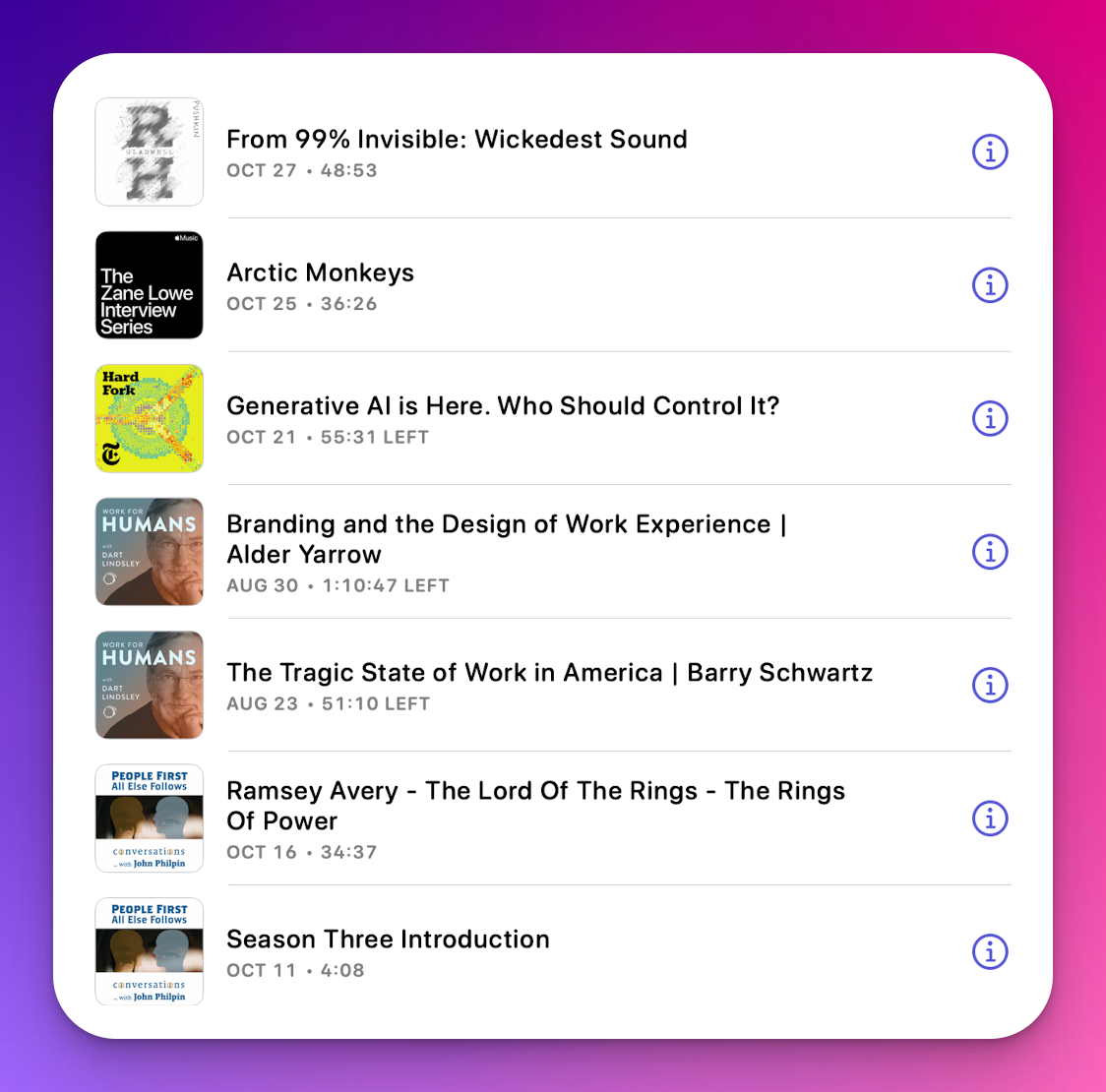
Some shows I simply have the latest version of ready to go if I feel inpired … No Such Thing, The Gist, John Hodgman being good examples.
Other shows, like Zane Lowe and Rockentours might have multiple episodes - because I really want to hear the guest. Example below - note that Zane Lowe has two shows in the hopper, Chris Lockhead has THREE. But - will I really get round to listening nearly 5 hours of Lockhead - just across these three shows - probably not, so over time they wil get removed without listening.
And finally - you will see that two of my twenty one shows are my own podcasts. Yes I do listen to them once they are published and I keep the latest Season in the Inbox for easy discovery if I need a link for someone. Season Three just kicked off - so only two shows so far.
Recommendations
So what shows would I specifically recommend? Well again - the point is what are you interested in? If I knew that, I could be of more help, so I reduced the list to a solid personal 10 - which are in no particular order, but if I know what kind of stuff you like - I probably have a view - with the exception of Sports!
🔸 Chris Lockhead and Category Pirates - marketing and business
🔸 Rob Long - 15 minutes of delight
🔸 Peter Kafka - media meets technology
🔸 Rockenteurs - a music podcast rom Gary Kemp and Guy Pratt
🔸 Zane Lowe - music
🔸 Sam Harris - for quiet relfection
🔸 John Hodgman - he’s just funny
🔸 Ezra Klein - considered thought, good guests
🔸 Mike Pesca - The Gist - a daily ‘news’ show from an ex PBS presenter
🔸 People First - my own People First podcast
That’s it - do you have any recommendations and thoughts?
My Speciality ? Generality !
A slightly edited version of a post originally published on February 14th 2016 @ Beyond Bridges, now archived here
A friend and reader of this blog just sent me this link, which is a third party version of the LinkedIN map below. It seems to be limited due to LinkedIN's API constraints, so it can't map more than 499 of your connections. That said, there does seem to be a lot more information and analysis that surrounds the graph. Andy it means YOU can go try it out on your network. Thank you David.
A good friend of mine messaged me through LinkedIN. He is a fast thinking, witty, bright, intelligent, big thinking kind of guy. He's also interested in his next gig - so let me know if you want an introduction. Anyway, to my point. He had been on my LinkedIN profile and commented;
I think you would be well served to pare that list (of skills I had listed in my summary) to maybe 4-5 distinct and specialized areas where you really shine better than the rest. Things like Leadership, Marketing, Communications are too generic and readily available in the marketplace.
And I agreed. In fact, so much so that I pared it down to zero. My skill list is summarized in another part of the profile anyway. But it got me to thinking.
I am a big fan of Mike Pesca over at Slate who delivers a daily podcast called The Gist. Try it. You won't regret it. A couple of weeks ago he had Eric Weiner on as a guest, and they spent some time talking about where genius comes from. Turns out that Eric has just written a new book about 'how genius happens'. One of my takeaways was that genius emerges from generalism - not speciality. For example, he talked about the fact that Einstein was not the most knowledgeable physicist of his time, but his value was that he was broad in both interest and knowledge. A 'Renaissance man' if you will. This an absolute opposite to what we live with today. We eschew the 'polymath' in favor of the 'monomath'. From the site Gain Weight Journal;
Unfortunately, we live in an era of monomaths now. This means specialists. The problem with that is that people get stuck with one way of thinking, they have blinders on, and cannot see the big picture, including the relationships and similarities between different things.
I know, even our education system is driven to a singular focus and it seems to be getting worse. For myself, I focussed on Maths and Physics in my education from the age of 15. Maybe I was bored. Maybe I could see the future, but despite that formal focus, I did put an effort into ensuring that I didn't get locked up in that world and miss out on everything else that there was to offer. (Though I probably shouldn’t have read all three volumes of Lord of the Rings over a two week period shortly before some year end exams!). Back to the plot. Reading that quote reminded me of what we used to say back in my Group Partner days ... "The Last Thing You Ever Need Near A Problem Is An Expert" Good. Because I am not. LinkedIN 'Labs' used to run something that visually mapped your connections so you could see clusters of people in your network. They closed it a while back, but at the time I wrote about it, dubbing it 'Cloud Hopping'. I also observed that most people had a very tight network of very few 'clouds'. This was mine.
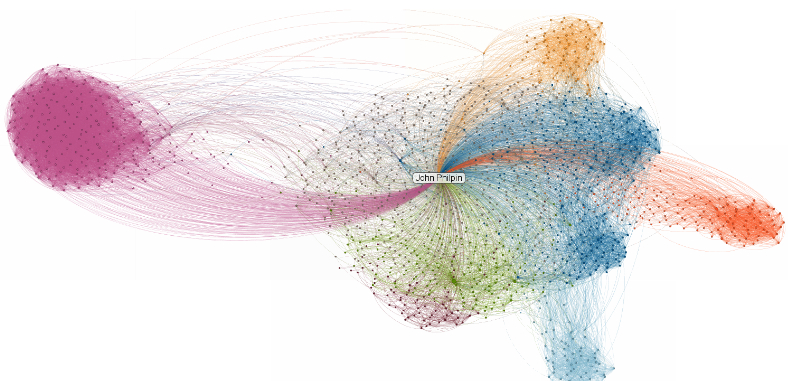
A highly distributed interconnected network, emerging from European and American networks in finance, technology, application and social disciplines. I think Derek was spot on. My strength is not my speciality. My strength is my generality. And, while I would absolutely not describe myself as a genius, I am definitely a cloud hopper. A connector. And there are not many of us around, or at least we tend to keep quiet, because we live in an age where value is placed on 'what you know'. The 'who you know' is almost written off as 'the old boys club' . But once you understand the value of the role that Gladwell calls out in The Tipping Point - the pieces fall into place.
My Speciality? Generality!
I first published this post on Beyond Bridges on February 10th, 2016. That site has gone, the words archived,