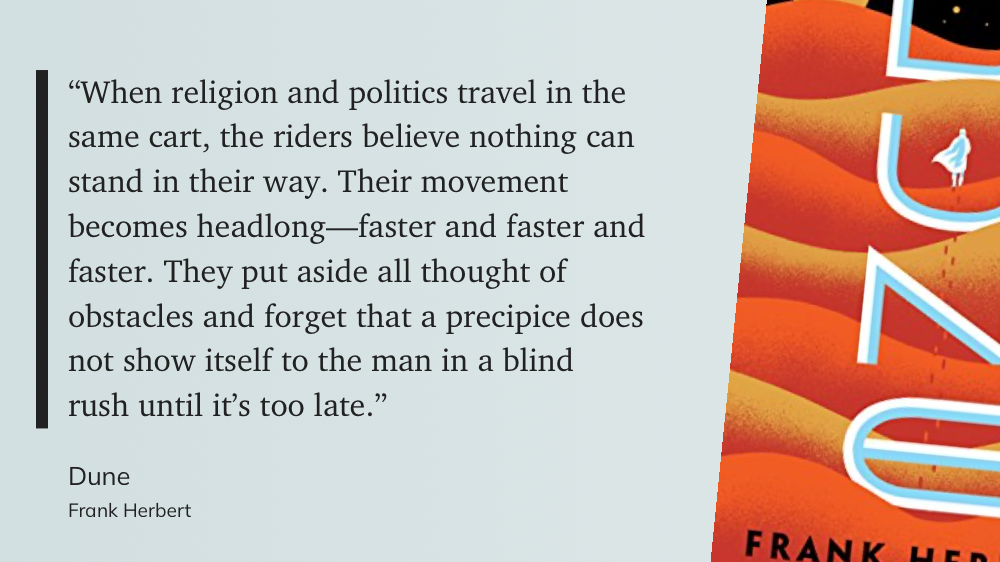
Nooooooooooooooooo…..
Truly sad news.
Who said …
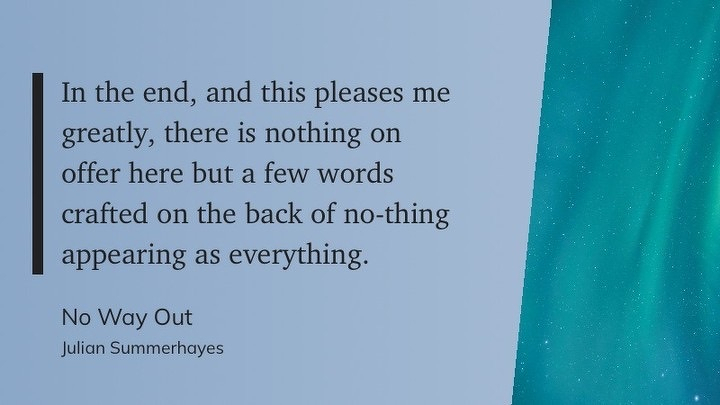
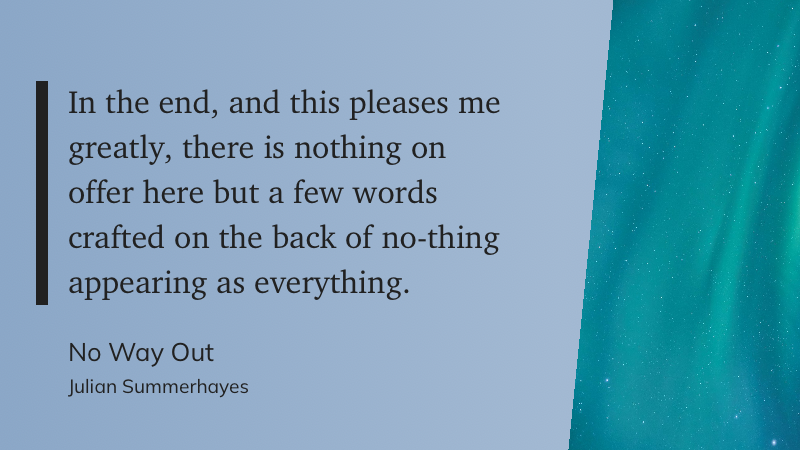
“Death has never made any sense to me, ow can a person be there and then just vanish?”
ð¬ and capped off with this opinion re coffee.
Clearly the man is an animal.
💬 and capped off with this opinion re coffee.
ð¬ The conversation moves on, from the poached egg to the toast.
💬 The conversation moves on, from the poached egg to the toast.
ð¬ Not wrong â¦
💬 Not wrong …
The famously freewheeling US president …
That’s how the Torygraph described Tяump
We never got to the bottom of the sanitary pad shooting of Trump - and we sure as hell won’t get to the bottom of Kirk’s. But I’ll call it now: both rest on the same foundation … misdirection.
From Visuals To Vision
Tracing the evolution from visual thinking frameworks like Group Partners’ 4D to Structured Visual Thinking (SVT) and beyond, this newsletter reveals how visuals became powerful tools for clarifying strategy, aligning teams, and driving execution and why rigid models and rare skills limited their impact. The article highlights why ‘Structured Thought’ is the next step: taking the clarity of visuals and coupling it with principles that make strategy adaptable, scalable, and actionable for any organisation.
If you want to talk more - I certainly do.
Let's set up some time to explore how Structured Thought can be used to help your business transition into the ‘Age of Experience’.
A Brief History of Visual Thinking
Visual thinking has shaped strategy work for decades, from Arnheim’s 1960s theories to the whiteboard sketchers and infographic craze. But without structure, it too often drifts into decoration instead of decision. This piece traces that history and sets up why I developed Structured Thought - a way to turn visuals from creative flourishes into business advantage.
If you want to talk more - I certainly do.
Let's set up some time to explore how Structured Thought can be used to help your business transition into the ‘Age of Experience’.
🎵 Paul Simon wrote The Sound of Silence nearly 60 years ago. Not as a hymn to peace, more a warning - about noise drowning out meaning. Yet here we are in 2025, trapped in the Noise Economy: dashboards buzzing, leaders performing, everyone talking, no one listening.
The Sound Of Silence ...

In a prior newsletter, I referenced an upcoming third part of the two part series - this isn't it. This is part two of the second part. Confused? You won’t will be.
Paul Simon’s ’The Sound of Silence’ is not a hymn to peace, it’s a warning.
(Paul Simon? Sorry - another ‘dated cultural reference’ - the guy that wrote this song ..
... the original …
Next year is its 60th birthday.)
A warning about the cost of disconnection and a society that confuses noise with meaning. When
“people talk without speaking and ‘hear’ without listening”
it creates a world where insight is drowned in volume, and truth is pushed to the margins …
“graffitied on subway walls while the neon gods glow above”.
Written in 1966. Welcome to 2025 and the noise - both cultural and corporate. It’s in our dashboards, our strategy decks, our KPIs, our Slack channels. And we’ve learned to perform in it. Constantly communicating, never quite connecting.
Talking at volume, rarely at depth.
We confuse motion with clarity. Performance with alignment. We pile on data, frameworks, and meetings, hoping that somewhere in the noise, the signal will emerge. It doesn’t. It is so bad that the phrase ‘signal to noise ratio’ is in common parlance. (I just wish those same people had heard of ‘The Shannon Hartley Theorem’)
The signal can't be heard because it’s drowned out by the cacophony of everyone having an opinion and expressing it. Loudly.
Off the top of my head we are currently sitting atop of 14 ‘Economies’. The;
Knowledge Economy
Digital Economy
Experience Economy
Attention Economy
Creator Economy
Gig Economy
Sharing Economy
Platform Economy
Surveillance Economy
Token Economy
Circular Economy
Green Economy
Purpose Economy
Emotion Economy
Sorry - 15. Welcome to The ‘Noise Economy’. Where visibility is currency, volume is mistaken for value, and the loudest voice wins. The problem? We’ve lost track of which economy we’re actually in (see above), but the Noise Economy is most definitely a direct descendant of ..
The Attention Economy, fuelled by clicks, likes, and scrolls, we were trained to compete on distraction, not depth.
Capturing eyeballs matters more than holding minds.The Information Economy, more knowledge, more tools, more power.
It didn’t teach us how to think. Just how to hoard.The Intention Economy, tried to shift power to the user by asking ‘what the customer wants’.
Most organisations still don’t listen so it remains guess work at best.
The Noise Economy
It’s what happens when attention, information, and intention all get misused. When systems built for focus get hijacked by the need to be seen. When every meeting needs filling, every dashboard animating, every ‘strategy’ deck starting at 50 slides.
Everyone’s broadcasting. No one is listening.

Responsiveness is confused with responsibility. Activity mistaken for progress. Motion for clarity.
And behind it all, the only economy that really matters - the Impact Economy (an economy that didn’t even make it on to my list of 15 - that is how bad it is.) - suffers. Because impact requires intention, filtered through structure, made real through action. And action needs clarity, not clutter.
Structured Thought reclaims that. Cuts through the static. Connects the real economies. And says: 🛑 stop performing. Start thinking.
Leadership in the Noise Economy
This obsession with noise distorts how we see leadership too.
We idolise the fixers. The ones who swoop in when something breaks. They get the spotlight. The headlines. The promotion. But we rarely ask: Why did it break? Who let the system bend until it snapped? And who held it together - quietly - before it failed? By the way - I am by no means the first person to write about this issue - there’s Martin Gutmann for example …
In today’s organisations, silence from a leader is suspicious. If you’re not seen, are you leading? If your team runs so smoothly that nothing flares up, does anyone notice? If the crisis never comes because you designed things right - do you get credit?
This is how we end up with leaders who perform leadership instead of practising it. They talk first in meetings. Reframe failure as their win. Build narratives faster than they build systems.
Structured leadership is different. It’s quieter. More design, less drama. It’s about preventing the problem before it arrives. About removing friction so people can do great work - without needing a hero to rescue them from chaos.
No standing ovation. Just sustained results.
Structured Thought as Anti-Performance
Structured Thought doesn’t announce itself. No fanfare. No flourish.
It starts with a pause. A silence. A moment when someone chooses to see before reacting.
It’s the discipline to filter before speaking. The skill to simplify without dumbing down. The courage to name what’s really going on - not what looks good in a quarterly update.
It’s anti-performance in the best sense. It replaces spin with structure. Buzzwords with logic. Consensus noise with clear direction.
That makes it quietly dangerous. In systems hooked on visibility, structure looks like subversion. But it’s what actually holds.
Silence as a Design Principle
In music, the ‘rest’ is as important as the note. Quoting myself, paraphrasing great musicians;
“Music is the space between the notes."
In architecture, it’s the space - not the walls - that makes a room useful.
In leadership, silence is where credibility is earned.
Structured Thought treats silence not as absence, but presence. It’s not what’s missing - it’s what makes meaning possible.
Good leaders don’t fill every silence. They shape it. They wait - not because they don’t know what to say, but because they’re paying attention. They let the signal surface. Let the system speak.
That’s not hesitation. That’s design.
Where Insight Hides
When Simon wrote,
“the words of the prophets are written on the subway walls,”
he wasn’t being poetic. He was being precise.
Real insight rarely shows up where you expect. It’s not in the pre-read or the polished deck. It’s in the offhand comment. The silent tension. The space between what’s said and what’s done.
The prophet isn’t always the keynote. Sometimes it’s the intern. The operator. The one who sees the system clearly - because they’re in it.
Structured Thought knows where to look. It doesn’t chase headlines. It watches the quiet parts of the system. Listens between the lines. And when it finds something real, it doesn’t amplify - it clarifies.
When Silence Speaks … Structured Thought Begins
When the noise stops. When the talking pauses. When someone finally asks, “What are we really doing here?” - and waits for the real answer.
Silence, in this sense, isn’t passive. It’s surgical. It clears space for structure to emerge. For ideas to breathe. For strategy to mean something again.
Because when the thinking is clear, there’s no need to shout.
No need to decorate or defend.
Just let the silence do its work.
That’s what makes it powerful.
The sound of Structured Thought is the sound of silence.
The sound that comes when something finally makes sense.
If you want to talk more - I certainly do.
Let's set up some time to explore how Structured Thought can be used to help your business transition into the ‘Age of Experience’.
So many jokes running through my body this morning - stopping at my knuckles and throat so they aren’t seeing the light of day.
Back in the day âweâ had a line:
“Oracleâs first platform for any `Productâ is always PowerPoint - and is written by LJE.”
It stemmed from Larryâs penchant for announcing products in large public forums and nobody else seemed to have any knowledge of it.
Just read this:
ð The New Math of Quantum Cryptography
With this quote
Some Oracles never change. readwise.io/reader/sh…
Back in the day ‘we’ had a line:
Oracle’s first platform for any `Product’ is always PowerPoint - and is written by LJE.
It stemmed from Larry’s penchant for announcing products in large public forums and nobody else seemed to have any knowledge of it.
Just read this:
🔗 The New Math of Quantum Cryptography
With this quote

Some Oracles never change.