
👤 PeopleFirst
Oh good: 🔗 Joyous - Replace surveys with dynamic AI chats and real-time action
My position?
For years we called AI an answer machine. One question in, one answer out. Vending machine.
A survey is a vending machine too. Ten questions, five minutes, a finish line.
A dynamic AI chat has no finish line. It wants you to think out loud, and at length.
AI removes the cost of asking questions. It doesn’t remove the cost of answering them. It raises it. And that cost lands on the respondent.
So most people will do what they do when a vending machine asks for a conversation: give it the minimum, or leave. After all, what’s in it for them?
Prediction: the people who go deep won’t be representative. They’ll be the ones who like talking to AI. You’ve swapped a bad sample for a self-selected one.
Here we go again …
Tech saves the organisation money and pushes the cost onto the people.
📰 Community .. What Community?
BusinessEngaged is what we call our approach to systems we are building for organisations that are ready for The Age of Engagement. It is a fundamental shift in how businesses connect, operate, and grow.
At the heart of engagement is community.
And that’s where we have a problem.
Because community has been hijacked.
Not suddenly. Not by one bad actor. This is how language always gets killed - slowly, by overuse, by laziness, by marketing departments who needed a word that felt warm and human and didn’t cost anything to say.
We know this pattern well. At PHI⑊PIN, precision in language isn’t a preference - it’s a principle. Language was one of the core tenets of People First and now in Structured Thought. Words shape how we think. Corrupt the word, corrupt the thinking.
So before we go any further - before we build, before we invite, before we grow .... we need to define exactly what we mean by community and just as importantly, what we don’t.
What does the dictionary say?
Let’s start with Merriam-Webster. 🔗 Their definition opens with:
a unified body of individuals
And then it goes on - and on. Seven sub-definitions under the first sense alone, from people living in a particular area, to a monastic community, to an interacting population of micro-organisms.
It’s not wrong. But a definition that needs seven sub-senses has told you everything and nothing.
I think the second sense gets closer to the feeling people chase:
a state or feeling of caring about and wanting to interact with others in a group
A feeling. Isn’t that what everyone is selling when they say “join our ‘community’.” The feeling. Not the substance.
And that’s the hijack in plain sight.
A Community Is
... people who need each other to succeed. And know it.
... people who recognise each other’s stake in a shared endeavour.
... where an audience knows the presenter - and members know each other.
... not where you go. It’s what you contribute to.
Community Is NOT
... an audience - they might know the presenter; they don’t know each other.
... a mailing list or database - transactional, one-directional; your community are not records.
... a membership - a card doesn’t make you known.
... your users - a relationship with a product, not people.
... your new Slack workspace even if you call it that. A channel is not a covenant.
... a networking event - connections made over coffee don’t create mutual stake.
and it certainly isn’t a room full of people having conversations, thought it might be a starting point.
A Quick Test
Do the members need each other? Not the platform. Not the host. Each other?
If yes - you might have a community.
If no - well then you might have something useful. Just don’t call it community.

The conversations are happening. The commitments are real. If you’re sensing this and already asking these questions, then you don’t need a better system - yet. You need a clearer answer to a simpler one: what are you actually trying to do?
That’s where we start.

🖋️ Community .... What Community?
Everyone has a ‘community’ and almost nobody does 🔵 and since community is core to everything we are building for the ‘Age of Engagement’ , it’s time we told you what we actually think. Spoiler alert: it’s not your Slack workspace, it’s not your mailing list and it’s certainly not your followers.
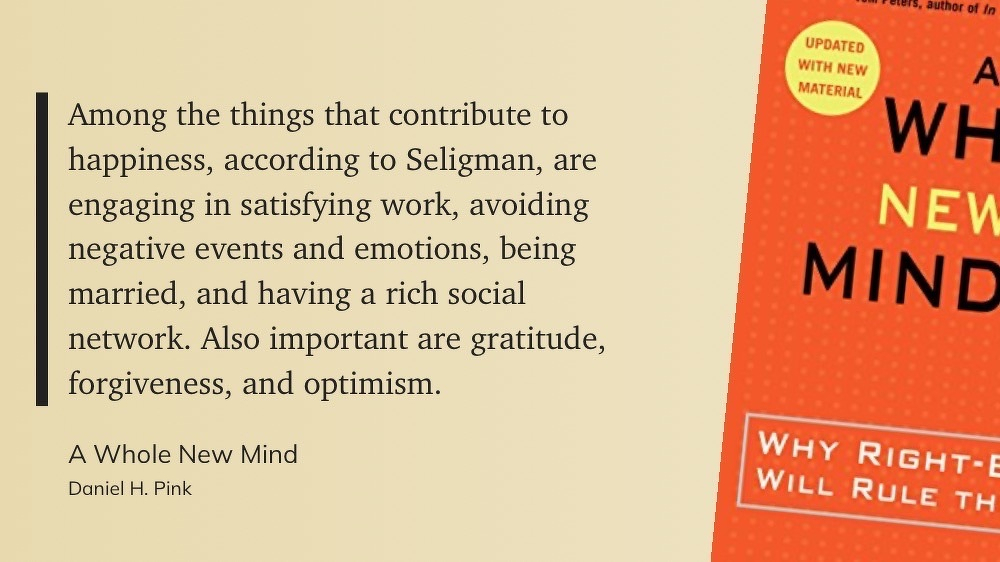
🖋️ ‘Content Category’ is an Oxymoron.
Regular readers will recognise this theme. Reminding again as I read 🔗 Joan Westenberg this morning.
#PeopleFirst
A code of principles proposed at the 1889 National Hobo Convention:
- Decide your own life; don’t let another person run or rule you.
- When in town, always respect the local law and officials, and try to be a gentleman at all times.
- Don’t take advantage of someone who is in a vulnerable situation, locals or other hobos.
- Always try to find work, even if temporary, and always seek out jobs nobody wants. By doing so you not only help a business along, but ensure employment should you return to that town again.
- When no employment is available, make your own work by using your added talents at crafts.
- Do not allow yourself to become a stupid drunk and set a bad example for locals' treatment of other hobos.
- When jungling [camping] in town, respect handouts and do not wear them out; another hobo will be coming along who will need them as badly, if not worse than you.
- Always respect nature; do not leave garbage where you are jungling.
- If in a community jungle, always pitch in and help.
- Try to stay clean, and boil up wherever possible.
- When traveling, ride your train respectfully. Take no personal chances. Cause no problems with operating crew or host railroad. Act like an extra crew member.
- Do not cause problems in a train yard; another hobo will be coming along who will need passage through that yard.
- Do not allow other hobos to molest children; expose all molesters to authorities – they are the worst garbage to infest any society.
- Help all runaway children, and try to induce them to return home.
- Help your fellow hobos whenever and wherever needed; you may need their help someday.
- If present at a hobo court and you have testimony, give it. Whether for or against the accused, your voice counts!
Fits right in with just being a good human - maybe we should teach kids how to be a hobo in school?
🖋️ You Can't Scale Conviction
Artists sensed it decades before Einstein. Science proved it a century ago. Business is still pretending it never happened. Here’s why your ‘population’ theories collapse the moment a single person acts from conviction - and why what you are trying to do to fix it will never work.
🔗 The AI Conversation CEOs Are Not Having Out Loud.
The topic was AI. But the real conversation was leadership.
💬 Brian Solis
The myth that CEOs ‘know’ is exactly that.
The bad ones play into that myth.
The good ones build trusted teams around them.
Same can be said for Presidents.
Human By Design
My Substack is themed on the idea of ‘People First’.

I even used to call it that.
It means;
People ahead of corporations
People ahead of technology
We don’t reject either, it’s just that people are the priority.

The Rear View Mirror
The same can be said for Systems of Record.
This is the first of a two part issue. If you already know our history and are more interested in where we are going - then the next newsletter is for you.
‘They’ have their CRM. Where’s my VRM?1
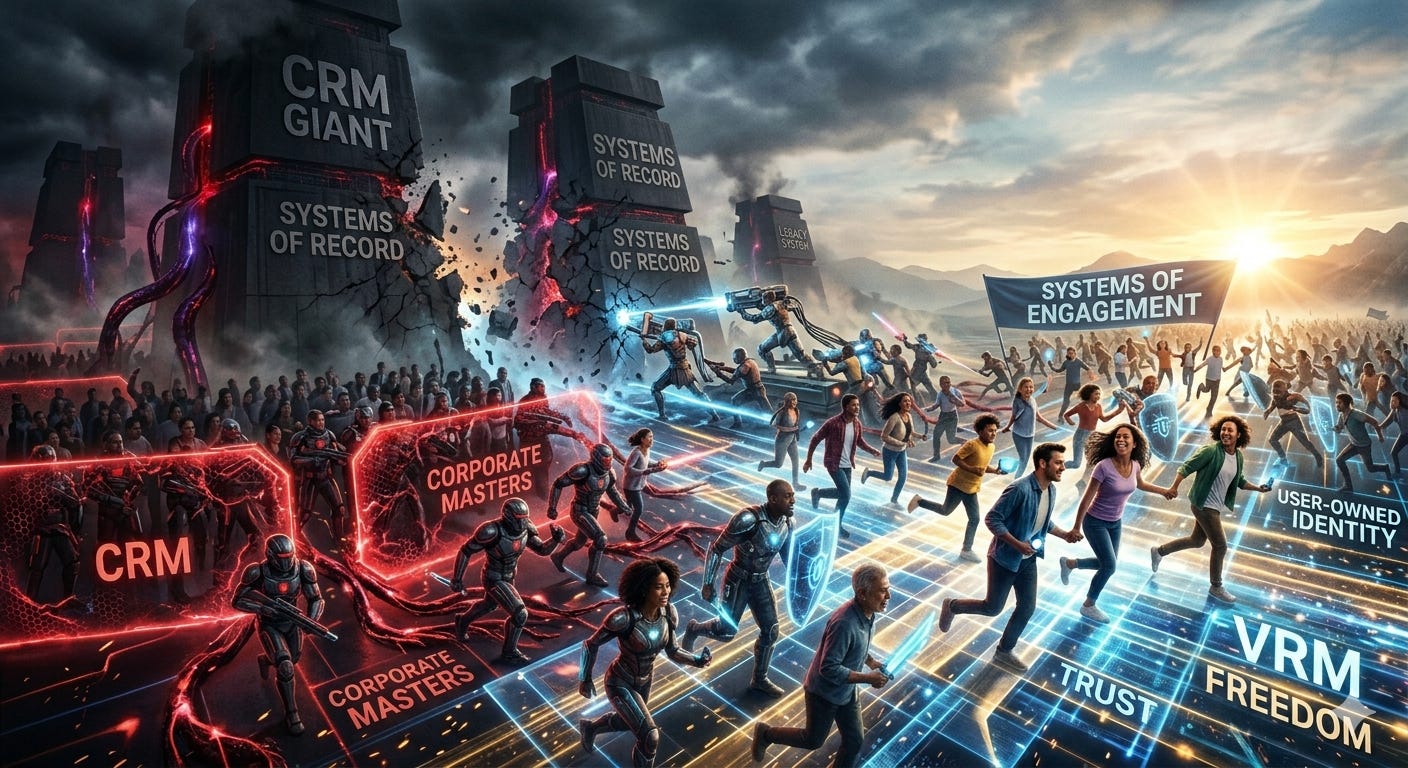
Before you get too excited - sorry this is not about that - but - the question has been my North Star for a couple of decades. It’s the itch that ‘Systems of Record’ couldn’t scratch, and the reason I spent my career working as a translator in rooms where the wrong problems were being solved with clinical precision.

The Translator in the Room.
My job was simple ..
Translate.
For technologists - competing to build smarter mousetraps and needing to explain themselves to ‘the market’.
For people - realising that the real problem isn't catching mice, it's that nobody's talking about why the mice are there in the first place.
I lived in that gap. I learned to speak both languages and discovered that software companies are brilliant at “solving the wrong problem really well”.2
It was a sign of the times - but they optimised for efficiency. For capture. For storage. For control. Systems of Record, designed to document what happened yesterday so they could save money today. And they locked you in. Built moats around the data. Made you dependent. That’s where the money was - still is for some. And at the time that was the right thing to do.
But to remix a couple of metaphors - if all you have is a hammer, by the time you get to where the puck is going, the problem might not be a nail anymore.
Tomorrow's problems can’t be solved with yesterday's tools.
I also learned that you can only save up to 100% of what you have BUT on the flip side - The Business Equation makes clear that there are no such limits to growth.
These learnings contributed to the foundation of ‘John2.0’ - People First. Process Second. Technology Third. And by ‘people’ I mean all people - customers, staff, vendors, partners, members … and knowing what each person needs to ‘improve their lot’ - not what the system wants to capture and a series of ‘truths’ informed how to build these new systems.
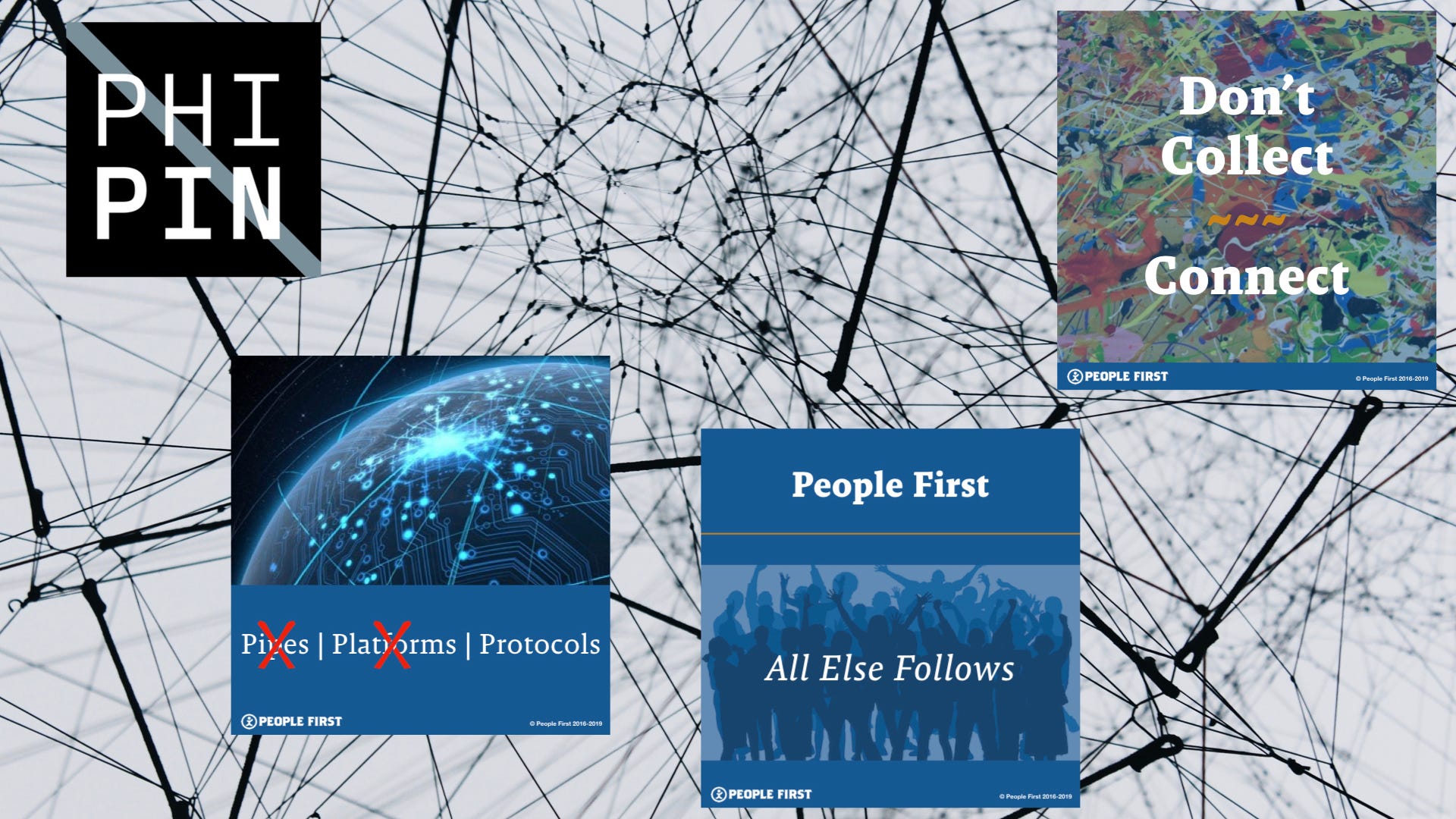
When I left People First ‘behind’ to start PHI⑊PIN3, it was only the name that changed. The foundation, the thinking, the frameworks all remained and are in constant use and now we build solutions on those principles. Not with a new tech stack. No reinvention of the wheel. Definitely not throwing away what works and absolutely building value through a three step process.
Think carefully.
Build what’s needed now.
Stay agile for the future.
Websites appear as outcomes not as the project. Solutions emerge from solving real problems, not from feature roadmaps. We move fast, faster than most. But every piece serves a purpose. Nothing exists for its own sake.
And here’s the thing:
We make money when our customers grow, not when they’re stuck.
The sunset in the rear view is clear. Yesterday is over and tomorrow is a new day.
Will it be exactly the same as yesterday? No. So why are you doing the same thing?
Each of us has one history - and many possible futures.
Which future is all to do with the choices you make today.
Want to talk more?
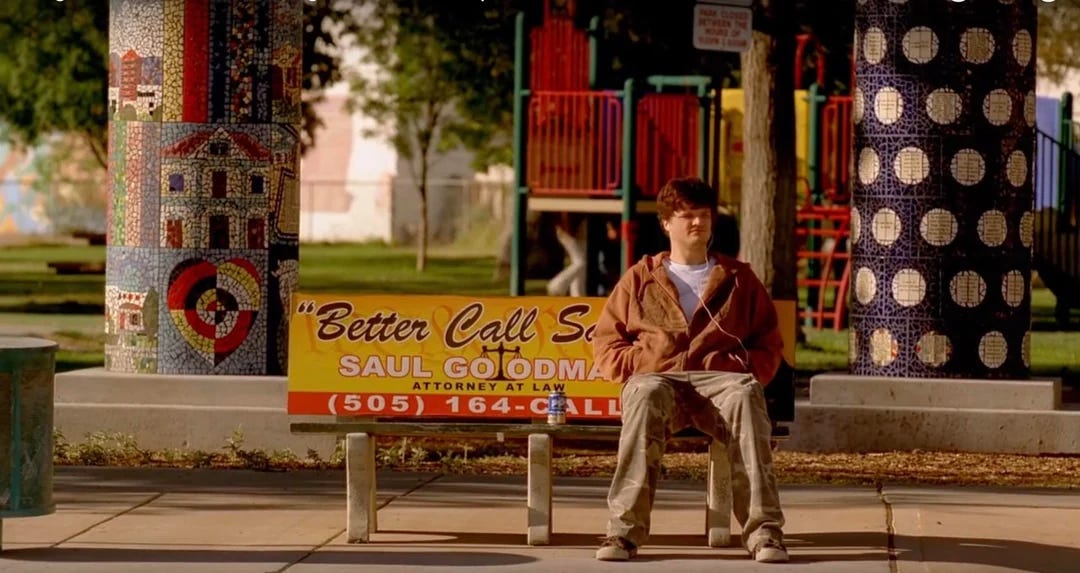
Joyce Searls (yes - that Joyce) posed this question years ago in the early days of Vendor Relationship Management (VRM) thinking. It remains the most elegant articulation of the asymmetry we’re working to address.
Credit to John Caswell for this formulation. It captures something I’ve observed across two decades of watching software companies excel at doing just that.
I should write a newsletter one day explaining ‘why’ PHI⑊PIN.
Bustin' Out

Most organisations are optimised for a world that no longer exists - built for control and standardisation and competing in one that demands responsiveness and fluidity. You can’t patch engagement onto record; the invisible architecture has to shift, and that requires the same structured thinking that got you here, just pointed differently. I published 8 new pages about this over the weekend - but what follows is a more playful approach to the framework.
I Can See Clearly Now
Can you? You have strategy documents, cultural initiatives, leadership programs, performance metrics … you name it … all the pieces from different jigsaws and no picture to even help you understand that you are on a hiding to nothing.
The Business Equation is running - because it always is. You are transforming core resources through process and technology, guided by human intent, into something others recognise as value. Just like every other organisation on the planet.
Are you tuning it or fighting it❓
The Times They Are A-Changin’
Dylan nailed it decades ago, but still we cling to ‘Systems of Record’ built for ‘The Age of Reason’.
Optimized for efficiency, control, predictability. They work brilliantly if the world stays still. It doesn’t. ‘Customer Effective Demand Networks’ have beaten out ‘Producer Efficient Supply Chains’. Your customers expect ‘Engagement’, not ‘Transactions’. Your staff expect ‘Agency, not ‘Instruction’.
The answer❓’Systems of Engagement’
Most organisations intuitively feel this - but perhaps can’t articulate it - and what the hell is a ‘system of engagement’ anyway. So we know it. Feel it even. But we can't move toward it because the foundations are built wrong.
So where do we actually start❓
It’s About the Journey
The sequence determines everything. People First - then Process - then Technology. That adage has been in play for decades, and still we don't understand that it's not just the words. It's the order.
Look around and watch organisations implement technology expecting people to adapt. Trying to change culture and expecting strategy to follow. Build and rebuild structure thinking that the work will fit.
It’s all backwards.
Structured Thought is not a methodology you implement. It's a practice. A way of bringing coherence to complexity by understanding which layer is actually broken.
Get the sequence right and each layer amplifies the next. Get it wrong and you’re fighting yourself while pretending you’re progressing.
Your task determines what structure you actually need, the structure enables your people to think and respond and those people enable you to use technology as a tool, not as a cage.
What happens when you get it right❓
The Space Between
If music is the space between the notes - work is the space between the boxes and when the sequence is right, something shifts. Not because you added more tools. Because you stopped letting them drift.
Your work becomes clear. People understand what problem they’re solving. They can see how their effort connects. They have agency to make decisions without asking permission.
Systems of Engagement start working because they’re built on a foundation that actually exists.
Data starts to be led by people, not leading people. You measure what signals matter. You stop optimising for transaction volume and start optimising for engagement quality.
When people have clarity and agency, they make better decisions faster.
Can you feel it happening❓
Comfortably Numb
We know something’s wrong. We feel it. But we’re comfortable in the numbness.
So we double down on what we know. More frameworks. More meetings. More measurement. We add layers instead of asking which layer is actually broken.
Why do we keep doing this❓
Message In A Bottle
The message is there. It’s been there the whole time, but what you read depends on where you’re standing.
To operations: Your processes are fighting how work actually happens.
To strategy: Your strategy isn’t landing because people can’t see it.
To culture: Your initiatives are disconnected from the actual work.
To technology: Your tools sit unused because the foundation isn’t built.
Same organisation. Same broken architecture. Different message.
People intuitively feel this. But there's no structure to build agreement on what it means. So they pull the bottle in different directions and the message gets ignored.
Operations wants to fix process.
Strategy wants to fix communication.
Culture wants to fix engagement.
Technology wants to fix adoption.
All diagnosing the same patient. All treating different symptoms. Nobody examining the root cause. But, once you see it, the message becomes clear. Not different messages from different angles. One message, finally legible to everyone. That’s when things change.
What happens next❓
People
Your data is led. Your people are first. Not as a slogan. Actually first.
You stop optimizing every system for measurement and control. You start optimizing for clarity and agency.
You invest in understanding your actual task. Then you give people the tools, context, and trust to solve it.
You sense what customers actually need. You let your people think instead of follow.
When you run the Business Equation this way - with clarity at the foundation, structure enabling people, and people enabling technology - the equation stops being something you manage and becomes something that reinforces itself.
But will you let it❓
Where Are We Now
The gap is real. Systems of Record built for yesterday. Systems of Engagement demanded by today. The collision is happening.
But here’s the thing about the message in the bottle. You can read the words, understand them, feel the weight of them. And still choose not to act. Living in your numbness.
Most organisations have already pulled the bottle from the water. They’ve read the message. They know the sequence matters. They know which layer is broken.
And yet.
The question isn’t whether you understand the problem anymore. It’s whether you’re willing to stop everything else to fix it.
Because this takes focus. This takes choice. This takes you - actually present, making actual decisions, staying integrated across functions instead of delegating it all away.
Are you ready❓
My Way
Music is my core and finds its way into everything. Meanwhile, I've published a series of pages on the main site walking through these challenges in detail.
This newsletter tells that story differently - through the lens of music and to remind us all that there is no single way. No absolute.
Paul Anka writes the song. Frank makes it famous. Sid turns it upside down.
That’s the point of the music I chose. Famous songs and unknowns. Covers and originals. Sometimes the covers are better than the original because they contain messages you don’t feel until someone else plays them. One of those videos shows us that everyone has a voice. No matter how insignifcant you might feel - the fact is that anyone can change the future. (Spoiler alert - it’s the Dave Mathews song.)
And then there’s the mix. Because if you do it exactly the same, what’s the point?
Life is a mix. It’s always different. Transformation is just the same.
Your organisation right now is a cover of something that used to work. A remix of systems built for yesterday, trying to make them sing in a world that’s moved on.
Those pages on the web site aren’t instructions. They’re the score.
What you do with them, how you play them, who you bring into the performance, which notes you emphasise, that’s your remix. That’s where the real work happens.
If you reached this far and want to talk more - I certainly do.
Let’s set up some time to explore how Structured Thought can be used to help your business transition into the ‘Age of Experience’.
Bonus: who played the song that inspired the title of this newsletter❓
I’ll tell you❗️
Coherence Is The New Moat
Not yet subscribed? There’s a button for that.
And then it happened
Ooh, and then it happened
Ooh, and then it happened
Ooh, and then it happened💬 Holland Dozier and Holland (‘H-D-H’ to their friends.)

If you have been following along (and if not - why not?) since the early days of People First, my work in Structured Thought and more recently, the consolidation into PHI⑊PIN then this is for you.
If you haven’t - it is - maybe even more so - still - for you.
Finally. It happened. Sometimes you think that you might just be ‘🔗🎵 blowing in the wind’ - until one day it changes and you think ‘maybe not’.
Today is one such day - because whilst spinning through this morning’s ‘thought review’ - 6 articles caught my eye1 that all connected. With each other, with me and with Structured Thought.
Six Voices. One Message.
Paolo Valdemarin | Laid out the job of what I call an ‘Engagement Platform’ by externalising your operating model so AI can translate between contexts while maintaining a single understanding.
Ben Thompson | Microsoft chose ‘coherence over scale’ by prioritising its own product suite. Why? Because maintaining a coherent vision across a portfolio matters more than maximising any single dimension.
Joan Westenberg | Solo operators using Structured Thought beat out large organisations because coherence compounds while incoherence fragments.
Christopher Lochhead | Execution is automated, knowledge is commoditised and real value has moved ‘upstream’ to problem framing. Which is exactly the point of ‘avoiding solving the wrong problem really well’ as my friend John Caswell has it and indeed, provides a ‘why’ of Structured Thought.
Geoffrey Moore | Agentic AI needs to be deployed atop proven, reliable structures with guardrails built in, not improvised on the fly.
Om Malik | The ‘announcement economy’ is a world of velocity and noise. Coherence matters precisely because everything else is optimised for attention rather than truth. I called it the ‘noise economy’ when I wrote about this last September in a piece called ‘Sound of Silence’.
The Convergence
You might think that these are isolated observations. They are not. Nor are they unique (other than they all appeared in my feed this morning). Bottom line - they are all describing the same shift. A shift that is unspoken - but at the heart of Structured Thought.
Competitive advantage is no longer scale, speed, or even access to AI. It’s coherence - the degree to which every decision, every output, every interaction derives from the same underlying model of reality.
In large organisations, this is nearly impossible. Different departments operate from different mental models and information fragments at every handoff. AI amplifies the disagreement rather than resolving it. But a small team with explicit structure working with a clear operating model, documented constraints, decision rationale, voice guidelines can scale without fragmenting and AI becomes a tool for executing within that coherence, not a way to hope disparate teams accidentally align. This is what structured thought actually means in practice: externalising your logic so thoroughly that it can guide people, process and systems.
Paolo Valdemarin: 🔗 AI as a communication tool
Ben Thompson: 🔗 Microsoft and Software Survival
Joan Westenberg : 🔗 The Coherence Premium
Om Malik : 🔗 The Announcement Economy
Chris Lockhead: 🔗 The Value of Your Value (LinkedIN)
Geoffrey Moore : 🔗 When will Agentic AI Cross The Chasm (LinkedIN)
Org Charts: Why They Are Wrong
Let me count the ways - but for now a short primer ….
Wrong - In What They Are
-
A static snapshot in a dynamic system - Org charts freeze people in place, in a world that’s fluid, adaptive, and always in motion.
-
An illusion of control - They suggest neat lines of authority, when actual influence flows in networks, whispers, and Slack threads.
-
A power fantasy - Designed more to reassure executives than to reflect how things really work on the ground.
Wrong - In How They Are
-
Too hierarchical, too linear - Most charts resemble military command structures in an age that demands collaboration and cross-functionality.
-
Built top-down, not inside-out - They reflect formal reporting lines, not value creation, lived relationships, or trust pathways.
-
Exclusionary by design - Contractors, advisors, ecosystem partners, AI tools? Nowhere to be seen, yet often critical to delivery.
Wrong - In the Information They Contain
-
Titles ≠ capability - Job labels are vague proxies. They reveal little about what someone is great at, trusted for, or actually doing.
-
Missing the real flows - No view of how decisions are made, who connects teams, or where knowledge is hoarded vs. shared.
-
Performance blind - They say nothing about value contribution, outcomes, energy, or momentum.
Wrong - In How Work Is Understood
-
They reduce people to boxes - And forget that work is a web of conversations, motivations, tensions, experiments, and progress.
-
Ignore emergence and adaptability - Real work happens across silos, shaped by informal leaders, not always those in bold font.
-
Reinforce outdated logic - Built for predictability and scale, when today’s work is about learning, iterating, and adjusting on the fly.
The Fractalisation of Work
To understand how the fractalisation of work (doesn’t) work - consider ‘the taxi’, the definition of which is in the process of being redefined as a personalised vehicle that will take you for a to b.
That continues - BUT … it also used to be a place for …
-
Human conversation - spontaneously - about local gossip, life advice, or even silence. And all without algorithmsmonitoring sentiment.
-
A helping hand, someone who’d load your luggage, not because it was required, but because that’s what people do.
-
Navigation expertise by someone who knows the backstreets better than GPS, and magically avoid traffic lines.
-
The ‘welcome committee’, offering recommendations for where to eat, what to avoid, and how to make the most of your stay.
-
An interpreter or cultural guide, especially in unfamiliar cities or countries, bridging gaps in language and local norms.
-
A protector that waited until you got safely inside your home or hotel before driving off.
-
A confidant that listens to everything from your job woes to relationship breakdowns .. no subscription required.
-
A fixture of community memory in the form of a driver who knew your parents, remembered your last trip and asked after your kids.
-
A micro-economy participant, in that they often owned their vehicle, had real agency over hours, routes, pricing, and long-term plans and what they earned was part of the local economy where they plied their trade - no profits siphon off and extracted to the banks of the ride share company.
-
A professional, who knows that the job isn’t just driving, but care, awareness, and service - all wrapped in experience.
None of which is really provided by the things replacing taxis …
And yes - I know that doesn’t describe all Taxis - but it certainly describes the good ones.
For the last 15 years, many companies chased ‘digital transformation.’ But if we’re honest, most of us didn’t transform, we digitised. We took analog processes and made them digital. We moved pieces to the cloud. We modernised within silos. We upgraded the present - instead of redesigning the future for a digital-first world.
💬 Brian Solis
** I have a draft that I clearly need to finish that is exactly along this theme although I call it a ‘**data-lead people first world’.
About This Blog
What is this blog about? Apparently it serves as a reflective exploration of complexity in various systems, highlighting the disconnect between theoretical frameworks and real-world behavior, while aiming to promote thoughtful navigation through that complexity. Who knew? Click through to read the why, the method and the overview.
Four Tools I Use
When I tell others, they seem to find them useful.
Ikigai - look it up
Pay, Play, Passion and Purpose - a ‘Structured Thought’ Model
Collect and Curate, Connect and Communicate - think Gladwell’s Tipping Point (Maven, Networker and Communicator).
Core and Context - think Moore - but then add a touch of Structured Thought with a dash of #PeopleFirst
🔗 … and then there is Hunter’s Letter
I’ll be back with more links at some point.