
🎙️ Podcasts
🖋️ Nilay Patel and Bart Butler - CTO of Proton - Talking
Privacy isn’t about hiding. It’s about choosing - not a quote - but that is absolutely the thread running through this Podcast - encryption, jurisdiction, age verification, AI. Bart keeps returning to ‘control’ as the definition of privacy, not secrecy.
🎛️🎙️ 🔗 Scripting News
I need an easy way to do a mini-podcast. An idea that should be said verbally, but it’s short and self-contained, about the length of an untitled blog post, like the one you’re reading now.
💬 Dave Winer
I had the same idea back in 2019 @dave - I even created a 🔗🎙️snicklecast to describe what a 🔗🎙️snicklecast - and why it is.
Never cracked the ‘simple’ part though.
I THINK there is something like this in MicroBlog on a higher tier than I sit at.
🖋️ Peter Kafka and Roger Lynch - Talking
A Podcast and Transcript: Roger Lynch reveals that Condé Nast’s survival isn’t about scale or content volume, but about brand authority and direct audience relationships, he suggests that when Google search collapses and AI platforms commodify content, only publishers with deep trust and “taste” that machines can’t replicate will make it.
If you follow me you will know that I don’t always listen to Lenny - but a big fan of his - and when he has a great guest … 🤯 .. 🔗🎙️ Simon Willison is one such great guest.
🔗 You Are Not Crazy - by Rushkoff is an interesting piece.
If you more aural than oral - 🔗🎙️this is the podcast version.
Interesting is not the same as great.
Finally ….
developers will need to focus even more on polish and making an app feel like a finished product
Hopefully that will not only be about Design and Interface, but also navigation and simplicity and all else that drives me nuts with too many apps. (Most if I am honest - some I stick with.)
In December 🔗🎙️Lenny talked with Elena Verna - head of growth at Lovable - and on the way through commented that ‘Minimum Viable Product’ is now table stakes - we need to be building Minimum Loveable Products.
Ok - self serving naming - but it is the same kind of thinking.
Sometimes ..
Then again - the ‘conclusions’ aren’t always a lock.
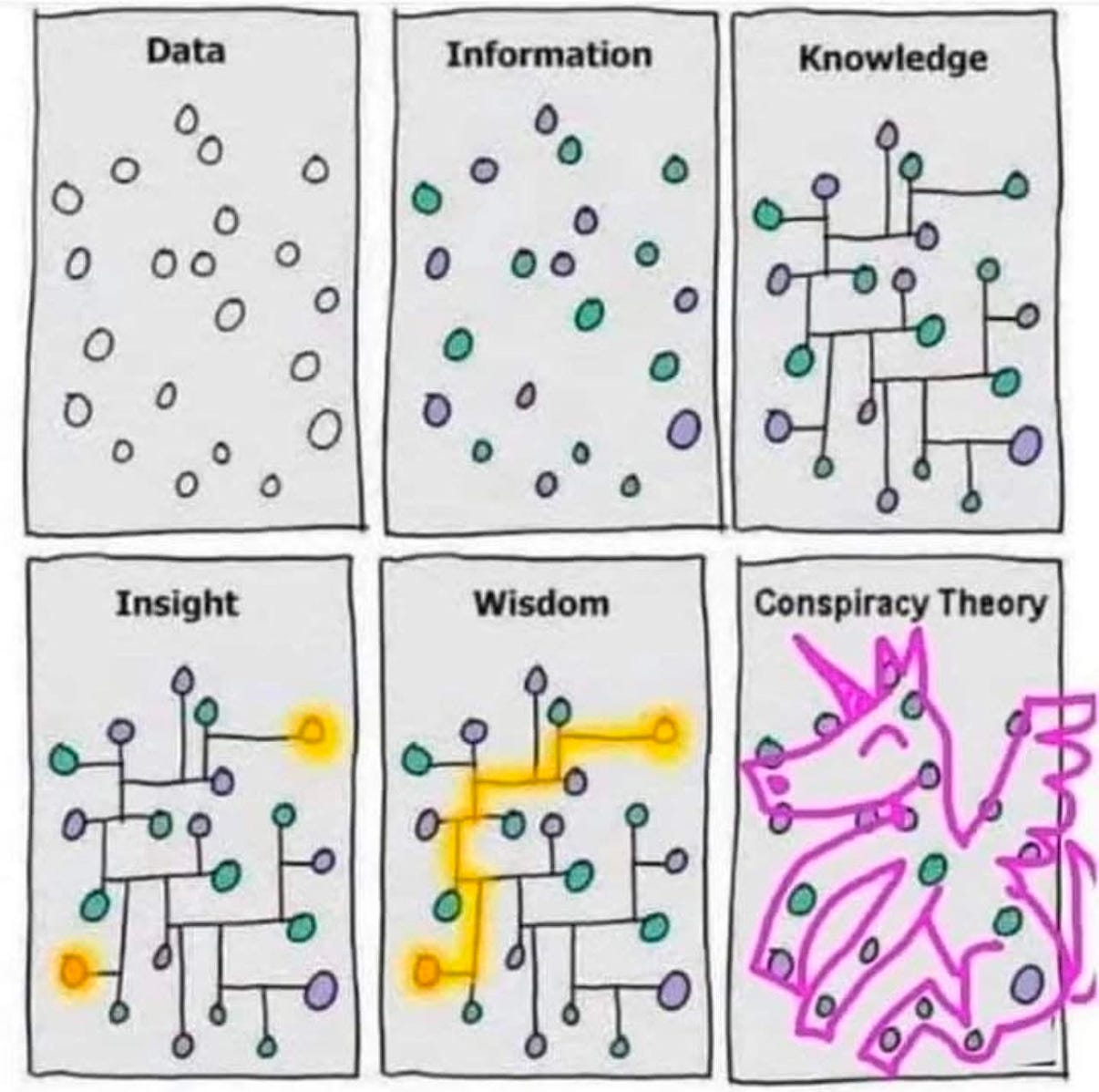

So, let’s explore together. Here’s what the past 24 hours have thrown my way…
I was introduced to a team deeply immersed in AI. I won’t go into their work here, but one line stuck with me: “I just can’t help connecting the dots - it’s what I do.” A ‘brother from another mother’. And - as it turns out - a lot of those dots tie back to one thing: process. More on that in a moment.
Then I …
stumbled on this article - Meet Your AI Co-Workers: How OpenAI and Anthropic Are Rewriting Work.
listened to this podcast … 🎙️China Is Run by Engineers. America Is Run by Lawyers from Stephen Dubner and Freakonomics. It’s a great show - but it was what his guest (Dan Wang) said towards the end. If you don’t have time to listen to the whole thing - fast forward to minute 47 or so - and learn about ‘process knowledge’. It certainly caught my attention.
And then there was a radio interview with Craig Steel from Vantaset (🎙️Listen), which quickly made waves in the New Zealand media. Prefer print? You’ll find it here.
“When AI is implemented simply to reduce workforce size or centralise control, it can backfire, weakening morale, diminishing trust and stalling innovation.”

All of this lands against a backdrop of Structured Thought I’ve been developing - specifically the shift from Producer Efficient Supply Chains to Customer Effective Demand Networks. The question is: where do you begin, and what do you focus on first? Because, despite what the movie might suggest…

AI will not be ‘everything, everywhere all at once’ - even though it might feel that way. It starts, and is in fact already starting, with the low-hanging fruit.
Take my brief stint as a Chartered Accountant trainee. As one of the ‘grunts’ in an auditing firm, my job was often to wade through piles of dog-eared flowcharts and confirm that the processes recorded on paper matched reality. My role was to flag the ‘deltas’ - the gaps. Many before me had done the same, leaving a trail of annotations so dense it was almost impossible to tell what the actual process was. At least, not for a first-year ACA student.
Years later, I landed at Vitria - competing with Tibco, SeeBeyond, and others in the crowded world of middleware. It was another chapter in the long tradition of process mapping. And the fight still goes on. Real AI - not today’s LLM craze - has been doing this work for decades: routing logistics, planning manufacturing capacity, detecting financial fraud, predicting equipment failures in aviation and utilities. Long before ChatGPT made AI a household word, these systems were already solving large, messy, real-world problems at scale. I’ve always thought of this work as ‘gap mapping.’ It was low-hanging fruit then, and it remains so today. But there’s still a long way to go.
… and that’s just one field we’ve been tinkering with for decades - never short of tech firms offering fixes. Now AI is cracking open fresh possibilities, with a new crop of startups racing in with their own AI-powered solutions. In ‘process mapping’.
The conclusion? AI is simply the next chapter in a long book we’ve been writing on process. The shift from Producer Efficient Supply Chains to Customer Effective Demand Networks isn’t about replacing people with machines - it’s about re-centering process around outcomes that matter. Middleware once helped us connect systems; AI now helps us connect intent, demand, and execution at a scale we haven’t ever been able to get close to. The real opportunity lies not in making processes faster, but in making them smarter, fairer, and more human.
If you want to talk more - I certainly do.
Let's set up some time to explore how Structured Thought can be used to help your business transition into the ‘Age of Experience’.

I was delighted to be joined on the People First podcast by Ramsey Avery who is the Production Designer for the Amazon series - Lord of the Rings - Rings of Power.
Wonderful conversation that I know you will enjoy.
🔗🎙️ Ramsey Avery - The Lord Of The Rings - The Rings Of Power
Discovered on my test blog from a year ago. (Clearly a space I don’t use a lot!)
A short extract from The Mike Hosking Breakfast show - down in New Zealand featuring Vantaset’s Craig Steele talking about Organisational Productivity - with a specific focus on Performance.
💬 Listening to 🔗🎙️this - Kara and Jesse Armstrong talking about Mountainhead - and this pops up in my Readwise.
SYNCH
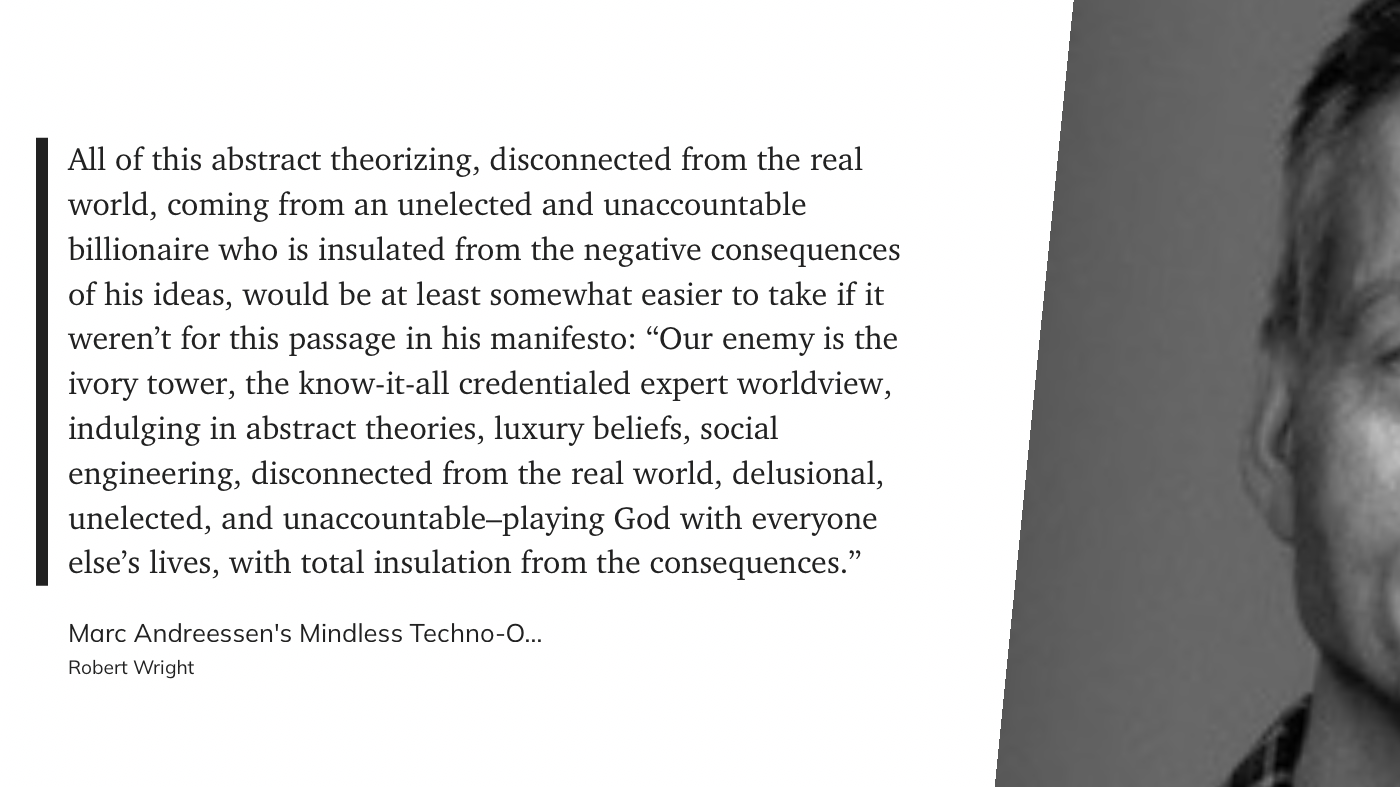
🔗🎙️Kafka talking to Jay Graber - an interesting listen - BUT my takeaway as a casual listener was that sites like ‘PinkSky’ are the long awaited ‘seperate instances’ to Bluesky. But no.
There is still not a Bluesky instance that is not on Bluesky.
Disingenuous - or did I mishear?
About Those PE Companies
If you are a regular reader of this blog - you will know that I am no financial expert. I never even played one on TV - BUT - fascinated by it since the people in finance are (too?) often the one that dictate the funds available to do what I think businesses need to do. Today’s topic - PE. Which is NOT the same as VC. Not at all.
Preet talking to Ian Bremmer .. sensible talk.
Christopher Lydon … Tяump a real life Great Gatsby 100 years later❓
Only one third in - and we will get to the Silverlake/WPEngine fracas .. but for now a 🎙️🔗link to Lenny’s podcast and a wise thought.
Side note - no expert on how this is all going to shake out in the courts - but from what I read - I remain on Matt’s side.
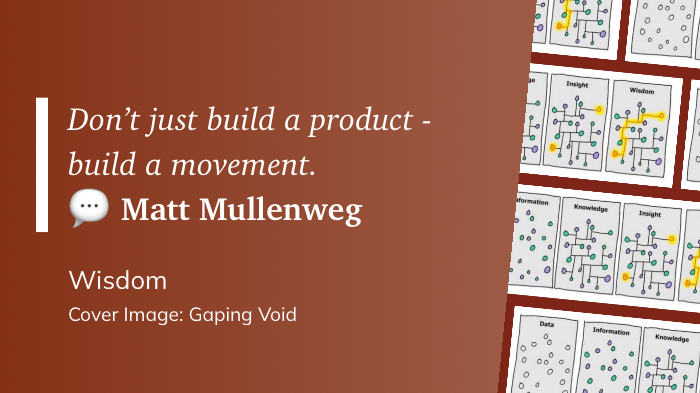
There are an increasing number of posts featuring this thinking …
🔗🎙️Trump’s Mafia World Order - Alastair Campbell
🖇️ I think Rushkoff said it best.
I go in and out with 🔗🎙️Hardfork with Casey Newton and Kevin Roose. Topics aside the ‘out’ is often because they both have a habit of moving the tone of their voice up a couple of octaves which truly pierce’s my ear drums.
And just now I realized how much they also remind me of YouTuber 🔗📼 Ryan George — who can be very funny - and equally piercing.