
🚧 WIP
Ideally posts in this category don’t stay this way - a reminder to yours truly that he needs to return here one day and do something with it!
🚧 Coordination Costs
The Stripe co-founders were candid about their failure to predict where the economy was heading. They also said they overspent on things like “coordination costs.” That’s not a term I’ve heard before, but I suspect it is a reflection of getting too big and too inefficient.
💬 Jessica Lessin
It's a new term to me aswell - BUT recently on LinkedIN there was a meme running around - which used this graphic.
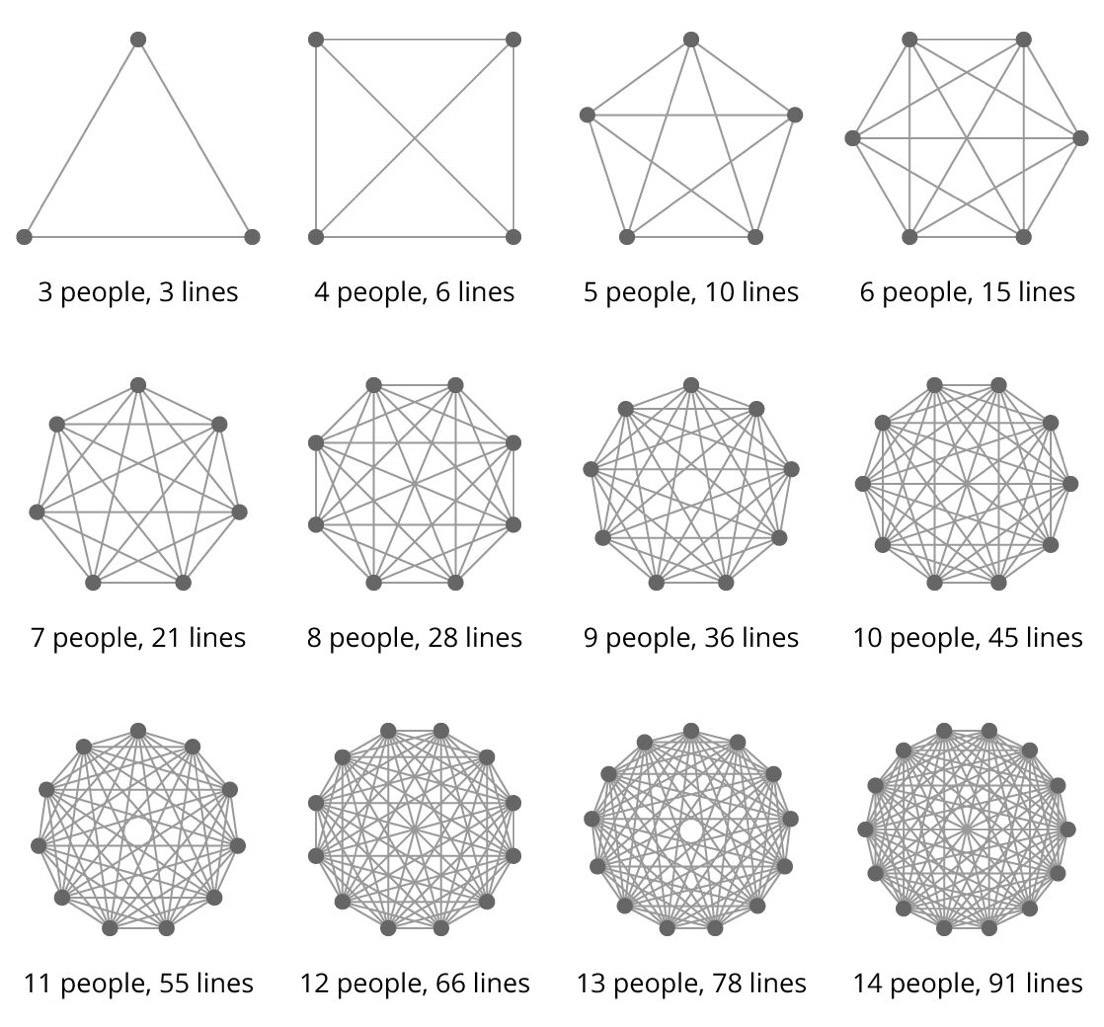
It's pretty self explanatory. The formula is that for every person you add to an organisation, the number of potential conversations increases - a lot. If 'n' is the number of people in an organisation, the number of potential conversations is n-1 + n-2 + n-3 .... in other words ...
3 people ... 2 + 1 = 3 4 people ... 3+2+1 = 6 5 people ... 4+3+2+1 = 10 6 people ... 5+4+3+2+1 = 15
And adding 1 person to a 10,000 person organisation adds 10,000 possible new lines of communication.
We Are Becoming A Power Skills Economy
Josh Bershin writes that we are becoming a power skills economy.
In other words, automation did not eliminate work at all – it created new jobs, better jobs, and an acceleration of our workforce into what we now call the “service economy.” We are essentially shifting to the right in this model.
💬 Josh Bershin
BTW, in case you are wondering, ‘Power Skills’ is the 'new' name for ‘Soft Skills’. To be fair, it did need a new name. It’s also fair to say that whilst he’s not wrong, he fails to mention that in the last 15 years (where he references 2007) no mention that the average income of people is flat and that real income is declining.
But that's a different opportunity.
Oh - and maybe not so 'new' Josh was talking about this back in 2019 - and gave us a few clues as to what he was talking about, this is one of his graphics.
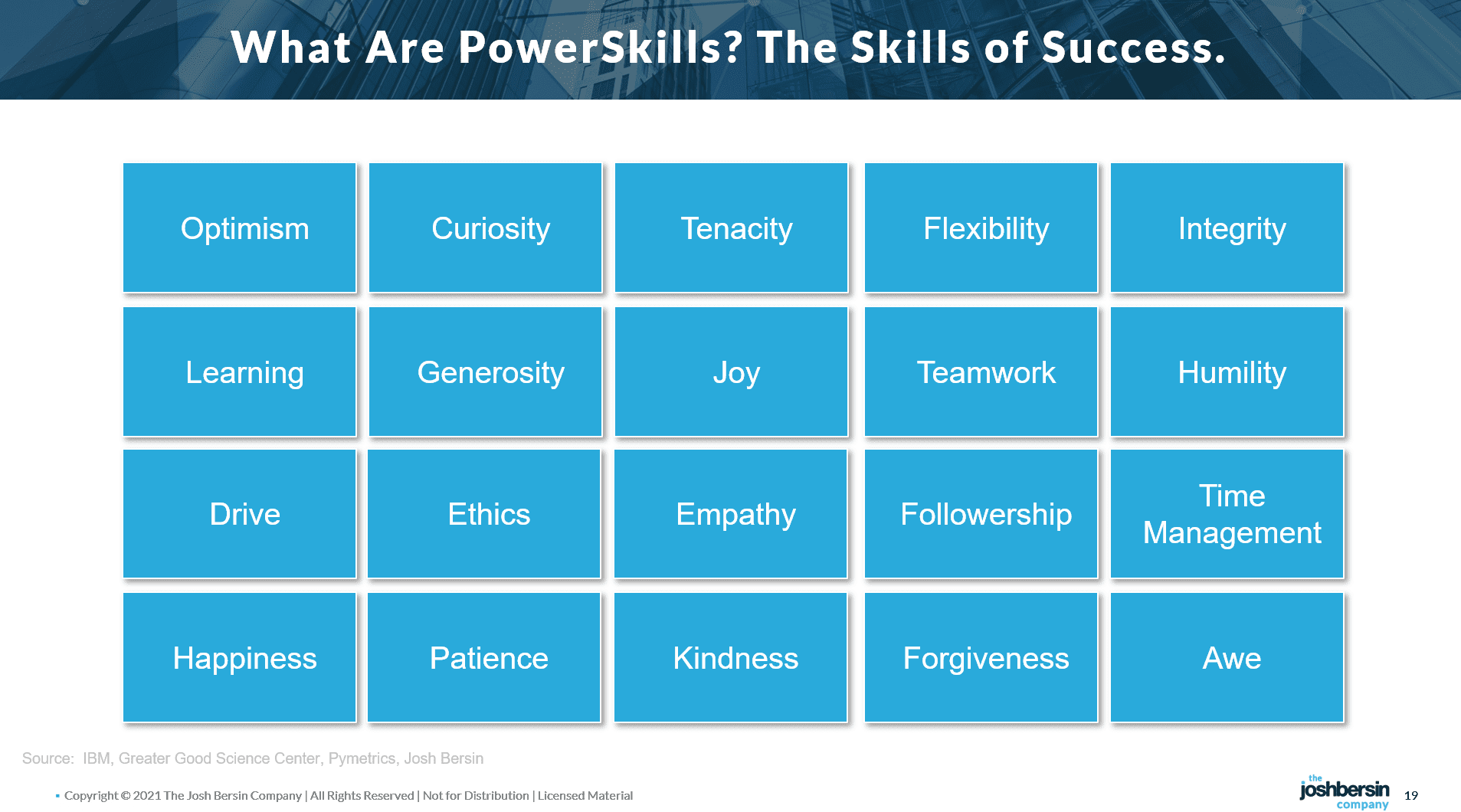
Here's My Take
1) Becoming? I think it is really more like that we are starting to recognize these skills. They have always been there - and though not necessarily recognised or even understood - I bet if you find successful people in that 'old' economy - they would demonstrate a lot of these traits.
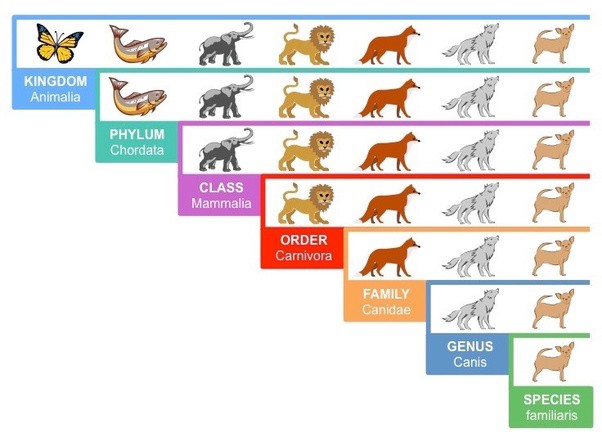
2) Josh is not alone in highlighting these skills and their importance. What nobody is doing is organizing these skills into a taxonomy - much less an ontology. (What's the difference you may ask) Stan Garfield has a very simple explanation)
Taxonomy
Ontology
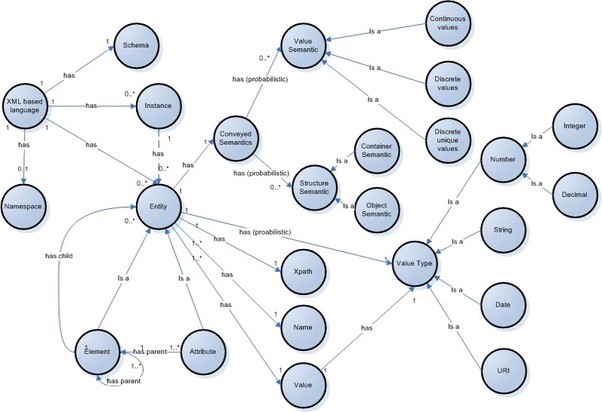
... except now there is.
More of this to come, but have to say, very excited by a company I have been talking to that has not only done a lot of research into these skills, but also which skills are most important - and why, depending on what you are trying to do.
Not only that, but they are releasing an app that will allow anybody to
- assess their personal strengths and weaknesses across all skills
- define which of those skills they should focus on to maximise their ability to be most succesful at what they are trying to do
- all through a self paced, self directed, learning program.
As I said - more to come. Just to say - the cavalry is on its way.
Featured Image by Tim Mossholder on Unsplash
If You Don't Add Value - Why Are You There?
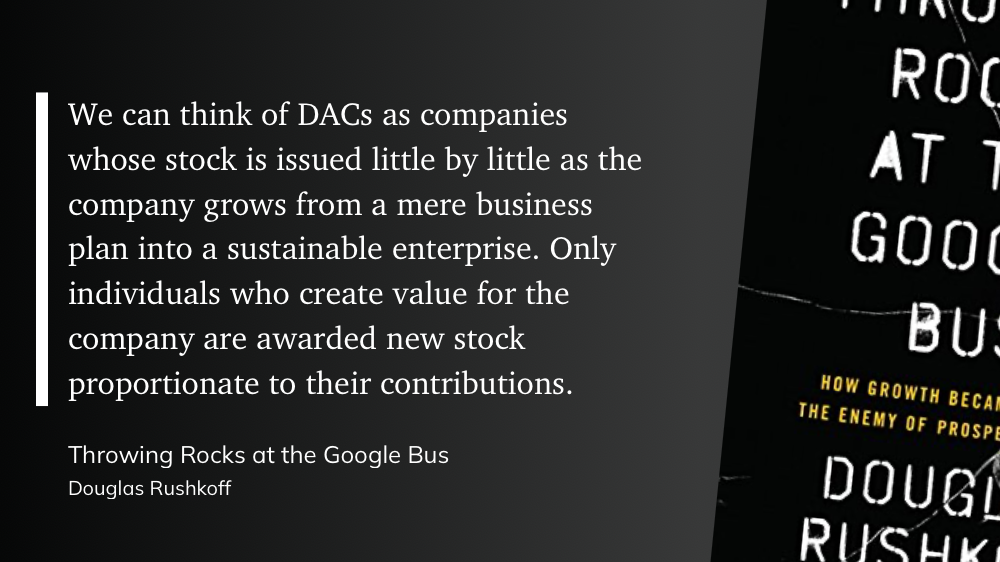
It is telling that someone like Doug Rushkoff can write these words;
Only individuals who create value for the company are awarded new stock proportionate to their contributions.
💬 Douglas Rushkoff
... without questioning the principle.
The corollary is of course that there are people that work inside a company that don't add value, which for yours truly is of course like a 'red rag to a bull' - because as the title of this post suggests, if you are employed by a company and not adding value to that company - then why are you there?
Stakeholder capitalism (apparently) 'solves' the problem.
‘Stakeholder capitalism’ is the buzzword du jour for business practices that strive to achieve more than profits and a high stock price.
💬 McKinsey
If you want to read more - you can:
Putting stakeholder capitalism into practice.
To be fair, the idea of 'Stakeholder Capitalism' has been around for several decades, although who actually coined the term is up for debate, with names including Klaus Schwab (Founder and Executive Chairman of the World Economic Forum), Peter Drucker and Tom Peters.
Still wondering? This is not a bad primer.
So yes - it is not a new idea - it's just that as the world's conversation is moving into fairness and equality, as we see a (kind of) resurgence of Unions and as 'capitalists' are pushed into the corner of 'defending their position' ... the term is emerging and arguably being positioned as the logical next step for a 'sustainable economy'.
I wrote about this over three years ago when I shared a Ted Talk from Nick Hanauer. Today, that video has had over 5 million views. At the point of 'first discovery', I had not heard of Nick - but as I pointed out, the principles of what he was talking about are engrained in People First thinking.
Today, you can hear the same language when people talk about DAOs in the world of 'Web3' and quite a few other places.
But then many steps before 'Stakeholder Capitalism', there was something called 'The Cooperative Movement' which got its start in 1844 in Rochdale a small town in Lancashire, England.
So far, I have not read anything that clearly articulates the distinction between Stakeholder Capitalism and Cooperatives and which and why each might be better or worse than the other. Sometimes I wonder if 'cooperative' is too 'radical' in this world - so we keep inventing new words to describe the same thing.
I have always liked the New Values/Old Values - New Power/Old Power model originally developed by Jeremy Heimans and Henry Timms nearly ten years ago.
So, picking on a random target company like Uber, which despite hanging its hat on 'the sharing economy' is actually 💯 an 'old thinking' capitalist company.
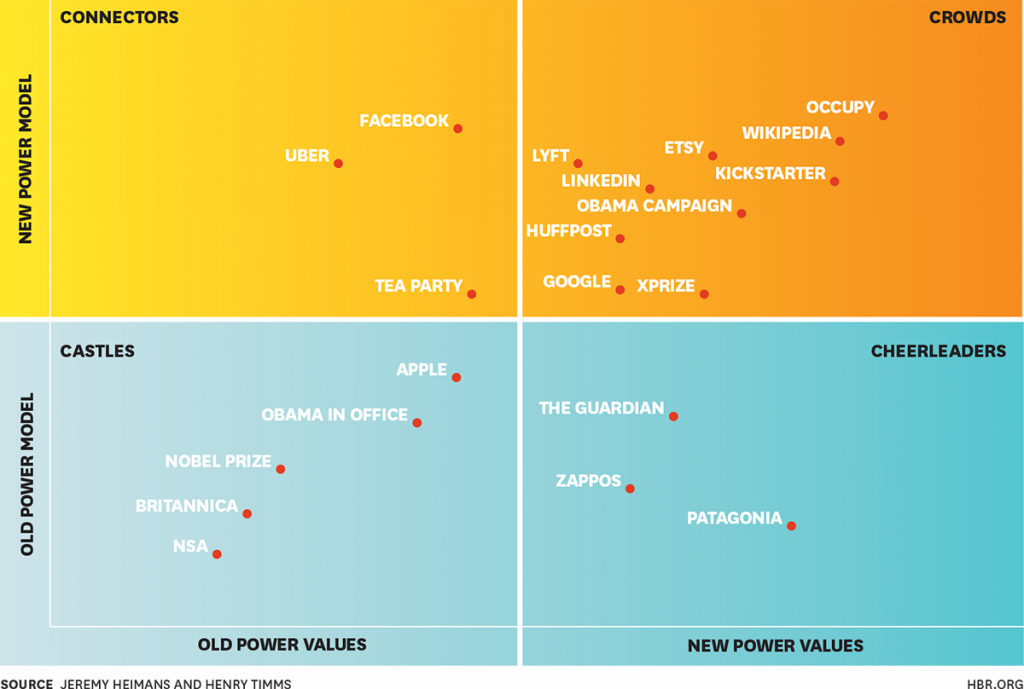
Now consider a company called ATX Coop Taxi - a cooperative taxi service based in Austin that has been around for over 5 years. NO - they aren't as well known - but their service is a 'cooperative'.
The question is why hasn’t it taken off?
That is for another time.
🚧 The Coup We Are Not Talking About
Shoshana Zuboff calls this development The Coup We Are Not Talking About. The subhead of that essay makes the choice clear: We can have democracy, or we can have a surveillance society, but we cannot have both. Her book, The Age of Surveillance Capitalism: The Fight for a Human Future at the New Frontier of Power, gave us a name for what we’re up against. A bestseller, it is now published in twenty-six languages. But our collective oblivity is also massive.
💬 Doc Searls (my emphasis)
🖋️ How Are We Going To Manage The Transformation We Need?
I often listen to a podcast or read an article and at the end of it my reaction is 'yes … and' or 'yes … but’.
IF I feel sufficiently moved - a link might get posted to my Thought Stream, together with a pithy observation - and I move on.
The Thought Stream
On the stream I offer a randomized link, that takes you to one of the posts. the oldest of which dates back 2005!
Sometimes though … just sometimes … what I am reading or listening to, triggers more than a few synapses and I am prompted into writing something more substantial. This is one such occasion after I listened to ‘The Thoughtful Leader’ - a podcast hosted by Mindy Gibbins-Klein when she was talking with Steve Sanders.
Full disclosure - whilst I don’t really know either Mindy or Steve - we have talked, exchanged ideas and generally feel we are on the same playing field. All three of us happen to belong to a tight network that runs out of the UK, but in my language, I wouldn’t say I ‘know’ either of them ‘well’ (yet), whatever that means. That said, they both come across as very good people that I will get to know better over time.
So to that podcast.
First - Mindy - my thanks for the People First call-out - at least that is how I am taking it 😀 … I know you weren’t connecting it to my work - but I’ll take whatever I can get - just like when Zuckerborg (sic) borrowed the phrase, I know he wasn’t talking about me - and in fact, I don’t believe him - but nothing wrong with pushing the image to remind people!

Steve - good job and on topic - as we explored when we recently talked. I think we might be cut from the same cloth, even though our suits might be different.
I certainly do not disagree with anything you said - but I do have a couple of observations.
One - Generational Differences
I agree on the challenge of focussing on generational differences. I know 15 years olds that are 80 and 80 years old that ‘remain’ teenagers. I get why business has this need for categorisation - I reject that people need to adopt it.
The New Yorker seems to agree.
Why do people adopt corporate language and thinking that is at odds with what is good for us?
For example;
I reject the use of that horrible corporate word ‘content’ that people spend so much time working to deliver into the platformed silos of LinkedIn, Facebook, TicToc, Snapchat, Instagram, What’s App and all the rest.
If your work is homogenous, un-differentiated, fodder written to feed the algorithm and garner clicks, hearts and whatever other little badge of honour the corporates regard us with - then perfect.
I would hazard a guess though that most creators don’t think that their posts, articles, essays, photographs, books, images, poems … are anything but that … but that is what we are reducing our IP to.
And of course, because anything that is an homogenized undifferentiated commodity - the price that gets paid is not on value - but how cheap an alternative might be.
.. and do not get me started on Marketing War Rooms!
But let’s keep the plot front and center.
I have been looking and commenting on these supposed generational differences for years and am not quite as optimistic as Steve when it comes to how fast this is going to change. More of that in a minute. But first - let me put my hand up in the air and emphasise that Steve is not alone in his optimism. Who am I to disagree with the findings of Accenture, who in this report seem to support the idea that we are moving towards this new world faster than any of us might think.
Esteban Kolsky is one of the few analysts that picked up on the survey - and in his post reminded us of the vagaries of such surveys!
… “let’s say you are not truly convinced that they WILL actually do what they say they may in a survey (something about an unconscious bias towards being liked makes most of us answer as expected, not as the way we will act, etc.).”
He goes on with this advice …
… “read while wearing rubber gloves and use thongs to “flip pages” if you want to avoid contact – hehe – but definitely read this about how consumers are changing, because outside of the flawed data-collection, the trend is real and well documented.”
… and it is my job as CCO (that’s ‘Chief Contrary Office’) not only to question the findings that were discovered when Accenture surveyed
… “more than 25,000 consumers across 22 countries, with follow-up focus groups in five countries.
(I’ll forgive the language - it’s Accenture, they can’t help it, but I prefer to survey people.)
… but indeed anything that sits oddly that is, in turn, being shared under the banner ‘common wisdom’.
The bottom line is optimism. Don’t get me wrong - even I am optimistic, it’s just the speed of adoption that I am questioning - which brings me to part two.
Two - The Speed of Transformation
First, I hope I am wrong. But, the evidence I am seeing suggests different.
I could highlight so many examples that might suggest how slow this is going to be - but let’s choose three.
Supply Chain Inequality
We have been able to buy ‘$1 throw away ‘designer’ t-shirts’ for decades. Stores like Primark despite pages like this exist because when it comes to action - as opposed to feeling, we turn a blind eye.
Just think for two seconds about the profit behind a $1 t-shirt being sold in a large department store on Oxford Street and other cities around the world. It surely points to inequality and sometimes exploitation somewhere (if not everywhere) in the supply chain.
Exploitation that we all hate and rail against - but we are complicit in our purchase.
What age group does Primark serve
”Whilst in-store customers may differ slightly, Primark’s social audience fall within the 17–24-year age demographic (depending on platform) and are over 90% female.
The very age group that we are pinning our hopes and dreams on to change corporations.
Ease of Transaction over Moral Compass
Uber Eats, Doordash, GrubHub et al make their profits through food delivery.
The mechanics of the transaction has 30% of the food order at your favourite takeaway magically being extracted from the local economy - only to appear as revenue in a company in Oakland, California.
It’s clear. But we continue to do it.
So much for being aware of social issues and forcing corporations to change.
A similar argument can be applied to Uber itself because it is ‘oh so convenient - and cheap … even though even in London there are apps that compete like Gett … so people who ‘say’ they are demanding Corporations to do better - vote with their thumb when it comes to the short term benefit of saving a buck. Principles are gone!
Don’t believe me? Consider this which headlines with;
“Black cabs roar back into favour as app firms put up their prices.”
Meanwhile - over in the USA …
DC AG Sues Grubhub For Sneaky Fees, Screwing Over Local Restaurants | Techdirt
“But Grubhub didn’t fully cover the costs of these discounts. Instead, it passed most of the costs of the discounts along to the already-struggling restaurants. Grubhub also forced the restaurants to pay their full commission on the discounted orders based on non-discounted prices. This promotion severely cut into restaurants’ already-small profit margins, and misled DC residents who believed their orders through Grubhub would help their favourite restaurants.”
Yikes.
Where is the outrage? Where is the socially aware youth?
Cryptocurrency
16% of Americans say they have ever invested in, traded or used cryptocurrency - depending on which site you visit, the numbers vary for the US and in different countries, but there is no doubt that a lot of people have jumped onto the bandwagon - despite the apparent danger of it being a highly volatile gamble in something that I would guess (no science here), some 90% of those people could not even start to describe how cryptocurrency works.
But that isn’t what this bit is about.
Lets start with another podcast that asks Can Our Climate Survive Bitcoin? - it’s an hour long - but well worth a listen - and it contains some eye opening stories.
One of the many stories - American towns competing with each other to offer massively discounted power to ‘crypto miners’ where the workers earn $20 per hour, and the owners - well - it’s the usual story.
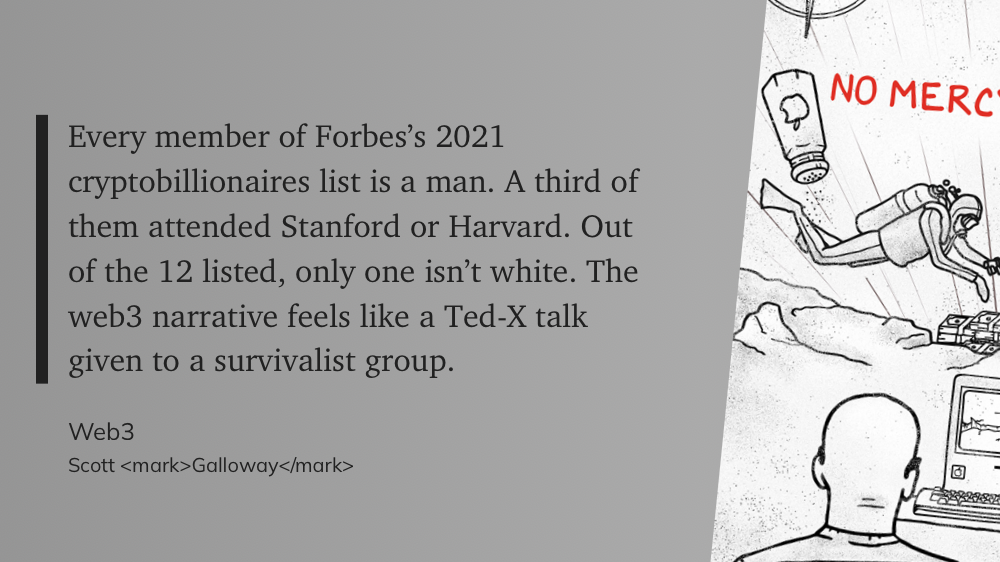
Scott Galloway nailed it in one of his pieces;
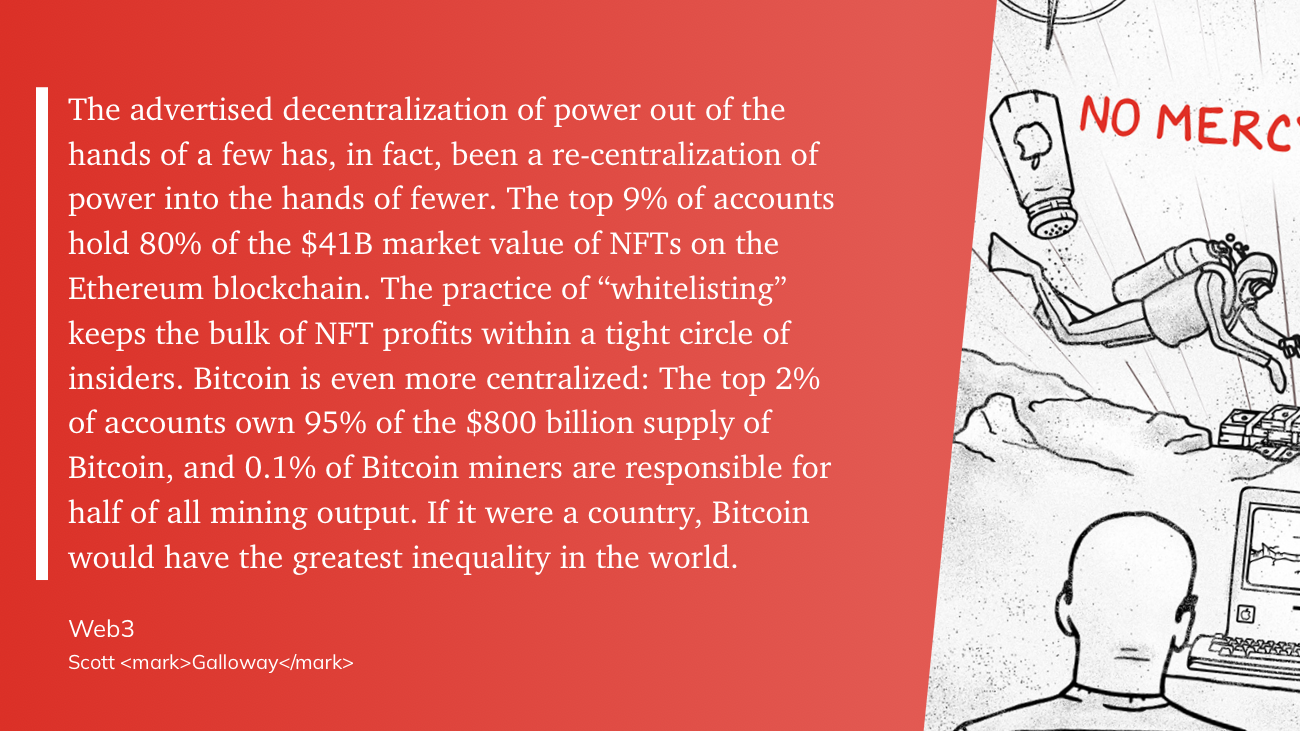
and
All animals are equal but some are more equal than others
💬 George Orwell
So how do you reconcile the crypto movement with the climate change crowd …
… “almost half of all American men ages 18 to 29 say they have invested in, traded or used a form of cryptocurrency.”
Maybe its just that the ‘modern youth’ are massively intelligent …
The test of a first-rate intelligence is the ability to hold two opposed ideas in mind at the same time and still retain the ability to function.
💬 F. Scott Fitzgerald
But I am not yet convinced.
No research yet - but as the funds spring up supporting this brave new crypto world and our children are apparently eschewing investment in the ‘extractive industries’ - we find this headline;
Exxon Mobil reportedly gets in on Bitcoin mining
Follow the money babe - follow the money.
Three - Altruism
Riddle me this … why are boomers generally seen as the ‘bad guys’. This just 5 days ago : Boomers responsible for nearly one third of greenhouse gas emissions, study suggests. Really, do some google searching - it is clear that boomers are positioned as 'the problem'.
I have no idea how true that is (full disclosure - I am a boomer)
But It Gets Worse
I am a Boomer
I am English
I am Male
I am Straight
I am White
Single handedly - most of the ills of the world might fall at my feet if you listen to the common narrative.
I do however know enough that the same data can produce very different conclusions.
But consider this;
Vint Cerf and Bob Metcalf’s work gave us TCP/IP - the internet wouldn’t work without that protocol
Tim Berners Lee’s work gave us the worldwide web.
So as to avoid confusion (and please note - this is a real image - not a photoshop .. I was there when it was taken.) …
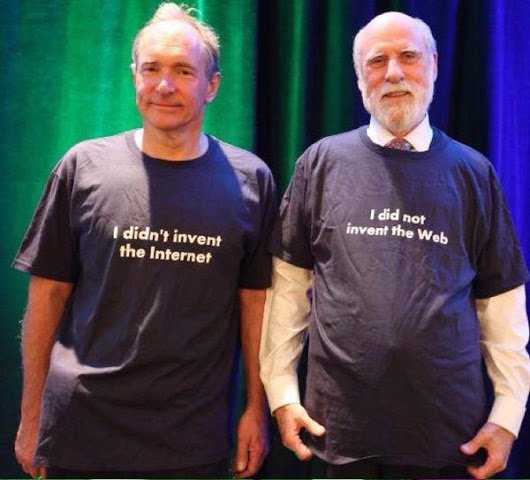
Let’s write that in a different way.
Baby Boomers Vint Cerf (78) and Bob Kahn (83) hold the join honorary title of ‘Godfathers of The Internet’. Tim Berners-Lee (66) came up with the World Wide Web and none of them are millionaires in the ‘millionaire sense’ - and certainly not billionaires.
It’s also telling that I more than likely need to provide context as to who these people are - but that when we move on to other generations, no explanation is necessary. We just somehow know their names.
Jeff Bezos at 58 sits at the cusp of Boomer and GenX, the other names you will be familiar with include;
GenX
Jack Dorsey (45)
Sergey Brin (48)
Larry Page (49)
Elon Musk (50)
Millenial
Mark Zuckerberg (37)
Evan Spiegel (31)
Zhang Yiming (38)
The web was created by Berner-Lee as a place of equality - where everyone had a publishing press and/or microphone - if they chose to use them.
But the money was made by ‘post boomers’.
The cesspit of corruption, bias and fake news - Fakebook was created by a millennial. The other one, Twitter, by a GenXer.
I could write it another way;
Boomers created the internet and the web and did not turn themselves into money-grubbing billionaires - like GenX and Millenials do today.
Now, who’s destroying the world?
Bottom Line
No matter the indignation we feel, or how loud our screams for a fairer society, the fact is that when it comes down to it, the further that happens from your wallet and/or physical presence - the more easily it is forgotten - or even ignored.
The t-shirt situation occurs because they are made on the other side of the world - too far away for me to affect. Besides - if I don’t buy them - others will - what difference does what I do make?
Uber, is an identical situation - except the person you are now stealing (what word would you use) from might be your neighbour!
And it is all because people, on the whole, do not understand. They don’t think - why should they - life is too busy!
As a result, corporations will continue as they do and won’t be challenged as they transition their businesses into spaces to make even more money - at whatever cost.
Yes - there are exceptions. Consider Patagonia, a retailer that takes its values to heart. Revenues of $1Billion - not chump change - but that’s less than Primark’s pre Covid annual profits - interesting to note that Arthur Ryan who founded Primark is of the Silent Generation as is Yvon Chouinard who founded Patagonia.
If we are really going to compare generations through the lens of ‘business oligarchs’ - it looks like the world might have got better with Boomers - and it has been going downhill ever since!
Conclusion
And, this is all written with a bit of tongue in cheek because I do so object to behavioural classification based on age.
But it’s also asking why we think everything is suddenly going to be different - and different quick - just because we hear how ‘woke’ and ‘aware’ the youth are - when it comes to global challenges. ‘the youth’ are coming to save us.
You might not remember the sixties (if you do - you probably ‘weren’t there’), but that generation had hopes, ideals and aspirations. They were also going to change the world for the better. Did they? Was it for the better?
To borrow a ‘sign off’ from my friend Geoff Moore - that’s what I think … what do you think?
🚧 It's A Pattern
In my book ‘For Business Leaders Slapped In The Face By A World They Thought They Knew’, I referenced an organization called 'The Prout Institute'.
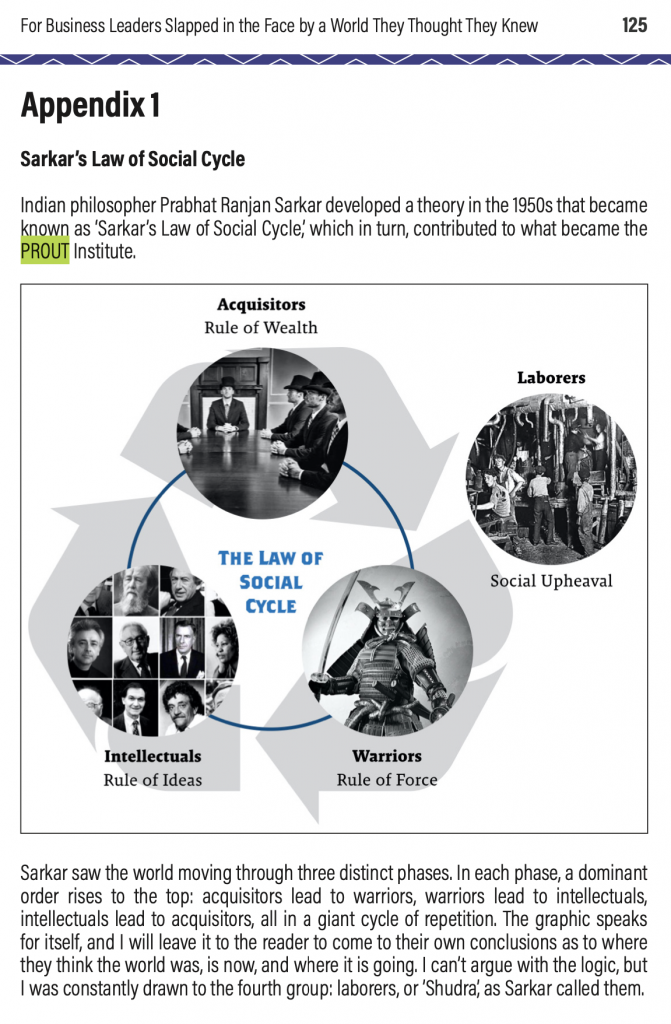
It came to mind as I watched this relatively unwatched (in the big scheme of things) video.
Andrew Pancholi is definitely an interesting man.
It's a 2022 video - but predates the invasion of Ukraine, though not the build-up with the result that we have an immediate feedback loop on some aspects of how right or wrong his thinking is. (He seems to be right.)
The talk is only 35 minutes or so of the nearly 1-hour video (the rest is a Q and A) - and touched on many topics including China's penetration into the world that Peter Frankopan - amongst others - wrote about in his 2018 book The New Silk Roads. (The Guardian). An excellent book that if the future of the world is interesting to you, this book should be either on your bookshelf - or (as in my case) in your iPad.
There is part of me that questions the pattern making ‘proofs’. Kind of like the ley lines of England … that are in the canons of ‘lost knowledge’. If you are loose enough with definitions and correlations then yes - everything is going to align.
Still, for all of that, it’s a good 35 minute listen - and it gets harder to say that as each day passes.
Experimenting With Footnotes
🚧 I wanted to write this post as a permanent test of applying ‘footnotes’ on my blog.
Here in the time line it is almost certainly going to look weird if there isn’t a title - but the idea is to improve the reading experience on the site - and then of course explore what it might look like in an RSS feed.
Post Posting
The footnotes aren’t coming through hyperlinked. YET!
Lorem ipsum dolor sit amet, consectetur adipiscing elit. Suspendisse varius sollicitudin consequat. Etiam cursus blandit nisl accumsan fermentum. Phasellus faucibus velit non porttitor tincidunt. Ut quis erat ac nibh auctor tempus. Sed a metus sed dui pulvinar dapibus pulvinar et nisl.
Click On The Arrow To Get Some Context
Lorem ipsum dolor sit amet, consectetur adipiscing elit. Suspendisse varius sollicitudin consequat. Etiam cursus blandit nisl accumsan fermentum. Phasellus faucibus velit non porttitor tincidunt. Ut quis erat ac nibh auctor tempus. Sed a metus sed dui pulvinar dapibus pulvinar et nisl. Sed consectetur, magna sit amet vestibulum dapibus, augue orci dignissim nulla, nec interdum ligula nibh at dui. In in dolor sit amet urna tempor pulvinar. In ut odio et ligula faucibus placerat. Proin pulvinar ex et sagittis molestie. Vestibulum dignissim faucibus diam, quis lacinia lacus mollis et. In fermentum ex quis consectetur semper. Nullam ut metus quam. Suspendisse potenti.
Sed consectetur, magna sit amet vestibulum dapibus, augue orci dignissim nulla, nec interdum ligula nibh at dui. In in dolor sit amet urna tempor pulvinar. In ut odio et ligula faucibus placerat. Proin pulvinar ex et sagittis molestie. Vestibulum dignissim faucibus diam, quis lacinia lacus mollis et. In fermentum ex quis consectetur semper. Nullam ut metus quam. Suspendisse potenti.
Video embed test
Blockquote Test
Normal
“Lorem ipsum dolor sit amet, consectetur adipiscing elit. Suspendisse varius sollicitudin consequat. Etiam cursus blandit nisl accumsan fermentum. Phasellus faucibus velit non porttitor tincidunt. Ut quis erat ac nibh auctor tempus. Sed a metus sed dui pulvinar dapibus pulvinar et nisl. Sed consectetur, magna sit amet vestibulum dapibus, augue orci dignissim nulla, nec interdum ligula nibh at dui. In in dolor sit amet urna tempor pulvinar. In ut odio et ligula faucibus placerat. Proin pulvinar ex et sagittis molestie. Vestibulum dignissim faucibus diam, quis lacinia lacus mollis et. In fermentum ex quis consectetur semper. Nullam ut metus quam. Suspendisse potenti.”
💬 Joe Blow
Hitchens Specific
"Lorem ipsum dolor sit amet, consectetur adipiscing elit. Suspendisse varius sollicitudin consequat. Etiam cursus blandit nisl accumsan fermentum. Phasellus faucibus velit non porttitor tincidunt. Ut quis erat ac nibh auctor tempus. Sed a metus sed dui pulvinar dapibus pulvinar et nisl. Sed consectetur, magna sit amet vestibulum dapibus, augue orci dignissim nulla, nec interdum ligula nibh at dui. In in dolor sit amet urna tempor pulvinar. In ut odio et ligula faucibus placerat. Proin pulvinar ex et sagittis molestie. Vestibulum dignissim faucibus diam, quis lacinia lacus mollis et. In fermentum ex quis consectetur semper. Nullam ut metus quam. Suspendisse potenti."
Meanwhile ….. why not explore header formats while I am here
Heading 1
Heading 2
Heading 3
Heading 4
Heading 5
Heading 6

🚧
Just Finished Reading: Taste: My Life Through Food by Stanley Tucci 📚
I don’t write many book reviews but for this one I will make an exception - with a good reason - but not yet.
I will be back. (If you will pardon a spot of ‘Arny Channeling’ !!!)
Rebuilding My Micro Blog 🚧
By simply adding stuff / pages and plugins to my blog without thinking something eventually had to break - and it did. My thanks to @manton and @pimoore for pointing out the error. Turns out Hitchens doesn’t include a ‘Replies’ page - which caused my archive to disappear.
Flat Earth time. I mean - everything. (Barring two hidden pages being used for 🖇️ 🔎The Readers Republic ).
The Rebuild
- Install Hitchens ✅ - thankyou @pimoore
(need to move my footer into Hitchens footer.) - Install Conversation ✅ - thankyou @sod
- Install Surprise Me ✅ - thankyou @sod
- Reply By EMail ✅ - thankyou @sod
Next Steps
🚧
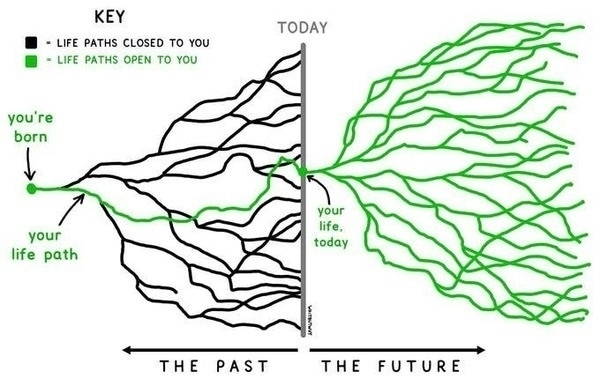
I still need to write more about this - but no more dilly-dallying - time to share regardless. The image speaks volumes.
Credit Tim Urban via Chris Hladczuk
📚 🚧 Funny how you come across stuff that is so cool - and then it disappears again … such as the Literature Map
I used it to create a 🔗 series of 7 posts last year and then it got lost.
Maybe something to use in the 🖇️ 🔎The Readers Republic?
🚧 CSS Experiments
🚧 Experimental Post as I play around with the CSS ... a LOT!
“wise words being captured for posterity.”
simple markdown with cite separate
💬 They Who Said It“wise words being captured for posterity.”
simple markdown with cite tight
“wise words being captured for posterity.” 💬 They Who Said It
simple markdown with cite tight and
“wise words being captured for posterity.”
💬 They Who Said It
simple markdown with attribution separate
“wise words being captured for posterity.”
simple markdown with attribution tight
“wise words being captured for posterity.”
💬 They Who Said It
Full On Quote
“Lorem ipsum dolor sit amet, consectetur adipiscing elit. Suspendisse varius sollicitudin consequat. Etiam cursus blandit nisl accumsan fermentum. Phasellus faucibus velit non porttitor tincidunt. Ut quis erat ac nibh auctor tempus. Sed a metus sed dui pulvinar dapibus pulvinar et nisl. Sed consectetur, magna sit amet vestibulum dapibus, augue orci dignissim nulla, nec interdum ligula nibh at dui. In in dolor sit amet urna tempor pulvinar. In ut odio et ligula faucibus placerat. Proin pulvinar ex et sagittis molestie. Vestibulum dignissim faucibus diam, quis lacinia lacus mollis et. In fermentum ex quis consectetur semper. Nullam ut metus quam. Suspendisse potenti.”
“Lorem ipsum dolor sit amet, consectetur adipiscing elit. Suspendisse varius sollicitudin consequat. Etiam cursus blandit nisl accumsan fermentum. Phasellus faucibus velit non porttitor tincidunt. Ut quis erat ac nibh auctor tempus. Sed a metus sed dui pulvinar dapibus pulvinar et nisl. Sed consectetur, magna sit amet vestibulum dapibus, augue orci dignissim nulla, nec interdum ligula nibh at dui. In in dolor sit amet urna tempor pulvinar. In ut odio et ligula faucibus placerat. Proin pulvinar ex et sagittis molestie. Vestibulum dignissim faucibus diam, quis lacinia lacus mollis et. In fermentum ex quis consectetur semper. Nullam ut metus quam. Suspendisse potenti.”
💬 They Who Said It
“Lorem ipsum dolor sit amet, consectetur adipiscing elit. Suspendisse varius sollicitudin consequat. Etiam cursus blandit nisl accumsan fermentum. Phasellus faucibus velit non porttitor tincidunt. Ut quis erat ac nibh auctor tempus. Sed a metus sed dui pulvinar dapibus pulvinar et nisl. Sed consectetur, magna sit amet vestibulum dapibus, augue orci dignissim nulla, nec interdum ligula nibh at dui. In in dolor sit amet urna tempor pulvinar. In ut odio et ligula faucibus placerat. Proin pulvinar ex et sagittis molestie. Vestibulum dignissim faucibus diam, quis lacinia lacus mollis et. In fermentum ex quis consectetur semper. Nullam ut metus quam. Suspendisse potenti.”
“Lorem ipsum dolor sit amet, consectetur adipiscing elit. Suspendisse varius sollicitudin consequat. Etiam cursus blandit nisl accumsan fermentum. Phasellus faucibus velit non porttitor tincidunt. Ut quis erat ac nibh auctor tempus. Sed a metus sed dui pulvinar dapibus pulvinar et nisl. Sed consectetur, magna sit amet vestibulum dapibus, augue orci dignissim nulla, nec interdum ligula nibh at dui. In in dolor sit amet urna tempor pulvinar. In ut odio et ligula faucibus placerat. Proin pulvinar ex et sagittis molestie. Vestibulum dignissim faucibus diam, quis lacinia lacus mollis et. In fermentum ex quis consectetur semper. Nullam ut metus quam. Suspendisse potenti.”
💬 They Who Said It
”You listen, watch, feel, smell, taste … sense"
“You analyse, think, interpret, connect, ruminate … process”
“You write, record, paint, present, talk … deliver”
“And none of it really matters - except you - and what you want out of it all.”
Managing Complex Change
🚧 Brought to my attention by Stuart Robbins, who went on to write ....
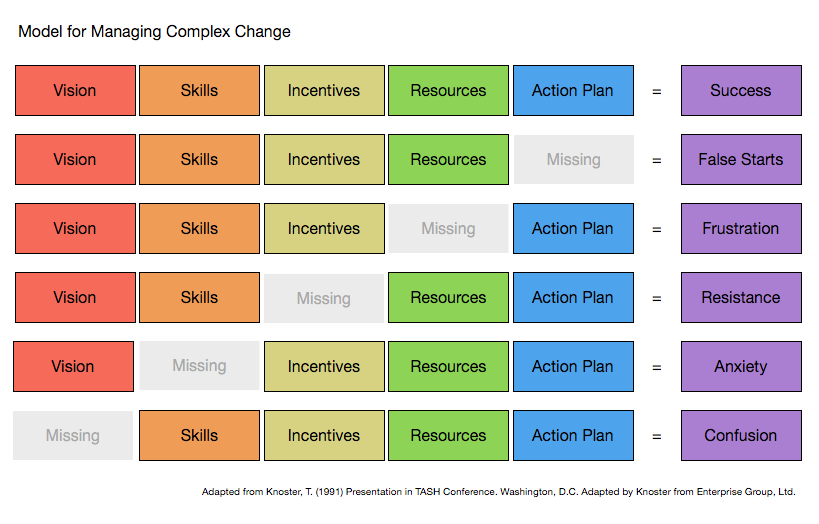
It is known as the Knoster Model for Complex Behavioral Change (circa 2000). For those who would like to know more, search for Timothy Knoster. In sum, Knoster identifies the 5 key elements needed for any Change Management initiative to be successful, and the relative symptoms caused if/when one element is missing.
Stuart Robbins
Interesting. I went of looking further and found an even better image (see below) that adds context to the steps and happy smiling emojis that reflect the expected feelings! :-)
The keen observers amongst you will also spot a different order and an extra step - but the principle holds. (The principle being - as Stuart said in his original message to me ... (I paraphrase) ... how much information can be packed into a single image (doffing hat to E. Tufte.)
John Philpin
🚧 I have moved my blog from an old domain to this new space. At the same time introduced some design changes which on occasions causes the old posts to look odd. As I see them, I fix them - but specifically not going back into the archives to fix proactively - life is just too short.
🚧 Navigation

Some Useful Tips To Navigate The Articles
The RSS feed is here.
Article Navigation

Like any good WordPress blog, searching by category is of course possible. We have also work hard to only have a single category per article.
We then refine the indexing of the article with free form tags.
We have also introduced a second layer of article - which is 'post type' ... using this filter you can find posts, asides, videos etc
Combine the two look for
- category = work
- post kind = video
Hit 'filter' and back comes the list of all posts that contain 'videos' categorized as 'work'.
And then, of course, you have search!
🚧 Seen two separate references in the wilds of the blogosphere to this graphic in the last three days - no original source. Posting for posterity to revisit at some point.
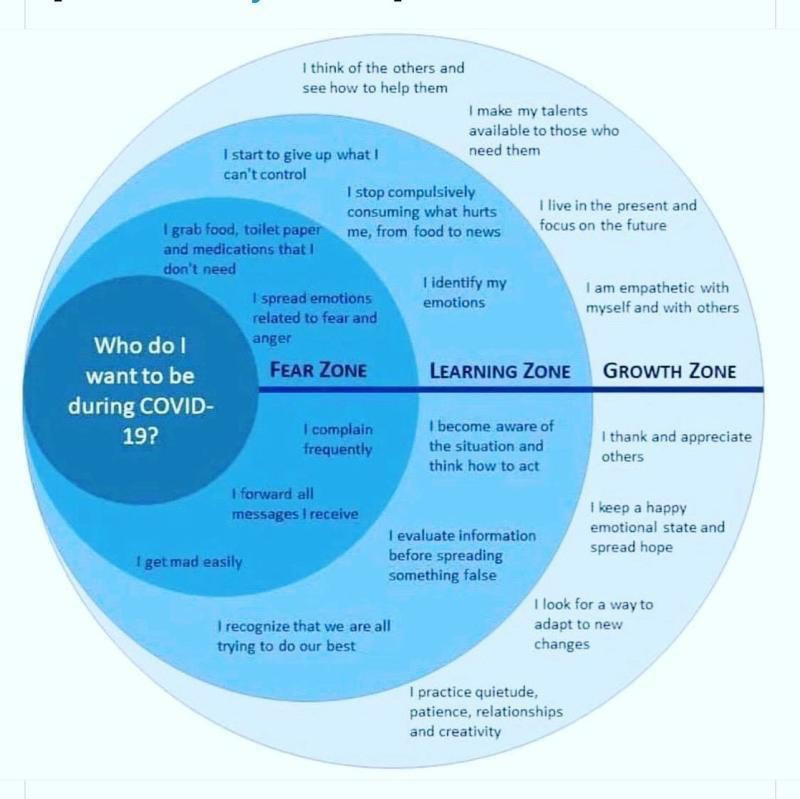
🚧 Me? I’m still on the ‘let me in’ part of the list. Anyone else care to share their Roam Reflections?
Three Stories
These three stories provide context to the People First Newsletter that was published on Tuesday April 21st
Mining Coin Through Your Bodies Activity
🔗 Microsoft Files Patent For New Cryptocurrency and Mining System
Body activity data may be generated based on the sensed body activity of the user. A cryptocurrency system communicatively coupled to the device of the user may verify whether or not the body activity data satisfies one or more conditions set by the cryptocurrency system, and award cryptocurrency to the user whose body activity data is verified.
And
a brain wave or body heat emitted from the user when the user performs the task provided by an information or service provider, such as viewing an advertisement or using certain internet services, can be used in the mining process."
What could possibly go wrong? The answer - as always - it depends.
Investing In The Student Body
Back in 2015 Purdue announced that it was going to invest in its students. I mean really invest.
Through its research foundation, the school plans to create ISA funds that its students can tap to pay for tuition, room and board. In return, students would pay a percentage of their earnings after graduation for a set number of years, replenishing the fund for future investments.
💬 WaPo
There was a lot of huh hah in the media at the time about people selling themselves into servitude. Education is a right and and and …
and yet 5 years later …
One Man Voluntarily Enters Indentured Servitude
It’s just that this isn’t how he sees it. (The story of the man who sold fractional shares in himself.)
It’s not the same, but it reminded me a little of this idea from 2005 - essentially fractional advertising on a single page to fund Alex Tew’s education. (I am going to say it worked. Ever heard of Calm? Alex co-founded the company and he is now co-CEO. Calm is rocking!
Anyway - back to Alex (the other one) - and isn’t it odd that they are both called Alex?
‘$ALEX’ holders are promised a share of ‘any money’ he makes in the next three years! (He’ll pay out up to a total of $100,000 over three years—the rest is (his) to keep). $ALEX holders can vote on some of his life decisions!
That second one smacks a little of 🖇️📚 Luke Rheinhart’s Diceman
… but essentially what Alex is doing is convincing people with money to give it to him - and in return, he will give them more back within 3 years. Why is that any different to those same people buying stock in a company?
The world has been dallying with these ideas for a long time. There is push back from some quarters that caution needs to be applied because this could return us to millions of people working in ‘indentured servitude’ - and certainly by Investopedia’s definition that is exactly what Alex has just signed up for.
I think they are wrong. Sure, we need to tread carefully and not blindly sell all our rights (Lessons learned from musicians of the 60s?) - but surely none of it can be worse than the alternative?
