
🖋️ LongForm
Want to reduce the noice and just focus on things with a little more meat - the this category is for you. Like so much on this site we have a ‘WIP’ as i take some out - and put some in - but safe for at least starting in 2026.
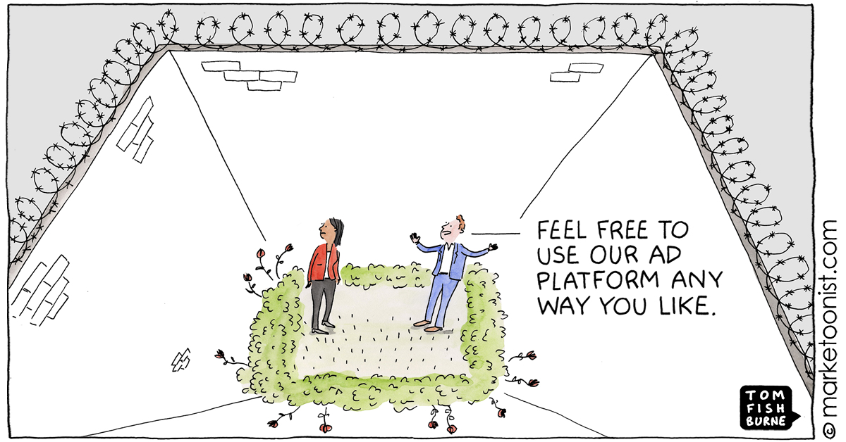
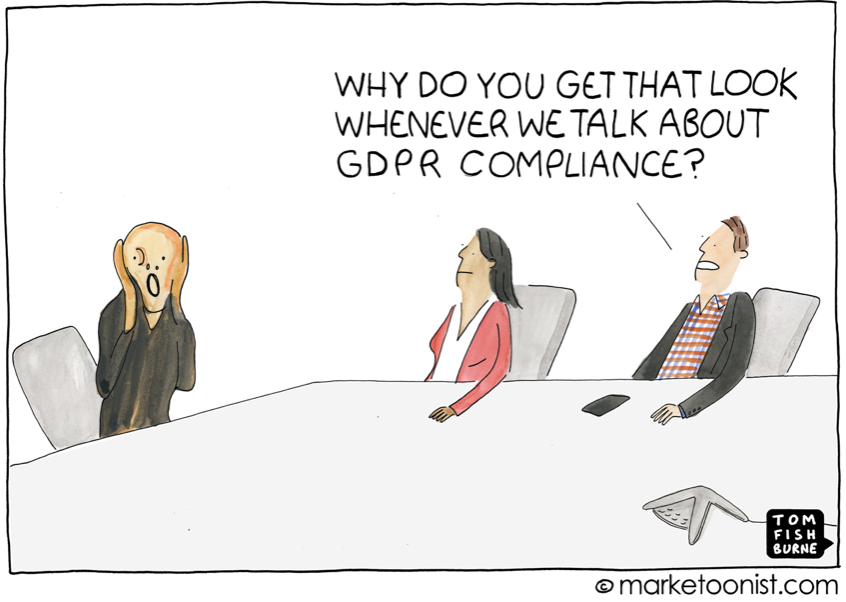
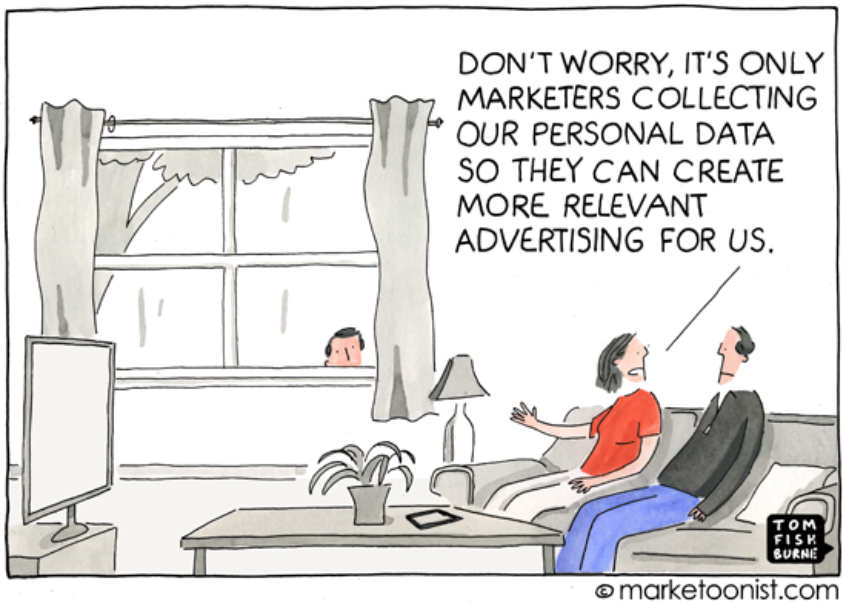
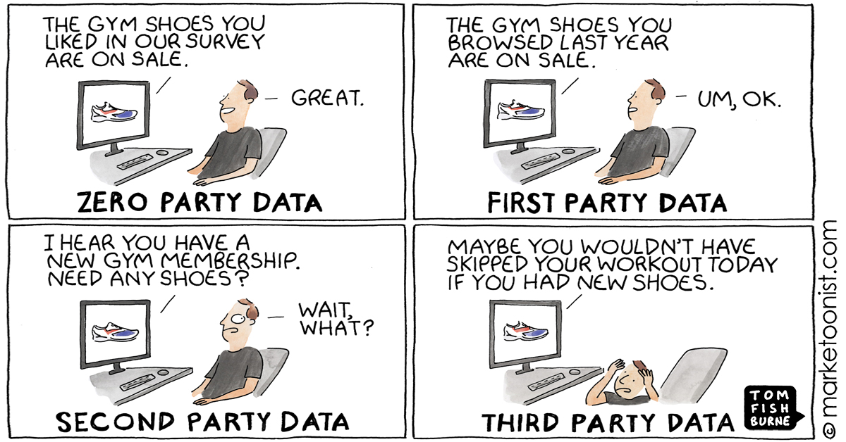
The Marketoonist Nails Data Protection
Can We Blame the Digital Age for the Disembodiment of Knowledge?
This is a question asked by Valerie Andrews over on BizCatalyst360
My short answer is NO. No we can’t.
I’ll get into the main thrust of my positon re the article in a moment - but first lets' talk about ‘the disembodiment of knowledge’.
“Disembodiment …. manifesting as a disruption of bodily self-awareness which induces a disturbing feeling of self-detachment or “depersonalisation”.
If that is disembodiment … then I don’t even agree with the premise. Maybe if a discussion ensues in the thread below - I will come back to this, but here is what I do know. The internet has certainly thrown open the doors to questioning facts and that is not always a good thing. But equally it is not a bad thing.
The world is a sphere is a fact. Despite the arguments. In fact, not to get meta - I would argue that simply rejecting the idea that the world is a sphere and is in fact flat is not an argument, but a simple unsubstantiated contradiction. I for one cannot get into those kinds of conversations.
Remember this?
“An argument is a connected series of statements intended to establish a proposition.”
But some ‘facts’ aren’t as clear - because it tends to question what we have been taught. As an English school kid I was taught about India and Pakistan. I ‘knew’ the facts.
Or did I?
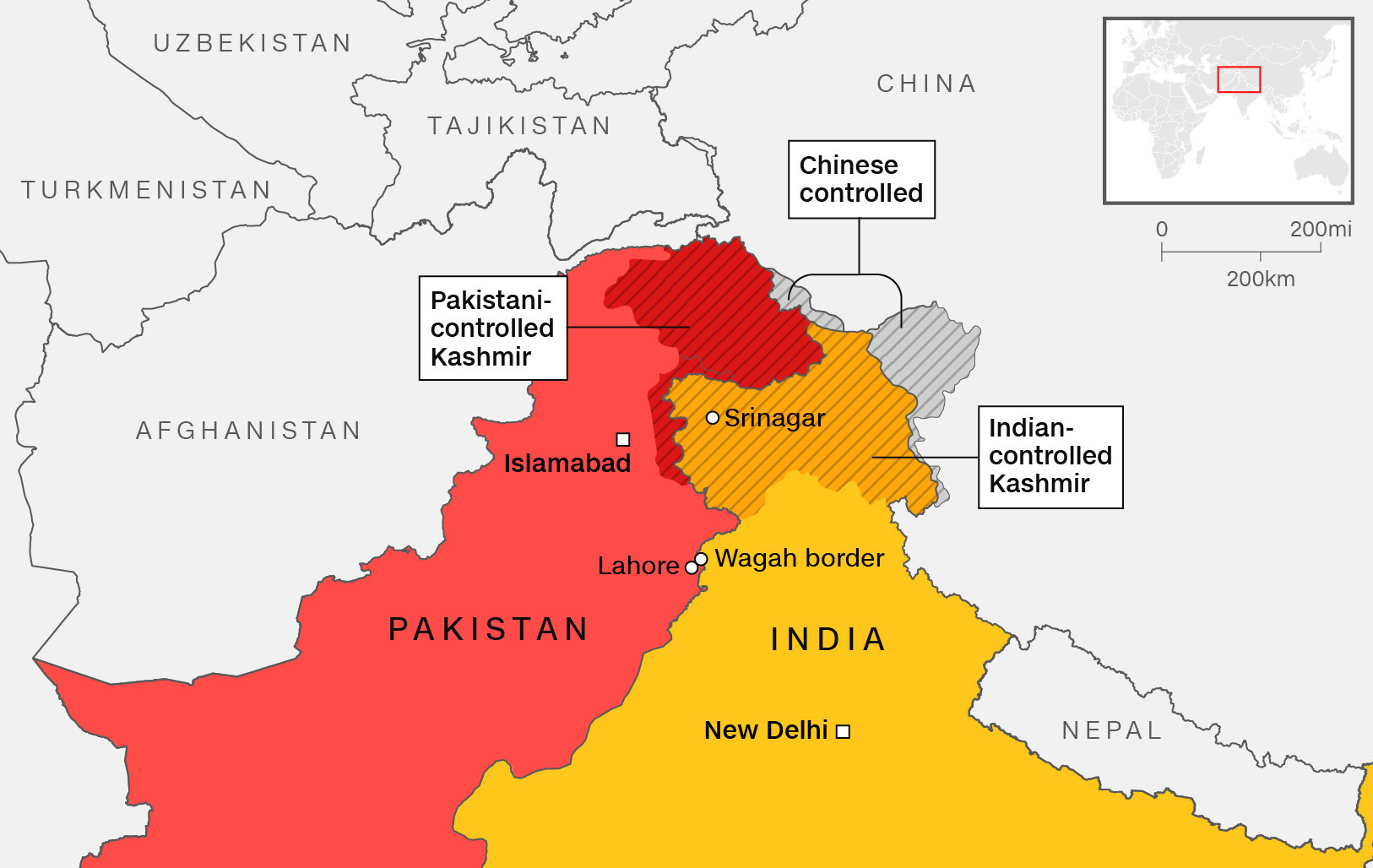
I don’t know the answer. But thanks to the internet I now know that what I considered to be a ‘fact’ is actually up for debate. It depends on your context.
Anyway. Back to the plot.
Valerie opened her article …
“This is the age of Kindle, cloud storage, and the app-for-everything. We’ve said goodbye to personal libraries and printed books, to cabinets and accordion files, to calculators and accounting ledgers. But is our understanding of the world—and even our sense of self— diminished as we lose our paper trail? The Berkeley artist Ann Arnold recently joined me in considering the advantages of the analog life. Here are our a few of our observations about old-fashioned ways of storing and accessing information.”
I don’t use a Kindle. I definitely use cloud storage and use a lot of (good) apps for things I want to do.
Just from that paragraph …
“We’ve said goodbye to personal libraries.”
No we haven’t.
In fact despite being very much a digital citizen, I have not said goodbye to most of the things on that list - other than (filing) cabinets and accordion files (thankfully). My calculator, accounting ledger and personal library exist on my computer. Needless to say, printed books do not - but yes, I do have them, because, like Valerie - I like them. Very much - just like my vinyl record collection and my CD collection they are very much part of me.
BUT - my information world is 90 to 95% digital. I have ‘everything’ on my computer - which means that where ever I am in the world - I can still pull up something I need when I need it - try doing that with your ‘at home library’ whilst travelling, or in the office, or on holiday, or from seat 36C on a plane crossing the Atlantic ….
In fact … to riff on another line from the article ….
“In the 2020s, the Englishman John Philpin viewed his computer as an extension of his brain, a virtual (fully backed up) vault filled with a lifetime of accumulated memories and accomplishments.”
Not to take away from the physical book or the analogue world … I love them both and the digital world is the same - yet different.
I too love the touch of the paper when reading the book - but knowledge isn’t only found on paper. Part of the knowledge I store digitally is in video format, others in audio format, yet others in image format. I am utilising beta software that allows me to find things inside of the video and audio. Not yet ready for prime time - but definitely coming.
Knowledge is also found in comments in threads - and if I see something like that - it is captured and added to my digital vault. Take for example this post, which was orginally going to be a comment posted to BizCatalyst. (NOT LinkedIN or Facebook - as I intimated in those two spaces - I like to comment where the work is done.) If it remained a comment, it would still be added to my my digital archive with a link to where it was posted. As a post it is automatically part of my ‘knowledge’ world.
Meanwhile, in the image world Apple - and I suspect Google (though since I don’t use them - I cant absolutely say) - allows me to search for text inside of photographs. So I can take a picture of a restaurant’s menu and later search for that restaurant name - and up it comes, together with the phone number that I can click on to call.
Try doing that with a book!
Valerie also referenced French author Henri Bosco. How she described his thinking reminded me of Zettelkasten. Unclear whether he specifically used the methodology - but there are plenty of writers that do.
One of the systems I use in my knowledge management is Obsidian - but Notion and Roam are two other alternative. All of them support a digital version of Zettlekasten. I DO NOT use Zettlekasten - for my needs the overhead is too great - but I know people that do.
By the way - to answer …
“What do we lose as we toss out the stash of work-related articles, the stacks of reference books, the cabinets full of rigorous research, the piles of faded diaries and journals?”
I scan things into my system as I go. So I don’t have to make that decision.
Finally, it’s an old one - but thought I would share this YouTube video … imagining a conversation when the world moved on from the scroll to the book.
In conclusion, ‘HumanIT’ is moving on. The world of atoms is not being abandoned but rather it now has a companion in the world of bytes. I would say that the storage and retrieval (retrieval being something that Valerie does not specifically call out in her article) of knowledge is best managed by bits and bytes - not atoms … and so this transition is finally allowing knowledge to ‘come home’.
What do you think?
🐧 The Twitter End Game
Two writers - well … write …
🔗 Ezra Klein and 🔗 Venkatesh Rao providing their take on what all this twitter stuff means. They seem to agree on the short term effect …
Venkatesh writes
“He can no more prevent Twitter from turning into a sort of personal Valhalla orbiting his person than Jupiter can stop being a massive planet. Which means there will be a massive shift from vibe-neutral public space to some sort of Free Speech Thunderdome where Elon sets the Vibe of the Month for you to either rejoice in, or resist.”
Ezra writes
“Betting against Musk has made fools of many in recent years. But I count myself, still, as a cautious believer in Musk’s power to do the impossible — in this case, to expose what Twitter is and to right-size its influence. In fact, I think he’s the only one with the power to do it. Musk is already Twitter’s ultimate player. Now he’s buying the arcade. Everything people love or hate about it will become his fault. Everything he does that people love or hate will be held against the platform. He will be Twitter.”
But maybe not the long term one.
Venkatesh seems to be of the belief of one more nail in the blog coffin - though I can’t reconcile how he arrives at that conclusion.
While Ezra writes;
“He will have won the game. And nothing loses its luster quite like a game that has been beaten.”
Lore - What Is It Good For?
Apparently - absolutely everything, (with apologies to Edwin Star). That said, a really GREAT series of articles by Venkatesh Rao on ‘Lore’ The Index To The Series
This is Part 7 of 7 : 🔗 Towards Management Metamodernism , from which I quote;
Just as Wallace noted, in 1993, that literary writing was increasingly substituting TV-watching for observation of life (which, as he pointed out, was understandable, since life itself was about sitting on a couch watching television), by 2007 or so, on the threshold of the global financial crisis, “external reality” to leaders meant the output of the literary-industrial complex.
💬 Venkatesh Rao - Ribbon Farm
(My bold reminding me of the UK series Gogglebox - an entire show where we the viewers watched other viewers watch television!)
Dear New Zealand ...
… did you know this was going on in your own backyard?
“In the back room of an old and greying building in the northernmost region of New Zealand, one of the most advanced computers for artificial intelligence is helping to redefine the technology’s future.”
🔗 A new vision of artificial intelligence for the people
… as reported by MIT.
Vibe Shifts - Are You Part Of Them?
I never made the switch from photography to illustrations on my web properties, but I do very much remember when Unsplash seemed to suddenly be the ‘defacto choice’ for photography on many sites. More recently seeing Craft and others add the service right into their apps, I have felt for a while that I need to discover a new source of visual inspiration.
Was that due to that acquisition, or is it the uniquity of images from the Unsplash library? Are they related?
Case in point …. how many times have you seen this image?

Photo by Ian Schneider on Unsplash
According to Unsplash it has nearly 150 million views and has been downloaded 1,225,278 times - not recorded are the 2,397 sites I have visited that use this image!
So yes, I have noticed that I am struggling to find images on Unsplash that work for what I am writing about. Which is why I am eagerly waiting for my access to DALL-E 2 and … Midjourney … because I already have plans to change the illustrative approach to my blogs and social sharing.
I thought it was just me - until I read this today;
Sometime around 2015 there was a mysterious vibe shift in web design. It came so suddenly, and with so much decisive force, that it stood apart from the normal ebb and flow of aesthetic trends. It was like an invasive species taking over an ecosystem from a weaker competitor.
💬 Nathan Baschez
🔗 DALL·E 2 and The Origin of Vibe Shifts
I think when Unsplash (the free photography website) was founded in 2013 it killed the old vibe by democratizing access to great photography, and thereby ruining its function as a costly status signal. Companies then started using custom illustrations in their brand aesthetic because illustrations suddenly became much more rare and expensive relative to photos.
I’m interested in this little piece of design history because today I think history is on the brink of repeating itself. Now that we have DALL·E 2 (and other AI image generators), a huge portion of visual vibes will become democratized. What Unsplash did to photography, DALL·E 2 will do to illustrations, 3D renderings, and eventually all visual styles.
In other words: a vibe shift is indeed coming.
A Different Take On Ikigai
Funny.

Thinking Allowed
This is a People First post that was originally on the People First domain. It has been moved here as part of my domain consolidation program. It’s a steady and slow WIP as I check each entry, so do please bear with me.- More about People First
- Other People First Posts
(not just from the ‘other domain’ … all of them.)
Finally!!
Really happy to report that the redesign here at People First is done. More to come, but first spending a little time cleaning up some a lot of the older posts.
Am I Dead?
You know in 🔗 Coco there is this idea that you need to be remembered to continue to live in the land of the dead?
I don’t think I am dead - but can anyone out there confirm?
Asking - because on three seperate occasions this past week - someone else has sought me out for a meeting, which I have confirmed and agreed to, only to then be totally ghosted.
I know. I know.
It’s not them … it’s me!
A Letter From Richard Feynman to Koichi Mano.
I wanted to share this because for me it truly resonated with the message we often hear in these modern times which is to “Follow Your Passion.”
The importance of the letter is (as is so often the case with Fenyman) - deep and clear.
Dear Kichi
I was very happy to hear from you, and that you have such a position in the Research Laboratories.
Unfortunately, your letter made me unhappy for you seem to be truly sad. It seems that the influence of your teacher has been to give you a false idea of what are worthwhile problems. The worthwhile problems are the ones you can really solve or help solve, the ones you can really contribute something to. A problem is grand in science if it lies before us unsolved and we see some way for us to make some headway into it. I would advise you to take even simpler, or as you say, humbler, problems until you find some you can really solve easily, no matter how trivial. You will get the pleasure of success, and of helping your fellow man, even if it is only to answer a question in the mind of a colleague less able than you. You must not take away from yourself these pleasures because you have some erroneous idea of what is worthwhile.
You met me at the peak of my career when I seemed to you to be concerned with problems close to the gods. But at the same time I had another Ph.D. Student (Albert Hibbs) whose thesis was on how it is that the winds build up waves blowing over water in the sea. I accepted him as a student because he came to me with the problem he wanted to solve. With you I made a mistake, I gave you the problem instead of letting you find your own; and left you with a wrong idea of what is interesting or pleasant or important to work on (namely those problems you see you may do something about). I am sorry, excuse me. I hope by this letter to correct it a little.
I have worked on innumerable problems that you would call humble, but which I enjoyed and felt very good about because I sometimes could partially succeed. For example, experiments on the coefficient of friction on highly polished surfaces, to try to learn something about how friction worked (failure). Or, how elastic properties of crystals depends on the forces between the atoms in them, or how to make electroplated metal stick to plastic objects (like radio knobs). Or, how neutrons diffuse out of Uranium. Or, the reflection of electromagnetic waves from films coating glass. The development of shock waves in explosions. The design of a neutron counter. Why some elements capture electrons from the L-orbits, but not the K-orbits. General theory of how to fold paper to make a certain type of child’s toy (called flexagons). The energy levels in the light nuclei. The theory of turbulence (I have spent several years on it without success). Plus all the “grander” problems of quantum theory.
No problem is too small or too trivial if we can really do something about it.
You say you are a nameless man. You are not to your wife and to your child. You will not long remain so to your immediate colleagues if you can answer their simple questions when they come into your office. You are not nameless to me. Do not remain nameless to yourself – it is too sad a way to be. Know your place in the world and evaluate yourself fairly, not in terms of your naïve ideals of your own youth, nor in terms of what you erroneously imagine your teacher’s ideals are.
Best of luck and happiness. Sincerely, Richard P. Feynman
The Original Post at Letters of Note has gone - but can be found on the internet archive.
Talking About Failed Leadership ...
Just after stumbling 🔗 across this
I found this
What tech billionaire was that wondered?
Eric Greenberg came the Google reply. He that founded Viant and then left and founded Scient. (I always thought that an odd move - to my mind they were identical companies - but no matter … onwards …)
To saving you going there, according to Wikipedia, Scient was bought and sold over the years and whatever is still left of it now sits in Publicis. Meanwhile Viant was acquired by something called Divine that filed for bankruptcy 20 years ago - and then liquidated after some of the execs were accused on looting subsidiaries.
**Meanwhile, more rabbit hold diving found that **
🔗 NY jury awards $12 million to Fla. billionaire in wine dispute
TL~DR … Eric lost in court to one of the Koch brothers over selling counterfeit wine.
Read more about that here …
🔗 Scient Founder Accused of Selling Counterfeit Wine
and out of that Eric emerged once more ….. to found ‘Wrap’
🔗 How Eric Greenberg Became a Once (and Future?) Internet Billionaire - WRAP
Who / What is ’Wrap’? Try this …
LMK if you get what they are doing. I don’t.
“How mighty are the fallen.”
Sometimes Old Posts Just Don't Hold Up
🔗 12 Different Ways for Companies to Innovate
It dates back to 2006 - and no need to read it, because in the opening paragraph they highlighted three US business leaders that we needed to pay attention to.
- William Ford Jr., Chairman and CEO - Ford
- Jeffrey Immelt, Chairman and CEO - General Electric
- Steve Ballmer, CEO - Microsoft
I think around that time there was a phrase bandied around …
#winning
📚The Cellist by Daniel Silva
Just finished reading: 🔗 The Cellist by Daniel Silva 📚
Definitely a good read … kept me turning the pages … though I take issue with him being described as ‘the new LeCarre … or am I just being overly defensive of one of my ‘4 Johns’.
That all said, the most amazing thing about this book is that following Jan 6th 2021 he revised the book top to bottom in 6 weeks. Not that this should cause you to read it … but absolutely testament to his desire for realism in his books.
This was my first Silva … but it won’t be my last.

MicroBlog Newsletter - The Issues
It truly is annoying that I only have 3 hours per day to try out CSS edit changes on my MicroBlog newsletter - and I can’t even choose when those three hours are. The draft appears - and then the clock starts ticking.
I have got errors - and each day I get the draft and then I try to fix the CSS in the time available - provided that I have nothing else going on - until I can’t any longer because my time is up.
Right now I am wrestling down these problems
🔸 my centered HR SOMETIMES isn’t centered.
🔸 ‘>’ HIDES the actual quote, while ‘blockquote’ works as it says on the tin.
🔸 my ‘attribution’ line isn’t indenting.
🔸 the font size doesn’t work well on a phone.
I know it is me. That doesn’t make it any less annoying!
It also doesn’t end there - because once this is fixed, I do have some other ideas on styling.
Should be done by 2023.
The Four Natural Forces Applied To Business
I used the 4 natural forces model in my 📚recent book as an analogy for the 4 forces of humanity.
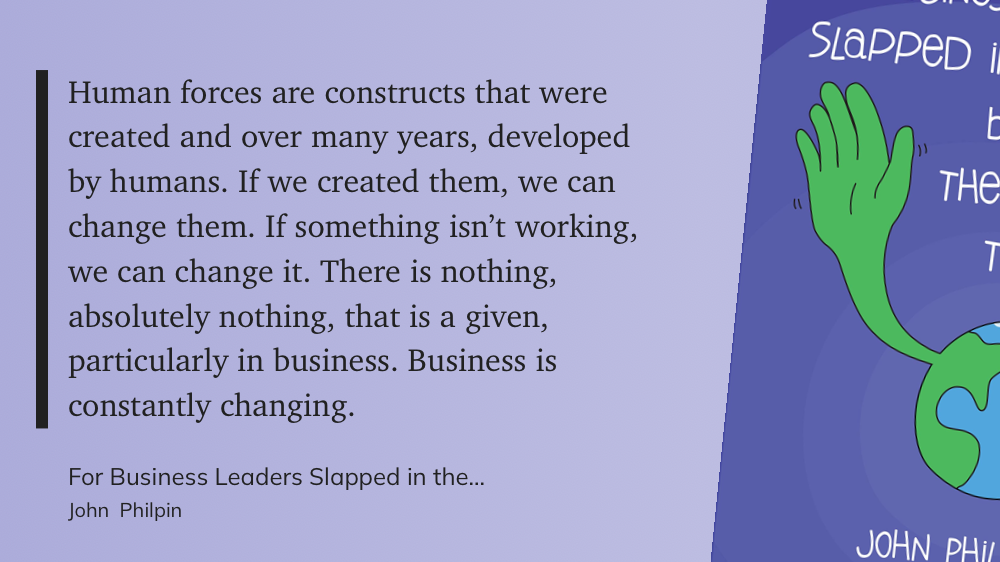
And then I read that 🔗 Fermilab has found a discrepancy with the mass of the W boson.
“The current 'standard model' of particle physics describes four fundamental forces. Three of those — electromagnetism, gravity and the strong nuclear force — push or pull things, broadly speaking. The fourth force — the weak nuclear force — doesn't really push or pull anything. Instead it makes one type of particle transform into another type of particle. In doing so we get the force responsible for radiation, and it's the force that drives nuclear fusion in the sun. So it's quite important.”
I’ll say it’s important. Now I will have to revisit some of the thinking in the book!
Guy Kawasaki and Marc Benioff In Conversation
Guy Kawasaki was probably for first person in the business world with the title ‘Evangelist’ and coincidentally an old neighbour of mine.
Marc and I worked with each other back in my Oracle days.
This podcast has Guy interviewing Marc talking of his trajectory from 19 year old college kid to CEO of a Fortune 100 company.
While it might SEEM to be yet another Silicon Valley story - this one is presented through the lens of what makes Marc different to the average SV success story … which is his humanity and desire to give back. He’s doing it in spades around San Francisco. But elswhere aswell.
He’s also very big into meditation.
The Famine of 1932-33
I was talking to a long time friend of mine last night. She is of Ukrainian descent.
I knew about Stalin’s ‘Great Famine’, but did not know how much of this act of aggression occurred in Ukraine.
🔗 Ukraine - The famine of 1932–33 (Holodomor)
“Of the estimated five million people who died in the Soviet Union, almost four million were Ukrainians.”
🚧 The Coup We Are Not Talking About
Shoshana Zuboff calls this development The Coup We Are Not Talking About. The subhead of that essay makes the choice clear: We can have democracy, or we can have a surveillance society, but we cannot have both. Her book, The Age of Surveillance Capitalism: The Fight for a Human Future at the New Frontier of Power, gave us a name for what we’re up against. A bestseller, it is now published in twenty-six languages. But our collective oblivity is also massive.
💬 Doc Searls (my emphasis)
🖋️ How Are We Going To Manage The Transformation We Need?
I often listen to a podcast or read an article and at the end of it my reaction is 'yes … and' or 'yes … but’.
IF I feel sufficiently moved - a link might get posted to my Thought Stream, together with a pithy observation - and I move on.
The Thought Stream
On the stream I offer a randomized link, that takes you to one of the posts. the oldest of which dates back 2005!
Sometimes though … just sometimes … what I am reading or listening to, triggers more than a few synapses and I am prompted into writing something more substantial. This is one such occasion after I listened to ‘The Thoughtful Leader’ - a podcast hosted by Mindy Gibbins-Klein when she was talking with Steve Sanders.
Full disclosure - whilst I don’t really know either Mindy or Steve - we have talked, exchanged ideas and generally feel we are on the same playing field. All three of us happen to belong to a tight network that runs out of the UK, but in my language, I wouldn’t say I ‘know’ either of them ‘well’ (yet), whatever that means. That said, they both come across as very good people that I will get to know better over time.
So to that podcast.
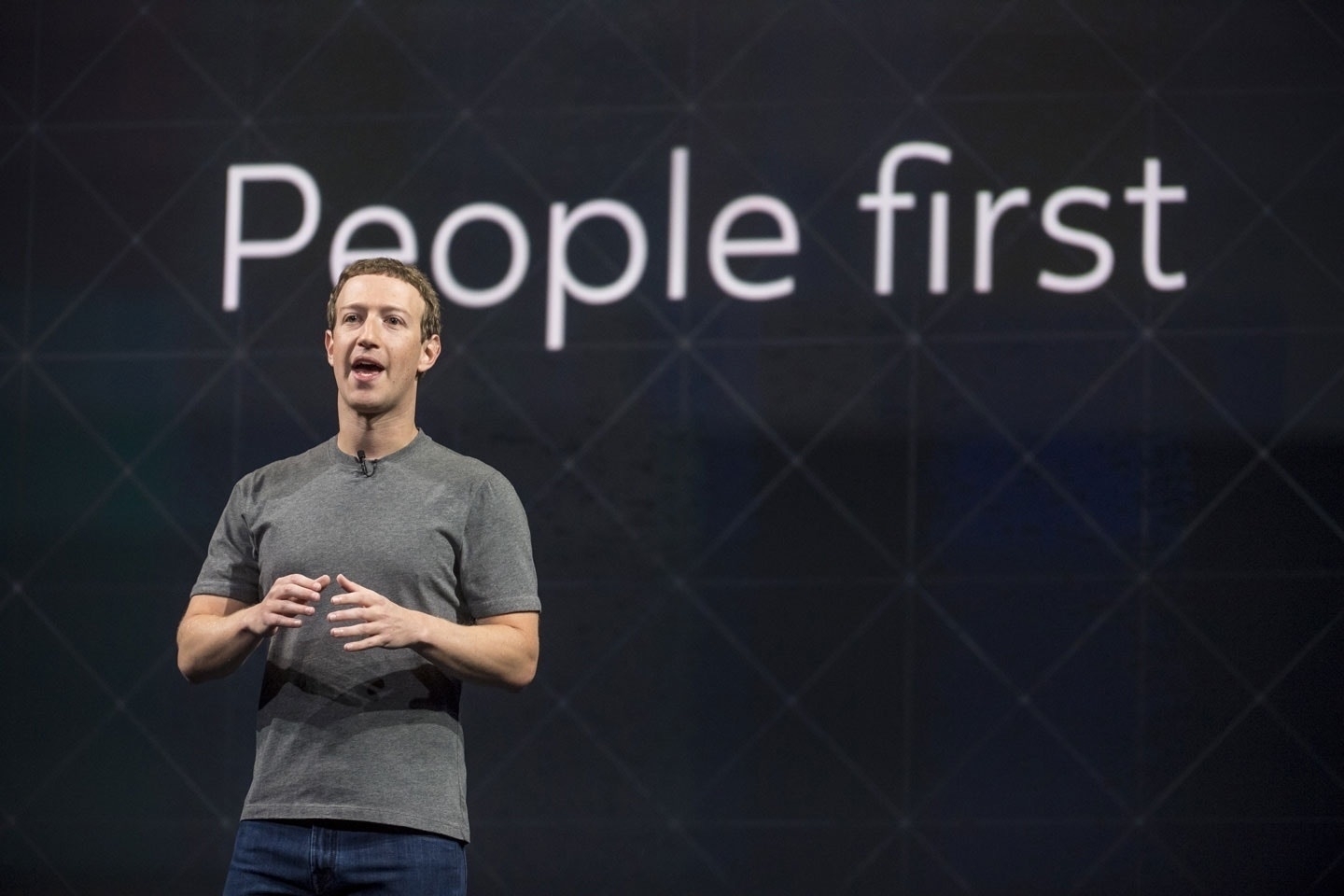
First - Mindy - my thanks for the People First call-out - at least that is how I am taking it 😀 … I know you weren’t connecting it to my work - but I’ll take whatever I can get - just like when Zuckerborg (sic) borrowed the phrase, I know he wasn’t talking about me - and in fact, I don’t believe him - but nothing wrong with pushing the image to remind people!
Steve - good job and on topic - as we explored when we recently talked. I think we might be cut from the same cloth, even though our suits might be different.
I certainly do not disagree with anything you said - but I do have a couple of observations.
One - Generational Differences
I agree on the challenge of focussing on generational differences. I know 15 years olds that are 80 and 80 years old that ‘remain’ teenagers. I get why business has this need for categorisation - I reject that people need to adopt it.
The New Yorker seems to agree.
Why do people adopt corporate language and thinking that is at odds with what is good for us?
For example;
I reject the use of that horrible corporate word ‘content’ that people spend so much time working to deliver into the platformed silos of LinkedIn, Facebook, TicToc, Snapchat, Instagram, What’s App and all the rest.
If your work is homogenous, un-differentiated, fodder written to feed the algorithm and garner clicks, hearts and whatever other little badge of honour the corporates regard us with - then perfect.
I would hazard a guess though that most creators don’t think that their posts, articles, essays, photographs, books, images, poems … are anything but that … but that is what we are reducing our IP to.
And of course, because anything that is an homogenized undifferentiated commodity - the price that gets paid is not on value - but how cheap an alternative might be.
.. and do not get me started on Marketing War Rooms!
But let’s keep the plot front and center.
I have been looking and commenting on these supposed generational differences for years and am not quite as optimistic as Steve when it comes to how fast this is going to change. More of that in a minute. But first - let me put my hand up in the air and emphasise that Steve is not alone in his optimism. Who am I to disagree with the findings of Accenture, who in this report seem to support the idea that we are moving towards this new world faster than any of us might think.
Esteban Kolsky is one of the few analysts that picked up on the survey - and in his post reminded us of the vagaries of such surveys!
… “let’s say you are not truly convinced that they WILL actually do what they say they may in a survey (something about an unconscious bias towards being liked makes most of us answer as expected, not as the way we will act, etc.).”
He goes on with this advice …
… “read while wearing rubber gloves and use thongs to “flip pages” if you want to avoid contact – hehe – but definitely read this about how consumers are changing, because outside of the flawed data-collection, the trend is real and well documented.”
… and it is my job as CCO (that’s ‘Chief Contrary Office’) not only to question the findings that were discovered when Accenture surveyed
… “more than 25,000 consumers across 22 countries, with follow-up focus groups in five countries.
(I’ll forgive the language - it’s Accenture, they can’t help it, but I prefer to survey people.)
… but indeed anything that sits oddly that is, in turn, being shared under the banner ‘common wisdom’.
The bottom line is optimism. Don’t get me wrong - even I am optimistic, it’s just the speed of adoption that I am questioning - which brings me to part two.
Two - The Speed of Transformation
First, I hope I am wrong. But, the evidence I am seeing suggests different.
I could highlight so many examples that might suggest how slow this is going to be - but let’s choose three.
Supply Chain Inequality
We have been able to buy ‘$1 throw away ‘designer’ t-shirts’ for decades. Stores like Primark despite pages like this exist because when it comes to action - as opposed to feeling, we turn a blind eye.
Just think for two seconds about the profit behind a $1 t-shirt being sold in a large department store on Oxford Street and other cities around the world. It surely points to inequality and sometimes exploitation somewhere (if not everywhere) in the supply chain.
Exploitation that we all hate and rail against - but we are complicit in our purchase.
What age group does Primark serve
”Whilst in-store customers may differ slightly, Primark’s social audience fall within the 17–24-year age demographic (depending on platform) and are over 90% female.
The very age group that we are pinning our hopes and dreams on to change corporations.
Ease of Transaction over Moral Compass
Uber Eats, Doordash, GrubHub et al make their profits through food delivery.
The mechanics of the transaction has 30% of the food order at your favourite takeaway magically being extracted from the local economy - only to appear as revenue in a company in Oakland, California.
It’s clear. But we continue to do it.
So much for being aware of social issues and forcing corporations to change.
A similar argument can be applied to Uber itself because it is ‘oh so convenient - and cheap … even though even in London there are apps that compete like Gett … so people who ‘say’ they are demanding Corporations to do better - vote with their thumb when it comes to the short term benefit of saving a buck. Principles are gone!
Don’t believe me? Consider this which headlines with;
“Black cabs roar back into favour as app firms put up their prices.”
Meanwhile - over in the USA …
DC AG Sues Grubhub For Sneaky Fees, Screwing Over Local Restaurants | Techdirt
“But Grubhub didn’t fully cover the costs of these discounts. Instead, it passed most of the costs of the discounts along to the already-struggling restaurants. Grubhub also forced the restaurants to pay their full commission on the discounted orders based on non-discounted prices. This promotion severely cut into restaurants’ already-small profit margins, and misled DC residents who believed their orders through Grubhub would help their favourite restaurants.”
Yikes.
Where is the outrage? Where is the socially aware youth?
Cryptocurrency
16% of Americans say they have ever invested in, traded or used cryptocurrency - depending on which site you visit, the numbers vary for the US and in different countries, but there is no doubt that a lot of people have jumped onto the bandwagon - despite the apparent danger of it being a highly volatile gamble in something that I would guess (no science here), some 90% of those people could not even start to describe how cryptocurrency works.
But that isn’t what this bit is about.
Lets start with another podcast that asks Can Our Climate Survive Bitcoin? - it’s an hour long - but well worth a listen - and it contains some eye opening stories.
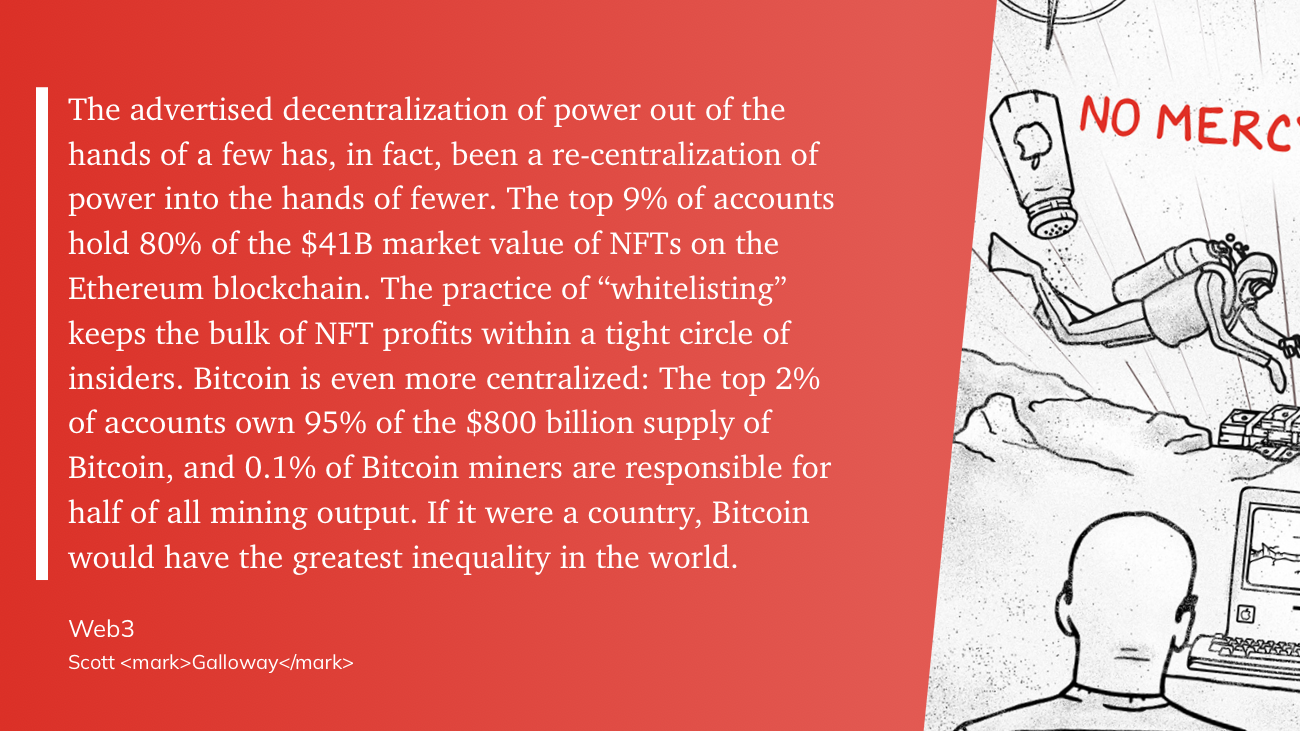
One of the many stories - American towns competing with each other to offer massively discounted power to ‘crypto miners’ where the workers earn $20 per hour, and the owners - well - it’s the usual story.
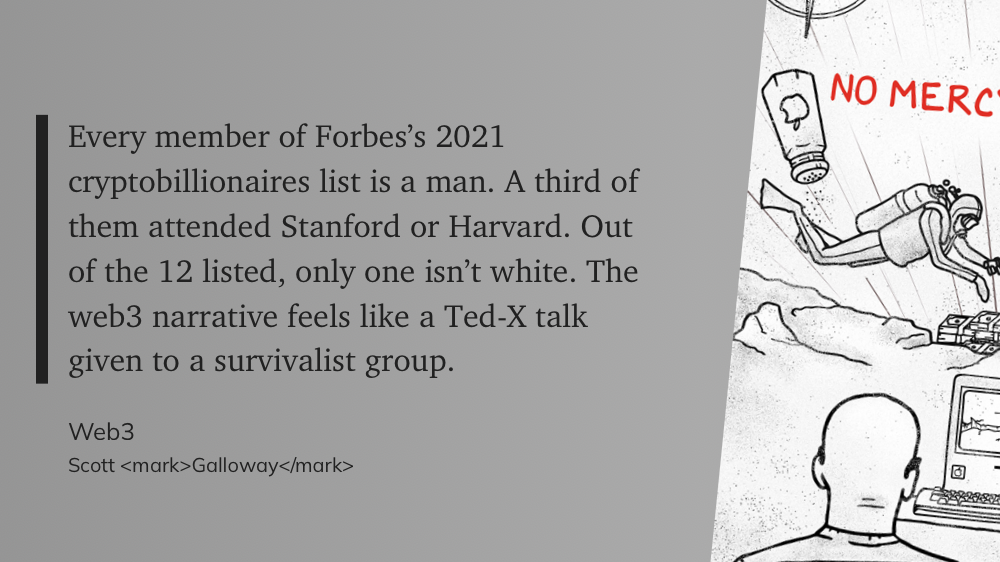
Scott Galloway nailed it in one of his pieces;
and
All animals are equal but some are more equal than others
💬 George Orwell
So how do you reconcile the crypto movement with the climate change crowd …
… “almost half of all American men ages 18 to 29 say they have invested in, traded or used a form of cryptocurrency.”
Maybe its just that the ‘modern youth’ are massively intelligent …
The test of a first-rate intelligence is the ability to hold two opposed ideas in mind at the same time and still retain the ability to function.
💬 F. Scott Fitzgerald
But I am not yet convinced.
No research yet - but as the funds spring up supporting this brave new crypto world and our children are apparently eschewing investment in the ‘extractive industries’ - we find this headline;
Exxon Mobil reportedly gets in on Bitcoin mining
Follow the money babe - follow the money.
Three - Altruism
Riddle me this … why are boomers generally seen as the ‘bad guys’. This just 5 days ago : Boomers responsible for nearly one third of greenhouse gas emissions, study suggests. Really, do some google searching - it is clear that boomers are positioned as 'the problem'.
I have no idea how true that is (full disclosure - I am a boomer)
But It Gets Worse
I am a Boomer
I am English
I am Male
I am Straight
I am White
Single handedly - most of the ills of the world might fall at my feet if you listen to the common narrative.
I do however know enough that the same data can produce very different conclusions.
But consider this;
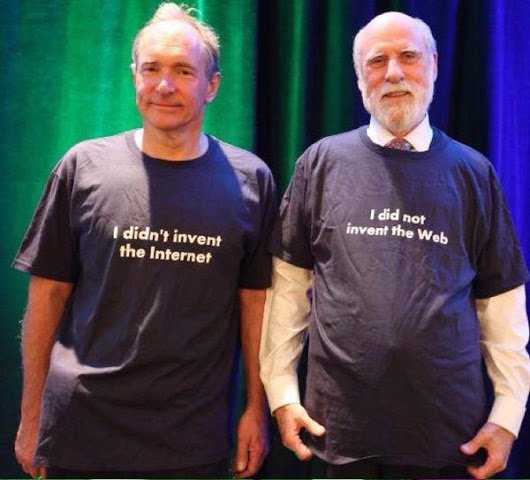
Vint Cerf and Bob Metcalf’s work gave us TCP/IP - the internet wouldn’t work without that protocol
Tim Berners Lee’s work gave us the worldwide web.
So as to avoid confusion (and please note - this is a real image - not a photoshop .. I was there when it was taken.) …
Let’s write that in a different way.
Baby Boomers Vint Cerf (78) and Bob Kahn (83) hold the join honorary title of ‘Godfathers of The Internet’. Tim Berners-Lee (66) came up with the World Wide Web and none of them are millionaires in the ‘millionaire sense’ - and certainly not billionaires.
It’s also telling that I more than likely need to provide context as to who these people are - but that when we move on to other generations, no explanation is necessary. We just somehow know their names.
Jeff Bezos at 58 sits at the cusp of Boomer and GenX, the other names you will be familiar with include;
GenX
Jack Dorsey (45)
Sergey Brin (48)
Larry Page (49)
Elon Musk (50)
Millenial
Mark Zuckerberg (37)
Evan Spiegel (31)
Zhang Yiming (38)
The web was created by Berner-Lee as a place of equality - where everyone had a publishing press and/or microphone - if they chose to use them.
But the money was made by ‘post boomers’.
The cesspit of corruption, bias and fake news - Fakebook was created by a millennial. The other one, Twitter, by a GenXer.
I could write it another way;
Boomers created the internet and the web and did not turn themselves into money-grubbing billionaires - like GenX and Millenials do today.
Now, who’s destroying the world?
Bottom Line
No matter the indignation we feel, or how loud our screams for a fairer society, the fact is that when it comes down to it, the further that happens from your wallet and/or physical presence - the more easily it is forgotten - or even ignored.
The t-shirt situation occurs because they are made on the other side of the world - too far away for me to affect. Besides - if I don’t buy them - others will - what difference does what I do make?
Uber, is an identical situation - except the person you are now stealing (what word would you use) from might be your neighbour!
And it is all because people, on the whole, do not understand. They don’t think - why should they - life is too busy!
As a result, corporations will continue as they do and won’t be challenged as they transition their businesses into spaces to make even more money - at whatever cost.
Yes - there are exceptions. Consider Patagonia, a retailer that takes its values to heart. Revenues of $1Billion - not chump change - but that’s less than Primark’s pre Covid annual profits - interesting to note that Arthur Ryan who founded Primark is of the Silent Generation as is Yvon Chouinard who founded Patagonia.
If we are really going to compare generations through the lens of ‘business oligarchs’ - it looks like the world might have got better with Boomers - and it has been going downhill ever since!
Conclusion
And, this is all written with a bit of tongue in cheek because I do so object to behavioural classification based on age.
But it’s also asking why we think everything is suddenly going to be different - and different quick - just because we hear how ‘woke’ and ‘aware’ the youth are - when it comes to global challenges. ‘the youth’ are coming to save us.
You might not remember the sixties (if you do - you probably ‘weren’t there’), but that generation had hopes, ideals and aspirations. They were also going to change the world for the better. Did they? Was it for the better?
To borrow a ‘sign off’ from my friend Geoff Moore - that’s what I think … what do you think?
What Is The Future Of Work?
Let me point out - again - that the answer to the question is useless - because the question is badly framed. I have written about this before here, here and here and a whole host of other places aswell.
The Conclusion
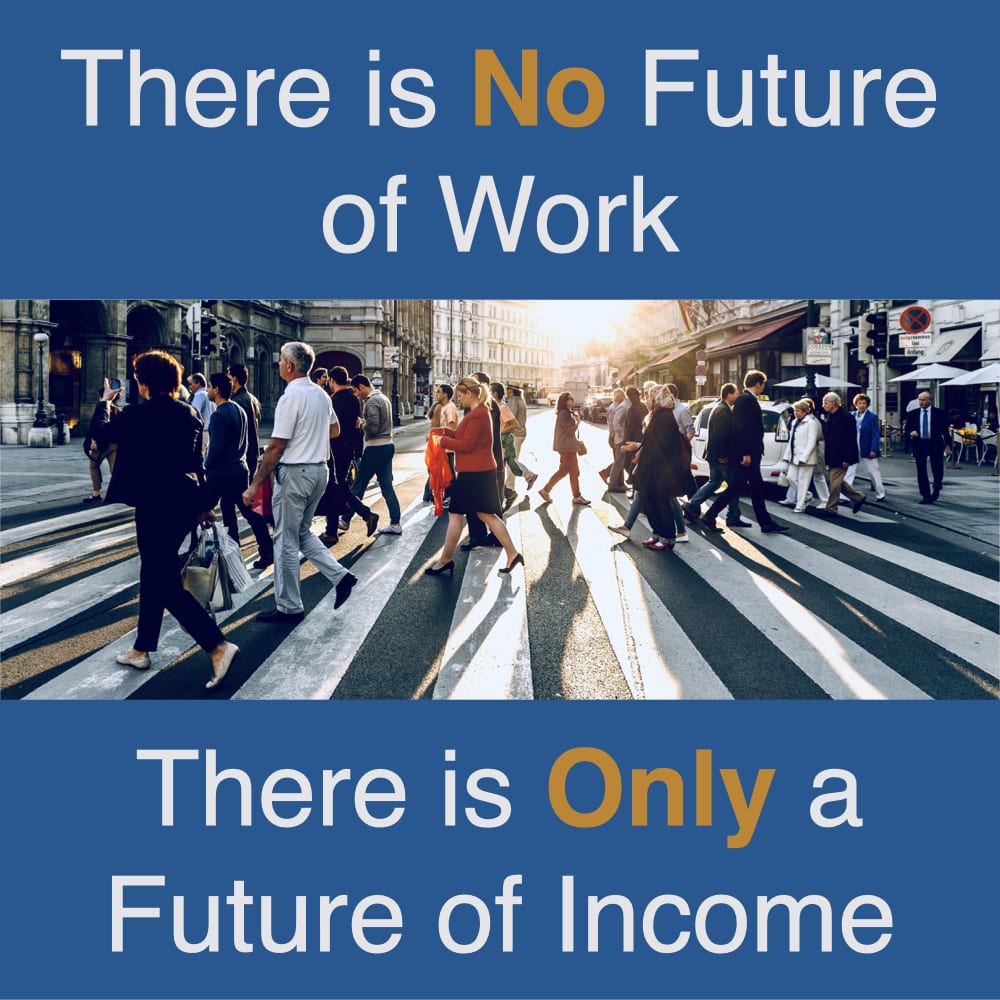
Fast forward to a LinkedIn graphic that was presented to me last week.
It appeared in Brett King's LinkedIn stream. Brett and I are connected on LinkedIn, and have a couple of very good mutual friends in common. Brett, like another 'futurist' Gerd Leonhard is doing a great job in 'getting the word out', but I worry that the word being got out is not just oversimplified but actually harmful because people are being lulled into a false sense of security.
This Is One Such Example
First, I assume that 'Aritificial' is a typo and not some new technological development ...
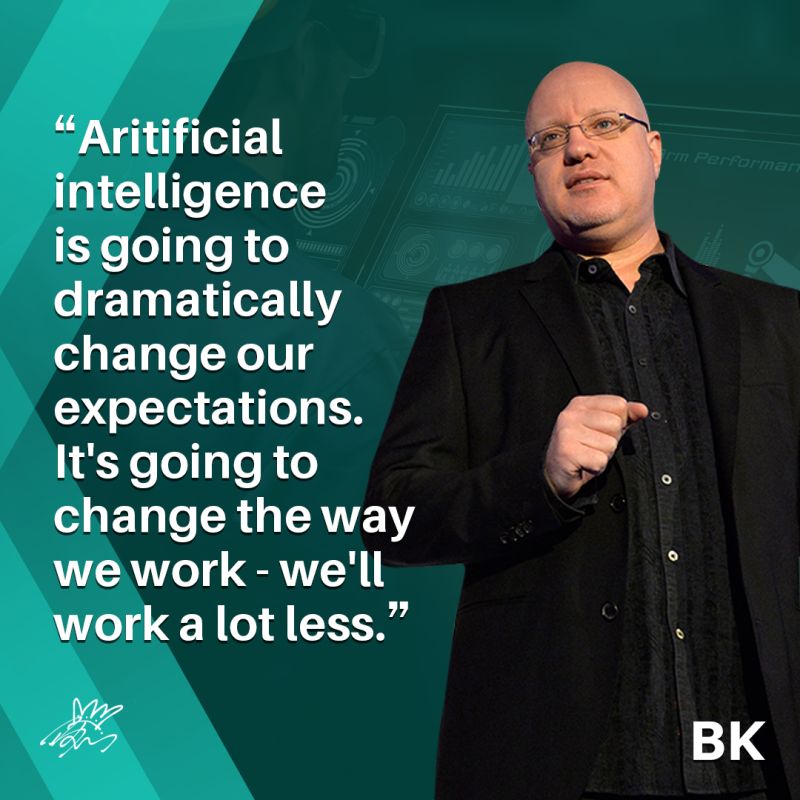
... but the lack of proofreading of a single sentence might be a clue to how substantial the thinking is that underpins the idea.
Important: Please do not take this post as my taking an anti position on Brett. I don’t know him, but do follow and pay attention. He is not wrong on a number of issues. Like these two ..
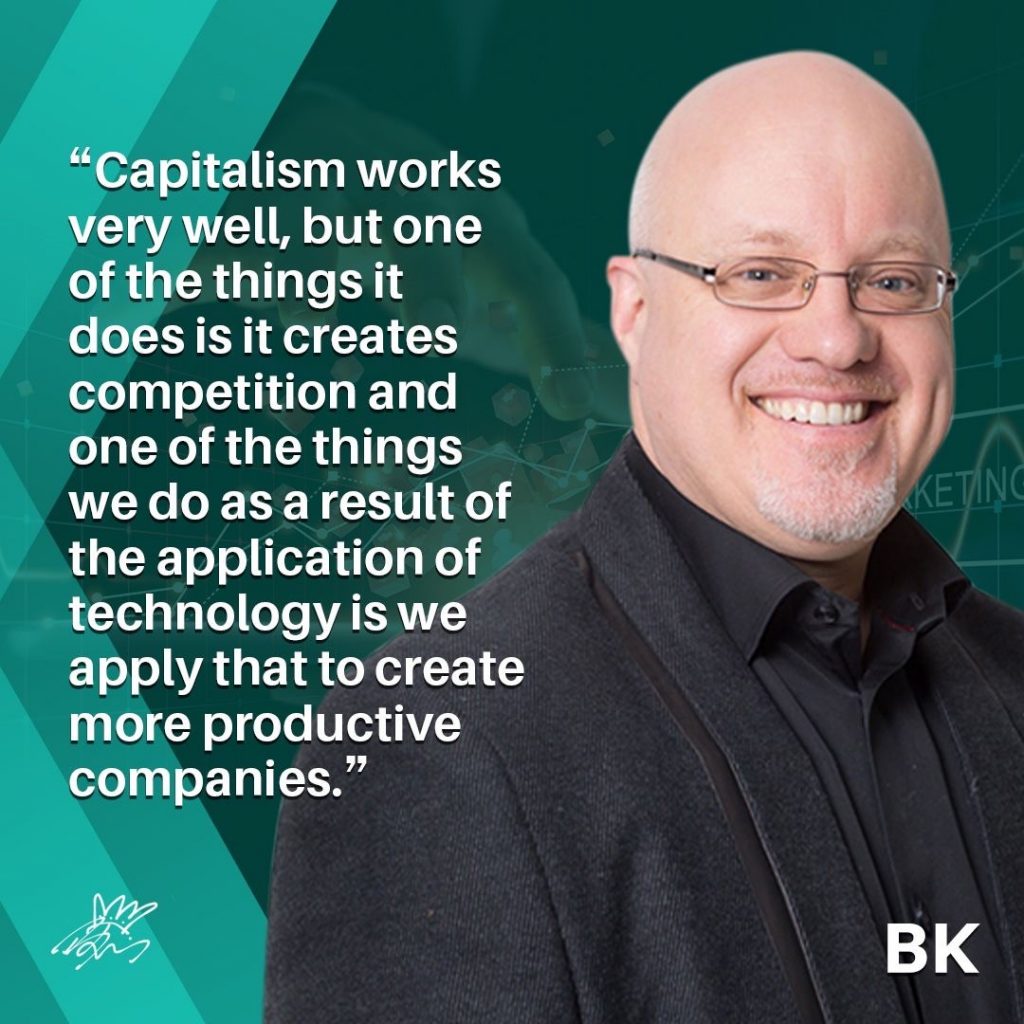
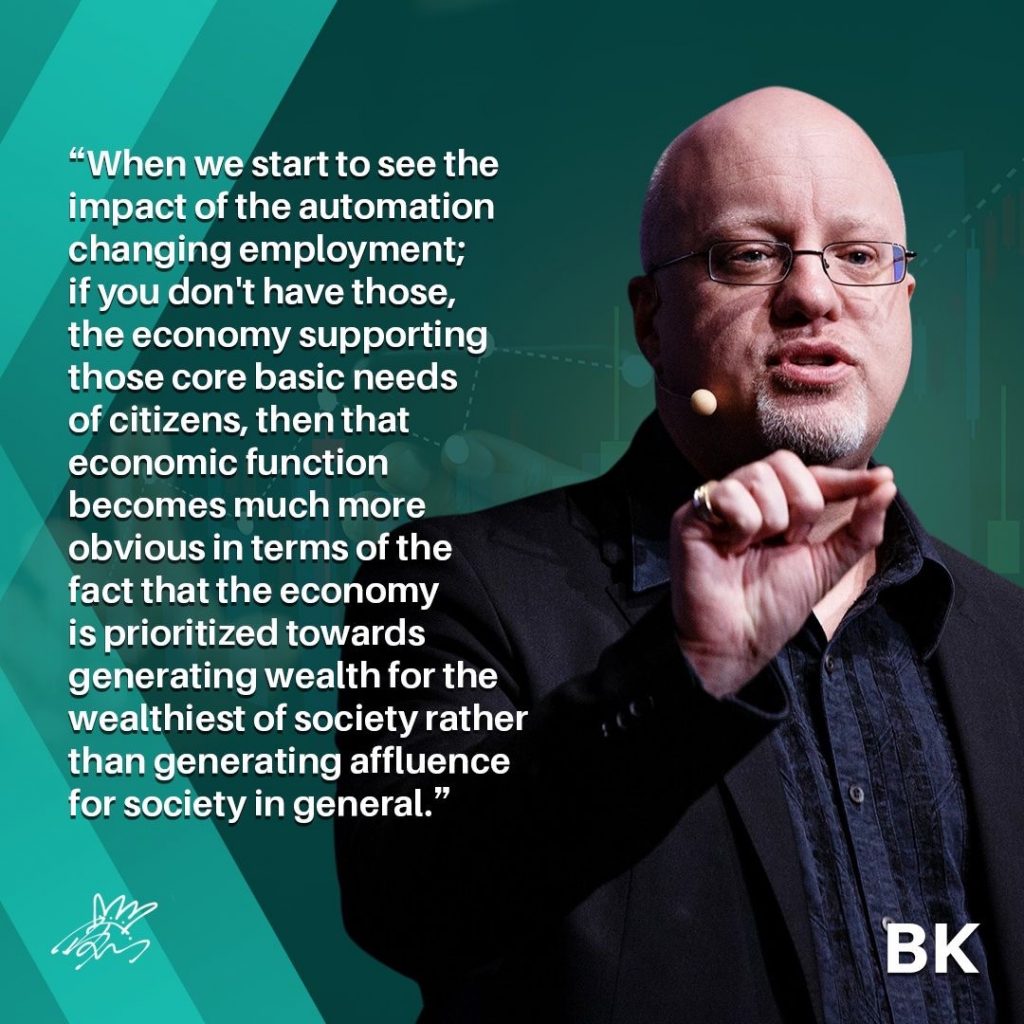
The Original Post on LinkedIn (sorry - I wanted to embed it here - but LinkedIn is the only site that seems to fail with a WordPress embeds) ... go figure.
The crux of my issue is the flip approach to what is happening in the world of business today.
I limited my response to a few lines ... hoping that a reader would be able to 'read between them', Brett read the lines, but not between them.
Brett duly responded ...
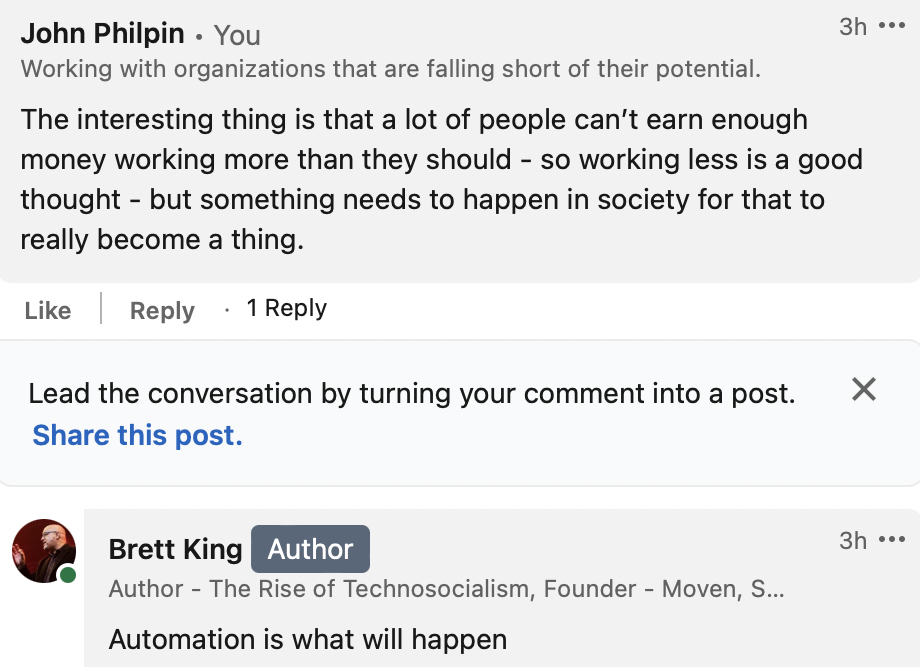
Readers of this blog will know that this is something I understand.
BUT
The point I was trying to make is not about the future of work - we know is being redefined through outsourcing, offshoring, automation, AI, the gig economy, zero hour contracts ... and it is clear those jobs aren't going to come back.
My point is (and always has been) more 'People Firsty' ... that is as all of this comes to be - how will people make income to live their lives in the future?
Example 1
In the comments in Brett's thread people referenced the four day week - and everyone is talking about how it is already happening. The assumption seems to be that a staff member will no longer work 5 days and instead work 4 days.
This is quite brilliant and lovely and utopian and - all those things we want to have in and around our lives and existence. Who doesn’t want to work less ...
If their salary is not affected.
But let's just take a couple of seconds to do a pretty shallow dive ... if people are working 4 days, not 5, then they are working 20% less. To let them work less and not pay them less is the equivalent of companies giving each of those people a 20% salary increase.
Are companies going to do that?
The answer is in plain sight because we have a stalking horse in the race. Thanks to COVID we have proof points all over the world that people don’t want to 'go back to the office' and in turn, some companies have responded with
That's ok - work wherever you want!
Spectacular - until you read the small print ...
This isn't the only article out there, do a search and you will find hundreds, if not thousands of articles debating the merits of paying your staff based on what locals earn.
Case in point - move 200 miles up the I80 from San Francisco to Reno, salaries are nothing like that of the Bay Area. On top of that since Reno is in Nevada - there is no state tax. In California - well like most places, it varies, but here is one slice ...
| $115,648 – $590,746 | 9.30% |
- so moving your life 200 miles reduces your cost of living substantially just based on tax savings. But there's more ...
Beyond the tax break, the Reno cost of living index is just 116.2, compared to San Francisco's at a whopping 244 - and that does not include the tax break just described.
So if you can do your job remotely, why wouldn’t you want to move to a cheaper place - and collect the same income. (Putting the comparison of living in Reno versus San Francisco aside.)
It does seem to be a perfect idea - except your employer is not generally going to allow that - because they do - and will - pay you based on where you live - not where you work!
I get the argument, I really do - but that's my point. If companies aren't going to pay people for value delivered, but based on where they live, then why are they suddenly going to pay you a higher daily rate because you want to work less?
To me, the 4 day week is an experiment to cut salaries - legally. It won't happen suddenly - just over time. They might well leave your salary in place, but everyone's? ... and when you leave will they continue to pay your premium rate to the next person?
Example 2
As more and more people leave their cubes to follow their dreams and passions - which is what everyone is telling you to do - right? Follow your dreams - it will all work out.
What dream and passion are you going to follow?
Look around today and you will find little societal support for artists, musicians, writers, poets et al. Imagine if the number of such people suddenly doubled, grew fivefold or even tenfold as we all follow our dreams ... are all those people suddenly going to be earning a lot more? (it's a rhetorical question.)
We are also told that there is so much opportunity in the professions of care-giving, social services, teachers, hospital workers, elderly care. They are right. Lots of opportunities. They are all on the ‘hot professions’ list, but before you get too excited, go talk to the people who work in those areas now. Ask them why Teachers are resigning en masse? Why do nurses get trained and don’t go into health services?
There are countless examples of how society (that's you and me), value these professions. We don't.
Back to musicians - we pay Spotify 10 bucks a month to stream an 'all you can eat' flow of music to your ears. The artists are generally not well rewarded. But it's not as if Spotify aren't making good money. How else do they afford to $100 million to sign up a single podcast - or buy company after company as they seek to lock up the world of podcasting. (BTW - they are doing it because the more you listen to that - the less they have to pay out.)
To conclude, as wonderful as it is for all of us to follow our dreams and passions - so we can all live fulfilled lives - we also need to earn an income. And we are barely doing that today, so how is that going to get better?
I said something better change
The Stranglers
I said something better change
I said something better change
I said something better change
Or maybe we will all move into social services, hospitals, caring for the elderly - since they are all on the ‘hot professions’ list. That said, the last two years have clearly demonstrated that while ‘society’ might value the people in those roles, it is clear that the paymasters do not.
In short, as we replace jobs with automation - and people don’t have a way to replace that income, something is not adding up.
Bottom line - as organizations remove people from their vendor supply chain and automate sales to improve business efficiency, more and more people will be left out of the workforce - and no matter how many Norman Tebbits (Sorry old English reference), how about Kim Kardashian's words of 'motivation'.
I have a way of looking at the issue. I call it ...
The Business Equation
At the simplest level, the business equation recognizes that every commercial entity has an input - where it creates something using people, money and/or assets to create a product or service that is sold - the output. The 'black box' in the middle is the business. Your business. Any business.
To maximize shareholder value, the business seeks to reduce the cost of what it produces or increase the price of what it sells. Yes there all kinds of techniques that are used - but reduce it all down and you are left with
It is a simplification, but the logic holds.
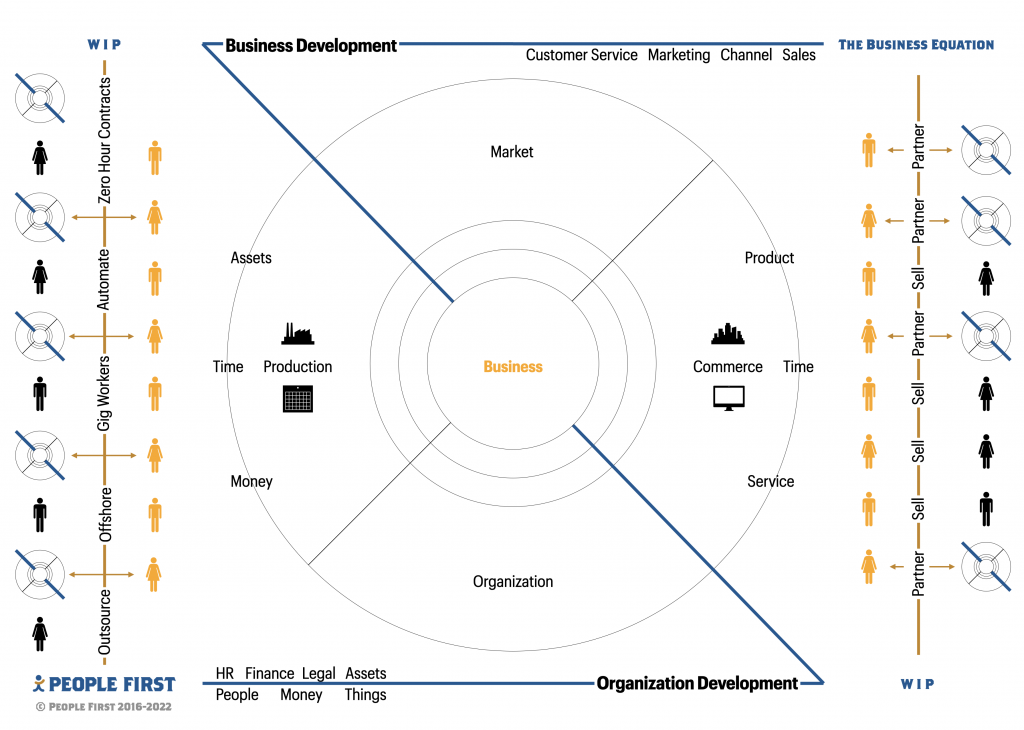
It is also true that on the left-hand side of the equation the fixed costs of 'people' is really high - which is why over the years, companies have sought to cut those costs by 'getting people off the books'. That's where outsourcing and offshoring got their start. Automation through Robotics is now turning into AI and then at contractual levels, the gig economy / zero-hour contracts all play into the needs of corporations who keep on pushing the boundaries of 'just in time' 'people'.
And you thought the days of people being cogs in the corporate engine was a thing of the past!
Now imagine every company big and small working to remove people from the equation in this way. Where does it leave people? Every mini Business Equation on the left of that diagram is doing its bit to outsource, offshore, automate .... and where do people fit in that equation?
To quote my friend Geoffrey Moore ...
That's What I Think - What Do You Think?