
🖋️ LongForm
Want to reduce the noice and just focus on things with a little more meat - the this category is for you. Like so much on this site we have a ‘WIP’ as i take some out - and put some in - but safe for at least starting in 2026.
The Times They Are A-Changin'
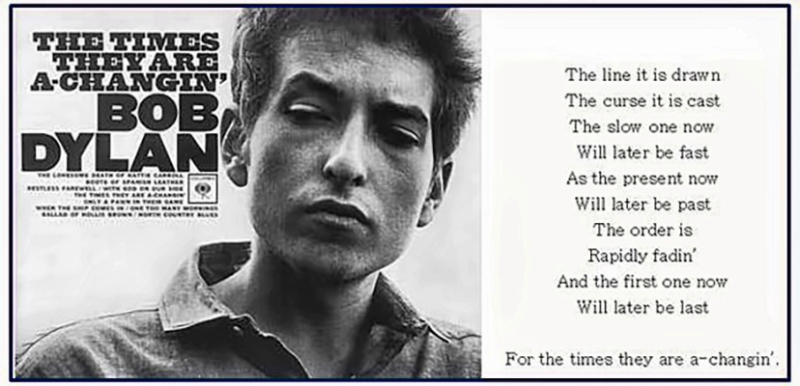
Come gather 'round people Wherever you roam And admit that the waters Around you have grown And accept it that soon You'll be drenched to the bone If your time to you is worth savin' Then you better start swimmin' Or you'll sink like a stone For the times they are a-changin'
💬 Bob Dylan
With the financial problems ricocheting around the world - I see occasional headlines from 50 years ago.
Three day work week - bad.
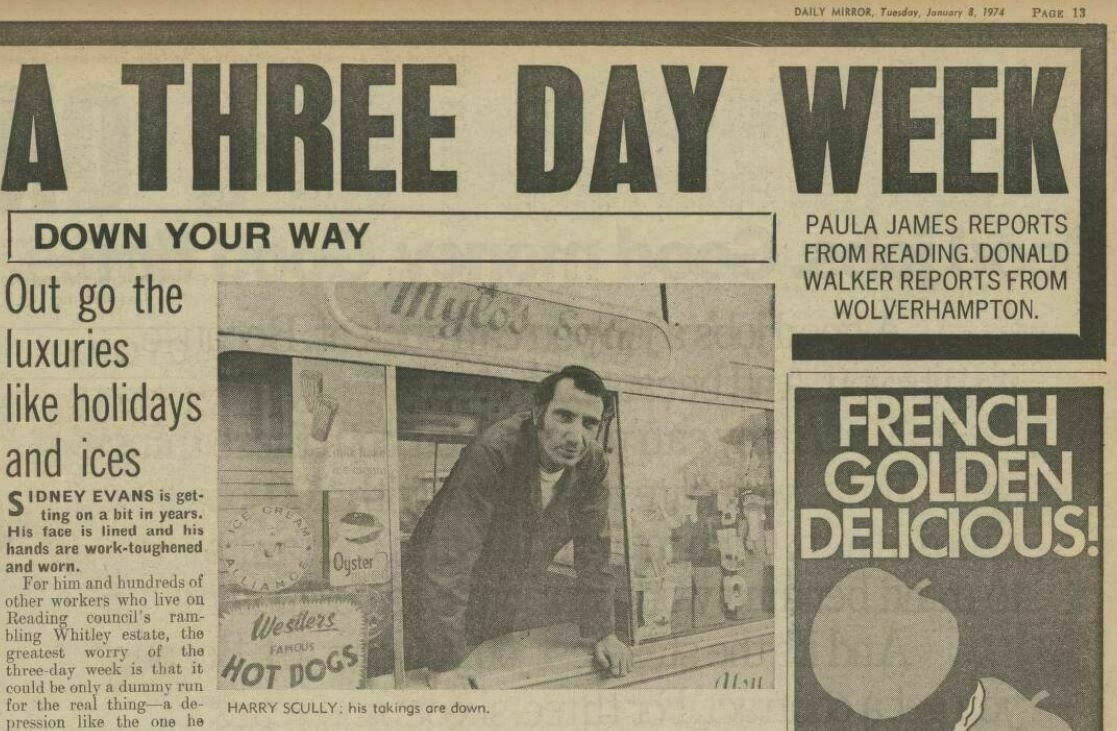
Fifty Years Later : Four day work week - good.
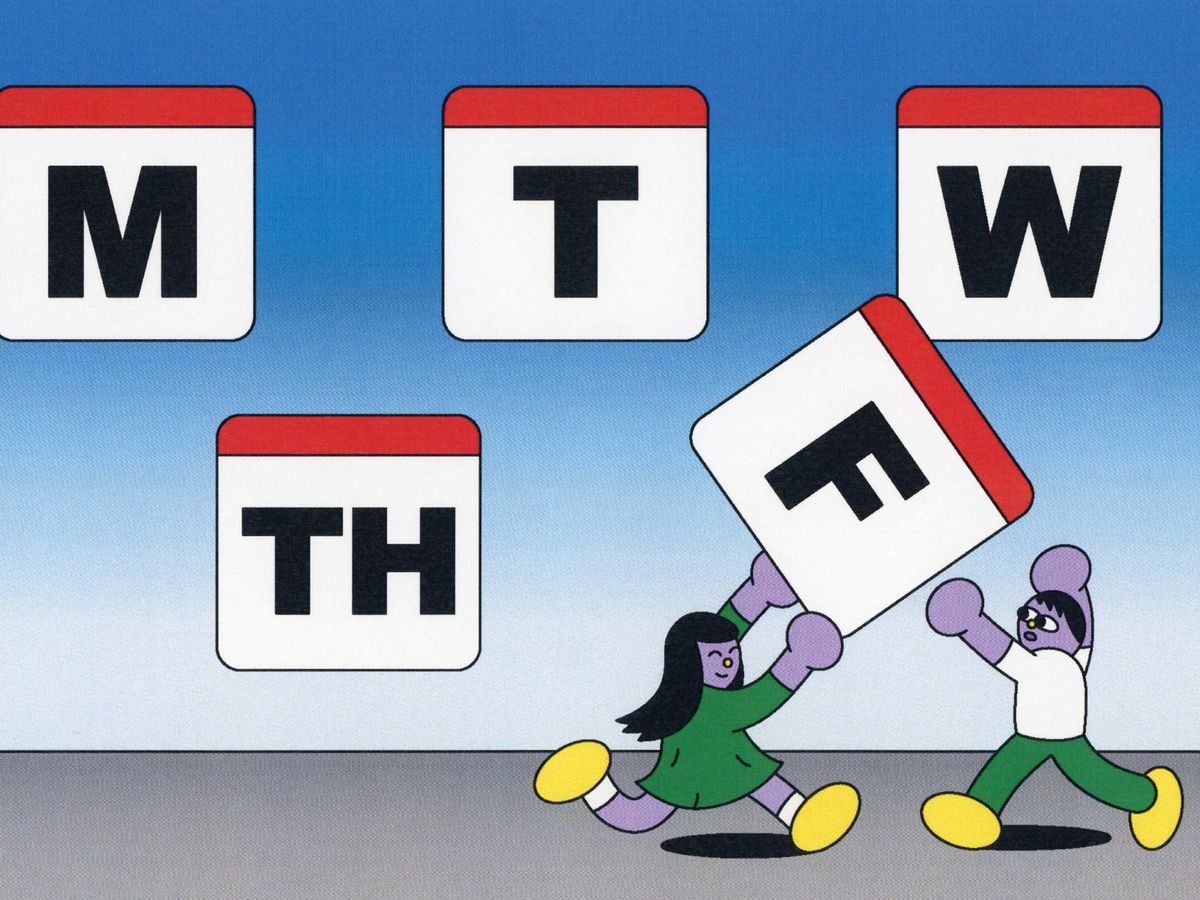
I get the subtle shift in the back story, just an observation.
Thinking Allowed
This is a People First post that was originally on the People First domain. It has been moved here as part of my domain consolidation program. It’s a steady and slow WIP as I check each entry, so do please bear with me.- More about People First
- Other People First Posts
(not just from the ‘other domain’ … all of them.)
Where Am I Working?
I am sitting in New Zealand writing this. It started as an idea in my head and was typed into a local file on my computer. I copied it to Wordpress (my blog hosting software of choice) and saved a draft to my People First server.
The words were then sitting on a server in Iowa, USA.
From this point on, as I edit the draft, I am in New Zealand, the words I am editing are in Iowa - where am I working?
By the time you read this post, I will have published and anybody in the world can read it.
Example, a visitor in Kenya pulls up this web site in their browser and these words are 'automagically' read in Kenya.

Question
Where is ‘the work’ done?
- New Zealand, because that is where I tapped the original words into the computer?
- New Zealand, because that is where I cut and paste those words into Wordpress?
- Iowa, because that is where the People First servers are?
- Where you are reading this because until those words delivered value (you reading them), no work was done.
I ask because once you know where the work was done, you should have an idea on where you should be taxed and arguably where you should be licensed to work.
This conversation doesn’t seem to be a major part of public discourse, because the scenario is an edge case. But for how much longer?
New York has a law that says anybody working IN NEW YORK pays New York Taxes and from that emerges things like the NY, NJ and CT tri-state tax agreement.
“Like all states with broad-based income taxes, New York has asserted the right to tax nonresident income earned within its borders. But unlike most other jurisdictions with significant cross-border commuter flows—such as Illinois and Indiana or Virginia and Maryland—New York has never given nonresidents a tax pass in the form of ‘reciprocity’ with their home states.”
But if my servers are in Iowa, my customers are in Europe, my bank account is in California and I only live in New York, should I pay New York taxes?
I write more about where we work in this week's newsletter.
Why Non Of My Books Are Available On Audible
Why none of my books are available on Audible is a 'spoken essay' from Cory which will eventually be the only entry he has in the Audible library.
Take a listen to find out why.
The link takes you to a page on his Craphound site, or go directly to 🎙️the podcast

Thinking Allowed
This is a People First post that was originally on the People First domain. It has been moved here as part of my domain consolidation program. It’s a steady and slow WIP as I check each entry, so do please bear with me.- More about People First
- Other People First Posts
(not just from the ‘other domain’ … all of them.)
About Those Deep Links To Email Messages
MacStories : 🔗 Generating Markdown Links to Mail Messages with Shortcuts and AppleScript
Dr. Drang : 🔗 Mail links and percentages
I used to use hook - but not enough to pay for it - so stopped.
Spark has an easy way to generate deep links to emails - BUT - if you move the message to a different folder - the lnk breaks for me.
So question.
Does the MacMail linking also break when you move messages, or is the ID absolute?
Data Is The New Soil

In 2013, Mark Cameron wrote
‘Data is not the new oil, it is the new soil.’
He concludes;
"Generating business value from consumer data isn’t about technology at all. It’s about how you use data to create a fantastic experience for your customers. If you can help your customer get value from their own information they will reward you for that effort. If you continue to use data to spam your customers or provide value to your company, you may find yourself wondering where everybody went."
💬 Mark Cameron
IMHO it's a soft article with most of the cleverness centering on the (S)oil pun.
Data is the new .... was the theme of an article I wrote for BizCatalyst a few years ago; Time To Terminate Analogies
"Sure, we wrap the idea up in customer care and nurturing, just as one does when growing plants in a garden, but at the end of the day Cameron’s argument – which seems to emerge from the work of David McCandless who writes at Information is Beautiful is simply a clever play on ‘(s)oil’ and sits squarely in old thinking. "
💬 John Philpin
“The soil analogy is certainly better than big oil but to me, it’s still about personal data being something that’s owned and used by marketers, rather than recognizing that data is used by all of us – both individually and collectively.”
💬 StJohn Deakins
But It Just Got Better
The other day an interview with Jerry Michalski appeared in one of my feeds, where he talked about Data Is TheNew Soil - nice piece - though no mention of Mark Cameron (rightly probably).
I still think the analogy needs to die - but there was a lot more insight and thinking around the idea (definitely not surprised - Jerry is a thinker). I can highly recommend the whole article which isn't just about the (s)oil pun, but includes many other topics, including these that tickled my particular fancy.
- Idea Superconductivity
- The Betterverse - not the Metaverse
- Linky Prose
- The importance of breaking Zettlekastens out of their private spaces
- Liquid Democracy
and a whole lot more.
Do take some time out and have a proper read.
Post Script
In case you were wondering .. yes this is the same Jerry that runs Jerry’s Brain. I am even in there - though it is clear that a few updates are needed!
What Is Web5

Good question.
Putting aside Molly White’s tweet from a few weeks ago, though she does raise a very good point ...
I did want to share a podcast I just listened to It's Mike Brock of Block (seriously, filed in the 'can't make this up' bucket) - and no I don’t think he is Dave Brock's son talking with Tech Dirt's Michael Masnick.
"Web5 is a new evolution of the Web that enables decentralized apps and protocols.”
Count me in the camp (though I am still with Molly) that this makes far more sense that anything I have heard describing the Web3 world - except isn't that how they described Web3?
Well yes - but that isn't what is going on. Of course whether Mike et al can make it happen remains to be seen - but at least when he talks he makes sense - and also clearly separates himswlf from the 'get rich quick / stay rich libertarian world that we keep reading about.
BoJo Trump Timelines and Parralels?
Just thinking aloud …
—-
June 2016 … Brexit - Driven by BoJo
November 2016 … US Election - Trump wins.
July 2022 BoJo stands down as his party FINALLY rejects him
Does this suggest that
December 2022 will be when the Rethuglicans finally reject Trump?
Interestingly, that date is just after the mid-terms, which everybody is convinced will be yet another Democrat shellacking, but what if it isn’t?
Will It Happen?
And if it does - will Trump get blamed?
🖋️ Class Action Against Uber and Lyft
One of a series of posts that came from one of my many blogs that I am slowly consolidating into this canonical reference. The old blog was with specific regard to ‘all things Uber’.
Where To Keep The Family Jewels
Would You Keep Your Most Valuable Possessions In The Vault Of A Company That Might One Day Just Close Their Doors And Block You From Getting All Your Stuff Back?
A few years ago … let’s call at it the ‘advent of social’, common wisdom suggested
‘Email is dead … long live Social’. If you know me, you will not be surprised to learn that I disagreed with ‘common wisdom’. I even wrote how the people at the vanguard of the movement were not just wrong … they were really wrong.
Fast forward to 2022 and it is clear that email has not disappeared… in fact for the past few years it has really caught hold … with everyone.
I publish my newsletter over on Substack, a company that when it launched just 5 years ago was greeted with a general shrug of shoulders and comments that could be rolled up into the umbrella term of ‘What Are They Thinking’.
I decided that what they were thinking was really interesting and when they announced their public beta in 2018, signed up to explore more, launching my first ever Substack newsletter on February 8th, 2018.
At the time my Wordpress Blog was at people-first.net … before moving to people first.vision and then on to people first.business. But I also had a mail chimp account which I used to send occasional missives … so needed to move my subscribers from there over to Substack, but life was busy and more importantly, IMHO Substack wasn’t quite ready for what I needed.
It was a year later when I threw my entire lot in with the company, closed down my Mailchimp account and moved my subscribers and committed to a weekly missive. Since then Substack functionality has gone from strength to strength. There are still oddities in some of their design decisions … like why can’t I center text if I really want to center text .. but on the whole … all good.
Of course lots of companies have woken up to the phenomena … both on the newsletter creation side and software to generate said newsletters. The ‘arms race’ is in full swing.
It was at the end of 2021 that the Microsoft company ‘LinkedIN’ launched its own newsletter functionality. If you are on LinkedIN, you know this because you are receiving messages from many people … too many actually, to sign up for their newsletter. But it is clear that people are signing up for them - the question is - are they reading them?
Here’s the Challenge.
Willy Sutton was a bank robber in the United States, dying at the age of 79 in November 1980. There is an apocryphal story where a reporter asked him why he robbed banks. Willy replied;
“ Because That’s where the money is.”
~ Willy Sutton
People often ask me why I am on LinkedIn, Facebook, Twitter et al
Willy knows - BUT - being there doesn’t mean these platforms are there only places where my thinking, IP, articles, ideas et al reside. All of that starts here - or over on that newsletter. In documents on my hard drive. In my Obsidian vault. Oh so many places - joined together by one common denominator.
I have control over where and how that content is managed and how it is found. No algorithms. Not 'at the will' of a faceless corporate bureaucrat.
Just my stuff. Where I want it. So when I want it, I can find it.
Linking Your Thinking
I have been tracking Nick Milo and his wonderful work around Obsidian for a while. Recently he announced LYT Kit v5 and 🔗 this is his overview.
People Are Visiting The Archives
Photo by Darius Bashar on Unsplash
After my unscheduled hiatus, I have been thinking about the podcast. It is going to be different. I mean everything is going to be different. Isn’t it? Why would the podcast not be different?
I recorded the first one earlier this week (don’t worry - you didn’t miss it - I haven’t dropped it yet). If you know me, you’ll know that I definitely err on the side of ten words where one will do … I’m working on it!
Brevity. That’s one of the changes.
It’s only 5 minutes - so far so good!
That’s also the thinking behind the newly launched ‘Short Sharp Shock’ - an ‘image lead’ sister publication that will come out weekly questioning what I am calling ‘The Status Futurus’. (Think Status Quo - except in the future.)
Meanwhile, the Blog has been redesigned to allow for easier navigation, titleless less short asides (why should everything have a title - including a Powerpoint slide) .. The book is still for sale, I am toying with a second book - similar principle - totally different topic,
And then there are the archives.
… and talking of archives and the use thereof?
Q: How do I know that people are coming given that I don’t overly bother with analytics?
A: Because people keep on writing to me telling me that a link is broken.
Sadly, yes, I know and as they are raised I either fix them or remove them.
The problem stems from using a series of People First domain changes over the past few years. Older posts pointing to people-first.net, the experimental wiki and glossary just will not work.
My sincere apologies.
We're getting there.
The Four Day Work Week - Is New Zealand Being Left Behind?
You can read the article here.
It’s not really a question as to whether New Zealand is being left behind. I think there are many countries facing this challenge … but the question is what is the challenge?
I ask because I believe that there is a massive conflation of this as people make their arguments..
Does a 4 day week mean
- Working 40 hours in 4 days
OR are we really talking about reducing the number of hours of a standard week to 32 hours?
If the latter we are essentially awarding people a 20% increase in their wage/salary… really? From businesses who argue that they can’t afford a 2 Percent increase in salaries?
If it is the former … what’s the big deal? It isn't that hard to reschedule the teams .. and the benefits to the staff ... priceless!
Imagine cutting out 20% of these rides every week!

A Good Idea That Might Go Wrong OR A Bad Idea That Will Get Worse?
A New Prediction Market Lets Investors Bet Big on Almost Anything - I see it is behind a paywall - but you can read it all on Apple News
The article is about a ‘new’ prediction market : Kalshi - which initially had problems with getting approval …
“But their concerns were overruled by the agency’s politically appointed commissioners, one of whom has since joined Kalshi’s board.”
The concerns are clear - but for all of that - I can’t help wondering if this still might be a good idea. (Revolving doors between government and commerce aside.)
Of course - they aren’t the first. Heard of predictit (I never knew it was a Kiwi play.)
Good Grief - Can Writers(*) At Least Question What They Are Being Told
How Remote-First Crypto Players Could End the Company HQ
We will see.
BUT
The real news buried inside the post is how many of these scams companies are based in Malta, The Caymans, The Bahamas … very … what’s the word … ‘levelling’?
As for crap like this …
““Fellow crypto exchange Kraken followed suit in doing away with its HQ in April, and while CEO Jesse Powell said the closure was specifically a response to incidents of crime impacting its employees on the way into the San Francisco office, he added Kraken has “no plans to establish a new, formal global HQ.”
My bold - BUT - if that really is the reason - why not set up an office in a different city - in Texas or Florida say
(*) I have a hard time calling them ‘reporters’ or ‘journalists’.
There Are Three Sides To Every Coin
As long as Spotify continues to generate headlines like Joe Rogan: We Have a ‘Mental Health Problem Disguised as a Gun Problem
I am good with Netflix generating headlines like Netflix CEO defends Dave Chappelle and Ricky Gervais
Though I take issue with Netflix falling back onto the ‘Free Speech’ defence. I would rather they used the ‘change the channel’ argument.
The Future of Personalization
Don’t get too excited - it’s a McKinsey paper.
The future of personalization - and how to get ready for it.
- Physical spaces will be ‘digitized’
- Empathy will scale
- Brands will use ecosystems to personalize journeys end-to-end
... wait - what?
"Empathy will scale."
You can't make this stuff up. Talk about buzzword compliance!
Then - when I was looking for a suitable image to use for this post ... I came across this doozy from Sitecorp.
If You Don't Add Value - Why Are You There?
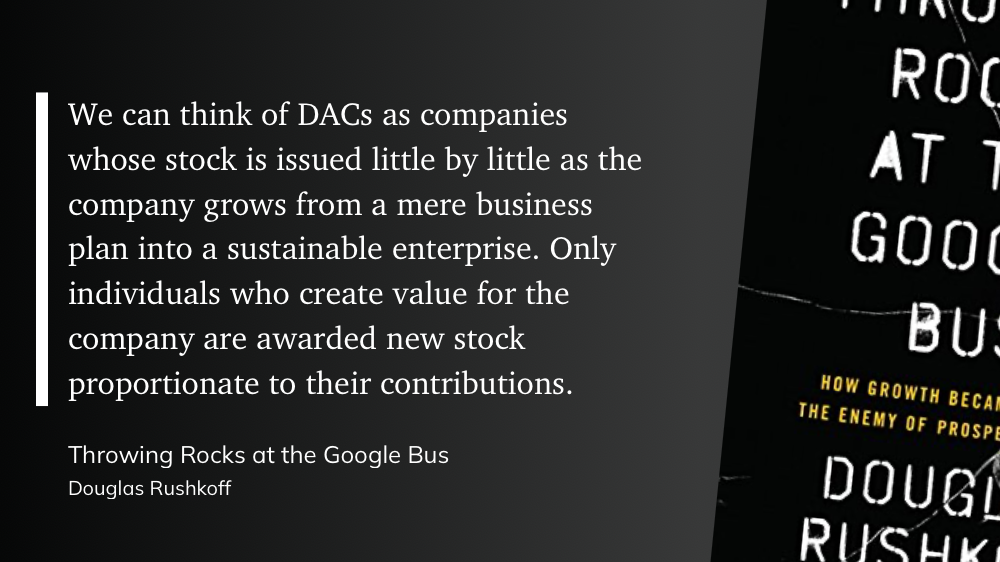
It is telling that someone like Doug Rushkoff can write these words;
Only individuals who create value for the company are awarded new stock proportionate to their contributions.
💬 Douglas Rushkoff
... without questioning the principle.
The corollary is of course that there are people that work inside a company that don't add value, which for yours truly is of course like a 'red rag to a bull' - because as the title of this post suggests, if you are employed by a company and not adding value to that company - then why are you there?
Stakeholder capitalism (apparently) 'solves' the problem.
‘Stakeholder capitalism’ is the buzzword du jour for business practices that strive to achieve more than profits and a high stock price.
💬 McKinsey
If you want to read more - you can:
Putting stakeholder capitalism into practice.
To be fair, the idea of 'Stakeholder Capitalism' has been around for several decades, although who actually coined the term is up for debate, with names including Klaus Schwab (Founder and Executive Chairman of the World Economic Forum), Peter Drucker and Tom Peters.
Still wondering? This is not a bad primer.
So yes - it is not a new idea - it's just that as the world's conversation is moving into fairness and equality, as we see a (kind of) resurgence of Unions and as 'capitalists' are pushed into the corner of 'defending their position' ... the term is emerging and arguably being positioned as the logical next step for a 'sustainable economy'.
I wrote about this over three years ago when I shared a Ted Talk from Nick Hanauer. Today, that video has had over 5 million views. At the point of 'first discovery', I had not heard of Nick - but as I pointed out, the principles of what he was talking about are engrained in People First thinking.
Today, you can hear the same language when people talk about DAOs in the world of 'Web3' and quite a few other places.
But then many steps before 'Stakeholder Capitalism', there was something called 'The Cooperative Movement' which got its start in 1844 in Rochdale a small town in Lancashire, England.
So far, I have not read anything that clearly articulates the distinction between Stakeholder Capitalism and Cooperatives and which and why each might be better or worse than the other. Sometimes I wonder if 'cooperative' is too 'radical' in this world - so we keep inventing new words to describe the same thing.
I have always liked the New Values/Old Values - New Power/Old Power model originally developed by Jeremy Heimans and Henry Timms nearly ten years ago.
So, picking on a random target company like Uber, which despite hanging its hat on 'the sharing economy' is actually 💯 an 'old thinking' capitalist company.
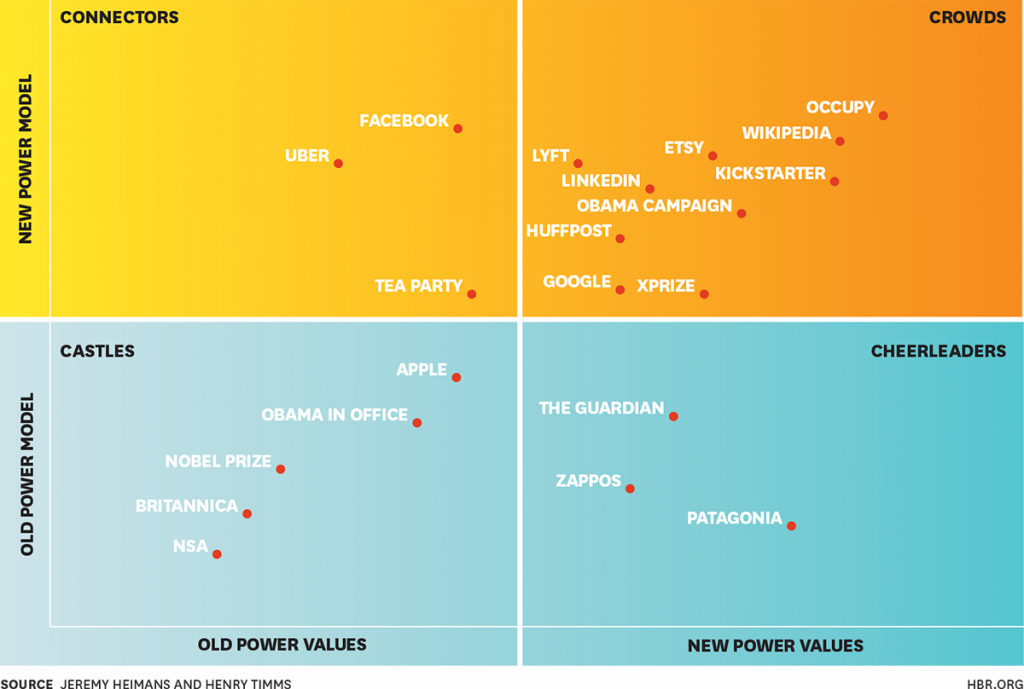
Now consider a company called ATX Coop Taxi - a cooperative taxi service based in Austin that has been around for over 5 years. NO - they aren't as well known - but their service is a 'cooperative'.
The question is why hasn’t it taken off?
That is for another time.
Toast Generally Lands One of Two Ways
“The expansion of shelter-in-place, or as we call it, forcibly imprisoning people in their homes… is, in my opinion, breaking people’s freedoms in ways that are horrible and wrong… What the fuck!… This is not freedom. Give people back their goddamn freedom.”
💬 Musk in America in April 2020 re lockdowns
Meanwhile …
""
💬 Musk in China in April 2022 re lockdowns
Read The Whole Thing - spells out very clearly which side the bread is buttered on - and the struggles to ensure that the toast doesn’t land face down!
Every Bay Area House Party
Astral Codex Ten had me curled up on the floor in stitches ….
Man, it’s been a crazy few months. You hear I quit my job at Google and founded a fintech startup?”
“No! What do you do?”
“War insurance!”
“War insurance?”
“Yeah. We pay out if there’s a war.”
“Isn’t that massively correlated risk?”
“Yeah. The idea is, we sell war insurance to companies who do badly if there’s a war - tourist attractions and the like. Then we sell the same amount of peace insurance to military contractors. As long as we get the probabilities and costs right, we make the same profit either way.”
“Neat idea, how’s it going?”
“Great! Ayatollah Khameini just bought a ten billion dollar policy.”
“Of the war version or the peace version?”
“Can’t say, confidentiality agreement.”