
? Posts
I don’t know - I share a lot of Om - but this one - this right here is in a class of its own - so beautiful. A delight to read. A level where you don’t just give up highlighing the best parts - but maybe even give up writing - because how can you even begin to achieve this.
🎈155/366 The First Vision Pro Concert Movie
I have touched on this before but after reading a Lefsetz post over the weekend, decided to expand a little and log the thinking for posterity.
🔗 Lefsetz Letter - Company At The Sphere - that’s the link to where 🖇️ this quote came from that I published this weekend. I said I’d be back…
Around 2016 - ’the term ‘spatial’ was being coined’. - though I personally think Apple’s ‘spatial’ is a light year or two ahead of where Mr. Scoble was at the time (He’s very quiet these days, isn’t he?)
🖇️ But February this year I made some pretty logical predictions about the first Vision Pro Movie.
🖇️ And in October last year I was predicting that The Sphere was a pretty good place to start on a ‘Vision Pro Concert Series’ - and I think Apple will be the one to do it. Well, maybe not ‘doing’ it - but certainly financing it.
I still think that.
But who will be the director and/or subject matter for this groundbreaking event?
Who’s Out?
Despite Tay Tay’s global appeal, it won’t be her. The Swifties don’t have the money to buy the Pro.
Peter Jackson is deep into the latest tech to do great things, definitely a friend of Apple - and his foray into music with The Beatles is interesting - but no, no Sphere experience and besides 🔗 he is deep into his next Trilogy .. as Producer - not Director, but still ..
Original “The Lord of the Rings” trilogy filmmaker Peter Jackson and his partners Fran Walsh and Philippa Boyens are producing the movie and “will be involved every step of the way,” Warner Bros. Discovery CEO David Zaslav said during an earnings call Thursday.
Phish? I dunno - not seeing it.
So Who’s In?
Two very real possibilities …
U2 - deeply intertwined with Apple - remember the album? And then they were first up at the Sphere - and Zane Lowe hanging out with them, talking with them. We have seen some of the footage, but who knows what was taken off the ‘back stage’ for the first Vision Pro movie?
… but I am wondering - and well out of left field - but …
The Grateful Dead - who have always been at the bleeding edge of touring and spectacle
- The ‘Home’ band for Bay Area based Apple
- Sphere residency happening - even as I type
- Residency coincided with Earth Day 2024 (very ‘Appley’)
- Lots of San Francisco through time imagery featured in the show
- 🔗 and then there is this - Huff Post - so maybe a pinch of salt is needed, written eight years ago …but written by Bill Bradey, so not his usual subject matter - but certainly no slouch.
- Note that Mayer is also part of The Sphere residency.
It’s all fitting in for this bear.
The only hard thing to reconcile is that ‘Tay Tay’ problem. Is there an overlap?
I think there just might be.
What do you think?
I wrote a post yesterday morning. It’s not my usual style, so I filed it in drafts while I cooled down.
I woke up this morning and saw the headline “Israel Blames Misidentification for Strike That Killed Gaza Aid Workers” … and so fuck it … it’s in the comments below. (If you are reading this and not on my site - click on the link.)
All Change? More Of The Same?
Life can move slowly.
But then it doesn’t.
Case in point …. or is it?
🔗 Me on LinkedIN 12th December 2023
Resignation 14 December 2023
🔗 Business Desk Reporting 19th December 2023
Good result?
It’s a start.

Then we learn that the new chair is Jenifer Kerr - wait, she’s the chair of NZTE.
Indeed she is.
We now have one person chairing NZTE and Callaghan - thought the profiles are slightly different. (I wonder why?)
NZTE
Jennifer has extensive governance experience, both in New Zealand and overseas. Her current positions include chair of Worksfe, deputy chair of Callaghan Innovation, a director of Eke Panuku Development Auckland and Waipa Networks, and member of New Zealand Police’s Audit and Risk Committee. Former governance roles include director of New Zealand Rugby and Counties Manukau Rugby Union. Previously, Jennifer has been general manager of customers, people and environment at Transpower, former group director of human resources and health and safety at Fonterra, and group manager of human resources for Mobil Oil for all of Europe. She has run her own consultancy and has strong experience in organisational strategy, chief executive recruitment and succession, executive remuneration and stakeholder relationships. Jennifer is a member of Global Women and has degrees in arts and social sciences from the University of Waikato. She is of Ngāti Mutunga and Ngāti Tama descent.
Callaghan
Jennifer Kerr has extensive international experience in the HR and health, safety and wellbeing sectors in North America, Europe, the United Kingdom and New Zealand. She was formerly General Manager of Customers, People and Environment at Transpower and Group Director Human Resources and Health & Safety at Fonterra. She has also operated her own consultancy business, and prior to that was the Group Manager of Human Resources for Mobil Oil for all of Europe. Jennifer has governance experience in the United Kingdom and New Zealand, including pension plan trustee roles in both countries. Jennifer is a member of New Zealand Global Women and has taken an active role during her career in mentoring and coaching other women to achieve their potential. She is of Ngāti Mutunga and Ngāti Tama descent.
One observation - nowhere in either of those bios is there a mention of anything to do with ‘RandD’, ‘Innovation’ ‘Tech’ and all the various off shoots and things that those two orgizations are there for. I guess it is clear what the focus is.
And maybe something else ..
Ever since I arrived in NZ I have been amazed by the sheer number of governmental organizations that float around the country ‘doing’ ’things’. It’s a country of 5 million people. These are the organizations I have identified so far that brave entrepreneurs navigate for help.
- Callaghan Innovation
- NZTE
- NZGCP
- MBIE
- NZGIF
- KiwiNet
- AUT
… not to mention the ‘chambers’ and ’ema’ and ‘business nz’ and ’eda’s’ and ‘incubators’ and ‘accelerators’ and … (thankyou Andy)
Here’s the question - as the new administration start implementing their plan - how many closures and/or mergers should we expect?
What do you think?
And is Callaghan and NZTE first?
🎈026/366 | 🆔 The 'entity' in Identity

BTW - If you want to cut to the chase - Identity 2.5 is a great Substack to get your teeth into.
Identity continues to be core thinking in the work I do with people. In particular with a company down here in Aotearoa.
The Founder is a deep thinker - as are his communications. One of my jobs is to take those thoughts and write words that ordinary people might understand.
In the ‘biz’, it’s a different challenge. Like any other ‘biz’, there are words and phrases that get used and we all think we understand them. But do we? Particularly when you are trying to reset thinking. Even a little bit. Why? Because specific words have specific meanings in certain contexts and ’the experts will hear th word and some they know what comes next.
Therefore you have to be careful when you use them. BUT, if you don’t use them, you find yourself having to keep redefining things so you don’t lose the frame of reference!
That’s the hard part, but now lets get back to the plot.
Last week I needed a ’twofer’.
I needed to summarize the essence of what we are talking about in ‘*everyday English’. I knew the recipients were on the ‘fringe’ of the biz, so they had an understanding of ‘identity’, but our pitch was to have them look at identity in a different way. Plain English needed but reset required.
When he saw my email he wrote;
“I like the Johnising of Alan.”
… which I am taking positively and assuming I am not too off beam - recording for posterity - with a few tweaks to protect privacy.
My take on Alan’s thesis
Identity is about people - ordinary people - not devices, not technology … people.
AND
People necessarily have to deal with businesses in three main contexts
-
In person
-
On the phone
-
Online
AND
A lot of identity processes are really kluges that get bypassed all the time. (Personal experience just last month with a bank where I had to prove who I was - and every single proof that they needed I failed - since I had been out of the country and all the ‘check points’ had changed. It took me about 15 minutes together my access back - and I know I legally failed.)
Think of it as ’theater’. Like taking your shoes off at the airport.
AND
There is no single safe mechanism that allows for all three contexts. In fact some things you need to do just cannot be done in certain contexts.
AND
The tech industry’ is mainly working on ’number 3’. (Even though numbers 1 and 2 will not be going away. They are mainly being ignored because I suspect that the tech industry really thinks about ’tech’ and seems to exclude ‘people’ and ‘place’. You only have to recognize that if you have someone’s device, then to all intent and purposes, you can assume their identity and place … who needs ‘place’ - we are all in one place. It’s called the internet!
OK - I am being a little unfair - but you know what I mean. Right?
AND
They are often only working on two party authentication - I am me - here is my proof that I am me - and you will believe me on providing that proof to you.
AND
The complexity, problems and potential losses are exponential when you consider three party authorization … i.e. I (party a) have an account with a business (party b) that grants me a discount at another business (party c). How do you make that work efficiently - across all three contexts?
Meanwhile
Clear use cases include KYC (Know Your Customer) .. a global process that is increasingly necessary as part of more and more laws - to ‘protect’ us. But it is theater. It’s a theory gone amok leaving with organizations that deal with people as a business have been forced to implement expensive, drawn out, and costly (for both business and customer) processes that are not really working.
There are many many more cases we will (are) work(ing) on.
Sometimes you will hear that ‘Web 3’ is going to solve it. Sometimes ‘DIDs’. Hell - even the NFT unicorns were making promises at one point. ‘Cyber’ … ‘AI’ … there is an ongoing barrage of people that talk hypothetically about the problem - but there still isn’t really a solution. They might well be the answer - maybe - but not today
- There needs to be wider adoption.
- It needs to be easy AND safe.
- There needs to be trust.
- It needs to be cost effective.
- There should be no barriers.
- We definitely should not be waiting for whatever the ’tech d’jour’ is to grant us salvation.
We call all that Identity 3.0 - and who knows - just like Web 3.0 it may happen one day.
We call our solution Identity 2.5 - because it does not use tech that is not available - rather it sits in existing infrastructure that is already in place.
We have a working demo. We have patents. We have commitment from the NZ Govt. We believe we are unique - and nobody that has seen it disagrees.
We are moving forward.
Later
This seems to have caught attention since I originally posted it, so in order to save you time, if you are interested in what I am talking about and want to learn more, you can drop me an email - and be sure I will get right back to you. My thanks for your attention.
At the beginning of the year I had grand plans for this series. A daily long-form post about something that was rattling my brain that day. And then life. For a while, I was even just dropping markers - to revisit. I came to realise that part of the problem was the complexity of the structure for each post - so that went away. Simplicity really is rather nice. As I write on 240413, I am now going back and filling in the gaps. PLUS - unless something strikes me immediately, I will not classify until the end of the day and go back to move one of the posts of the day into the 366. Also - if you are wondering how I have update the words at the bottom of over 100 posts at a stroke, well - THANK YOU Andy Sylvester and his Glossary plugin.
🌡️ It's Called Global Warming
Ever wondered why we used call it ‘Global Warming’ - and now we call it ‘Climate Change’?
Said it before - say it again - Language is important. More than important - it shapes how society thinks.
Frank Luntz understood that …
Memo exposes Bush’s new green strategy. is a 20 year old article describing how Frank Luntz first introduced the idea of ‘changing the dialogue’.
Doesn’t ‘climate change’ sound so much nicer than ‘global warming’?
Which is why 20 years later we read these kind of headlines quite regularly.
One in three people on the planet hit by ‘monster Asian heatwave’
Language is one of the 8 pillars of People First thinking where we explore the subtle art of manipulating conversation and dialogue through the careful choice of words. It’s rampant.
Why You Can't So Easily Replicate Silicon Valley
Wherever you go in the world, New Zealand, Scotland, Austin Texas, Raleigh North Carolina, Hyderabad, Shenzhen …. pretty much anywhere, you will find there are tech centers. Tech centers that often adopt ’Silicon’ or ‘Valley’ or variations on such in their names, but there are many more. The local government will often declare they are investing and building a tech center of excellence to ‘rival’ Silicon Valley. Except they aren’t. Let me explain.
The 🔗 Beckn protocol “allows you to create open and decentralized digital ecosystems”. So far, the word ‘blockchain’ is mentioned nowhere (that I have found). I also haven’t found how it handles ‘identity’ before it facilitates a transaction, though it says it does ‘identify each other’ but I’m not sure that is the same thing?
Can anyone share their experiences. It looks really interesting from a ‘People First’ perspective.
Extracts from their world …
identify each other and perform transactions with each other without the need for a central intermediary
Beckn Protocol is an open commerce protocol with an abstract core, which is enabling market players to reimagine building seamless digital experiences and networks. This is very similar to how HTTP, while being a simple and open protocol has fueled seamless interaction between multiple systems and led to an explosive growth in internet adoption.
The beckn community is an open community. So, no registrations. No memberships. No partnerships. Just a minimal footprint of an open and equally accessible Beckn Protocol that anyone can use. Multiple businesses and organizations have started using beckn protocol to fuel their digital acceleration. The credo of being an open protocol creates a level-playing field for any market player, small or large.
My Speciality ? Generality !
A slightly edited version of a post originally published on February 14th 2016 @ Beyond Bridges, now archived here
A friend and reader of this blog just sent me this link, which is a third party version of the LinkedIN map below. It seems to be limited due to LinkedIN's API constraints, so it can't map more than 499 of your connections. That said, there does seem to be a lot more information and analysis that surrounds the graph. Andy it means YOU can go try it out on your network. Thank you David.
A good friend of mine messaged me through LinkedIN. He is a fast thinking, witty, bright, intelligent, big thinking kind of guy. He's also interested in his next gig - so let me know if you want an introduction. Anyway, to my point. He had been on my LinkedIN profile and commented;
I think you would be well served to pare that list (of skills I had listed in my summary) to maybe 4-5 distinct and specialized areas where you really shine better than the rest. Things like Leadership, Marketing, Communications are too generic and readily available in the marketplace.
And I agreed. In fact, so much so that I pared it down to zero. My skill list is summarized in another part of the profile anyway. But it got me to thinking.
I am a big fan of Mike Pesca over at Slate who delivers a daily podcast called The Gist. Try it. You won't regret it. A couple of weeks ago he had Eric Weiner on as a guest, and they spent some time talking about where genius comes from. Turns out that Eric has just written a new book about 'how genius happens'. One of my takeaways was that genius emerges from generalism - not speciality. For example, he talked about the fact that Einstein was not the most knowledgeable physicist of his time, but his value was that he was broad in both interest and knowledge. A 'Renaissance man' if you will. This an absolute opposite to what we live with today. We eschew the 'polymath' in favor of the 'monomath'. From the site Gain Weight Journal;
Unfortunately, we live in an era of monomaths now. This means specialists. The problem with that is that people get stuck with one way of thinking, they have blinders on, and cannot see the big picture, including the relationships and similarities between different things.
I know, even our education system is driven to a singular focus and it seems to be getting worse. For myself, I focussed on Maths and Physics in my education from the age of 15. Maybe I was bored. Maybe I could see the future, but despite that formal focus, I did put an effort into ensuring that I didn't get locked up in that world and miss out on everything else that there was to offer. (Though I probably shouldn’t have read all three volumes of Lord of the Rings over a two week period shortly before some year end exams!). Back to the plot. Reading that quote reminded me of what we used to say back in my Group Partner days ... "The Last Thing You Ever Need Near A Problem Is An Expert" Good. Because I am not. LinkedIN 'Labs' used to run something that visually mapped your connections so you could see clusters of people in your network. They closed it a while back, but at the time I wrote about it, dubbing it 'Cloud Hopping'. I also observed that most people had a very tight network of very few 'clouds'. This was mine.
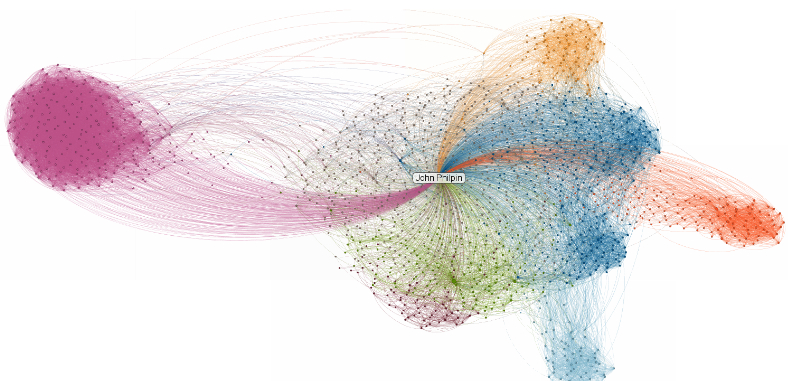
A highly distributed interconnected network, emerging from European and American networks in finance, technology, application and social disciplines. I think Derek was spot on. My strength is not my speciality. My strength is my generality. And, while I would absolutely not describe myself as a genius, I am definitely a cloud hopper. A connector. And there are not many of us around, or at least we tend to keep quiet, because we live in an age where value is placed on 'what you know'. The 'who you know' is almost written off as 'the old boys club' . But once you understand the value of the role that Gladwell calls out in The Tipping Point - the pieces fall into place.
My Speciality? Generality!
I first published this post on Beyond Bridges on February 10th, 2016. That site has gone, the words archived,
We Are Becoming A Power Skills Economy
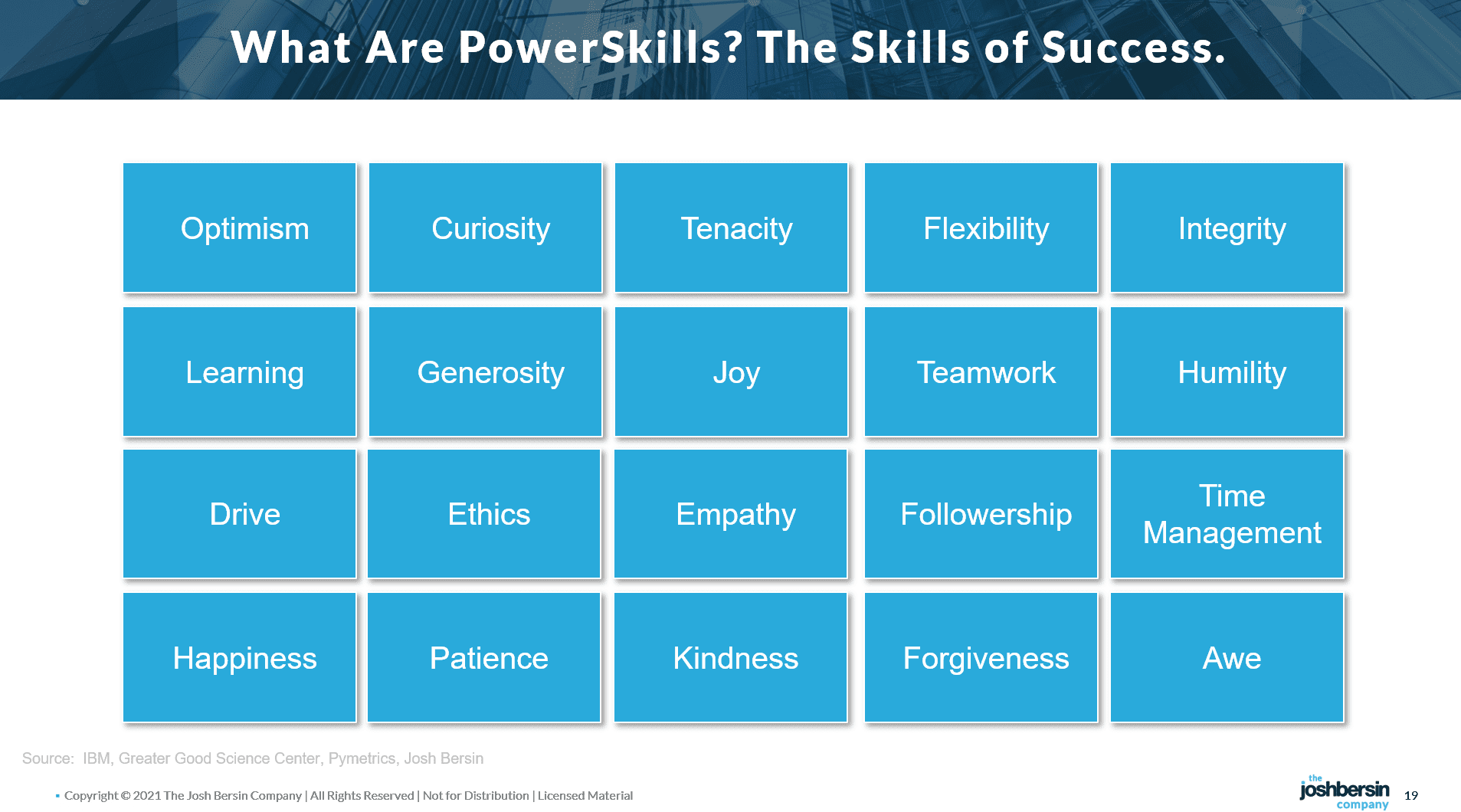
Josh Bershin writes that we are becoming a power skills economy.
In other words, automation did not eliminate work at all – it created new jobs, better jobs, and an acceleration of our workforce into what we now call the “service economy.” We are essentially shifting to the right in this model.
💬 Josh Bershin
BTW, in case you are wondering, ‘Power Skills’ is the 'new' name for ‘Soft Skills’. To be fair, it did need a new name. It’s also fair to say that whilst he’s not wrong, he fails to mention that in the last 15 years (where he references 2007) no mention that the average income of people is flat and that real income is declining.
But that's a different opportunity.
Oh - and maybe not so 'new' Josh was talking about this back in 2019 - and gave us a few clues as to what he was talking about, this is one of his graphics.
Here's My Take
1) Becoming? I think it is really more like that we are starting to recognize these skills. They have always been there - and though not necessarily recognised or even understood - I bet if you find successful people in that 'old' economy - they would demonstrate a lot of these traits.
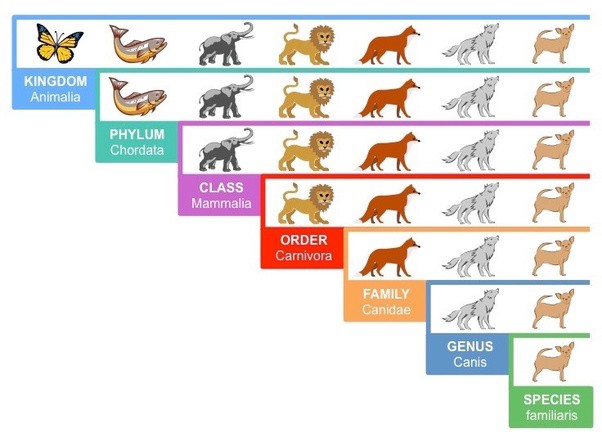
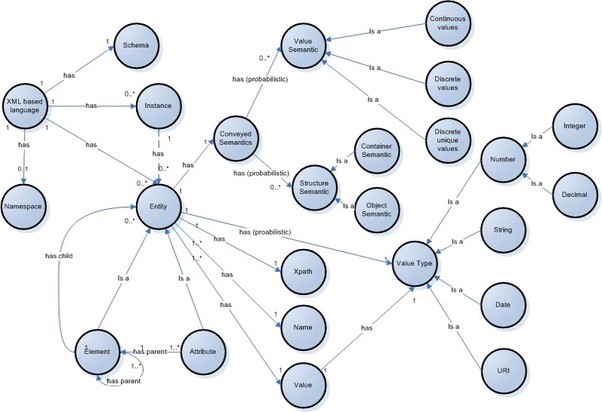
2) Josh is not alone in highlighting these skills and their importance. What nobody is doing is organizing these skills into a taxonomy - much less an ontology. (What's the difference you may ask) Stan Garfield has a very simple explanation)
Taxonomy
Ontology
... except now there is.
More of this to come, but have to say, very excited by a company I have been talking to that has not only done a lot of research into these skills, but also which skills are most important - and why, depending on what you are trying to do.
Not only that, but they are releasing an app that will allow anybody to
- assess their personal strengths and weaknesses across all skills
- define which of those skills they should focus on to maximise their ability to be most succesful at what they are trying to do
- all through a self paced, self directed, learning program.
As I said - more to come. Just to say - the cavalry is on its way.
Featured Image by Tim Mossholder on Unsplash